Tirzepatide 5mg
Dual GLP-1/GIP receptor agonist peptide engineered for research on glycemic control, energy homeostasis, and body composition.
Mechanism
Dual GLP-1 and GIP receptor agonist that stimulates glucose-dependent insulin secretion, suppresses glucagon release, slows gastric emptying, and enhances central satiety signaling.
Dosing
Standard research protocols evaluate a starting dose of 2.5 mg once weekly, escalating up to 5 mg once weekly via gradual titration.
Reconstitution
Add 2.0 mL bacteriostatic water to yield a final concentration of 2.5 mg/mL.
Storage
Store lyophilized peptide at −20 °C; once reconstituted, refrigerate at 2–8 °C and use within 2–4 weeks.
Mix & measure Tirzepatide 5mg
Pre-filled with this protocol's recommended BAC water and documented starting dose — edit any field to run your own numbers.
Mix & measure Tirzepatide 5mg
Vial strength → BAC water → target dose
Common vial sizes
Label claim
Total doses in vial: 2.0
U-100 syringe: 100 units = 1 mL
Need supplies for this protocol?
Research-grade peptides, fast shipping, competitive pricing
Reconstitution math only — not dosing advice. U-100 syringe: 100 units = 1 mL. Advanced calculator →
Track my protocol
Log each dose, build a streak, and watch your progress through this protocol's schedule.
Dosing Chart
| Phase / Day(s) | Dose & Frequency | Volume (U-100 units / mL) |
|---|---|---|
| Weeks 1–4 (Initiation) | 2.5 mg once weekly | 100 units (1.0 mL) |
| Weeks 5+ (Maintenance) | 5.0 mg once weekly | 200 units (2.0 mL) |
Reconstitution Steps
- 1
Remove the lyophilized 5 mg Tirzepatide vial from −20 °C freezer storage and equilibrate to ambient room temperature for 15–20 minutes.
- 2
Sterilize the rubber stoppers of both the peptide vial and the bacteriostatic water vial using a fresh alcohol swab.
- 3
Using an appropriate sterile syringe, draw 2.0 mL of bacteriostatic water.
- 4
Insert the needle at a slight angle and inject the 2.0 mL of bacteriostatic water slowly down the inside glass wall of the vial, avoiding direct forceful streaming onto the lyophilized cake.
- 5
Gently swirl and roll the vial between your palms until the powder is fully dissolved; never shake vigorously to prevent mechanical shearing of the peptide structure.
- 6
Label the vial with the final concentration (2.5 mg/mL) and reconstitution date, then immediately store in refrigerated conditions at 2–8 °C protected from light.
Supplies Needed


Peptide Vial
Supplies 5 mg lyophilized tirzepatide; typically provides two 2.5 mg doses or one 5 mg research dose once reconstituted.


Insulin Syringes (U-100)
Utilized for precise volumetric delivery of research aliquots; 2 to 4 syringes required per month depending on weekly protocol cadence.


Bacteriostatic Water
Provides preserved sterile diluent; requires 2.0 mL per vial reconstitution.


Alcohol Swabs
Maintains aseptic technique across vial septa prior to fluid transfer and sampling; requires 2 swabs per session.
Why researchers study it
Dual incretin pathway synergy
Glycemic regulation and beta-cell function
Appetite modulation and central satiety
Adipose tissue lipid handling and insulin sensitivity
These describe what is being studied, not proven benefits, approved uses, or promised results.
Overview
Tirzepatide is a synthetic unimolecular dual incretin receptor agonist that activates both glucose-dependent insulinotropic polypeptide (GIP) and glucagon-like peptide-1 (GLP-1) receptors. Mechanistically, native GIP and GLP-1 are gut-derived peptide hormones essential for glucose-dependent insulin secretion, glucagon regulation, and central satiety signalling. Tirzepatide integrates activity at both target pathways, engineered with a C20 fatty diacid side chain that promotes non-covalent binding to circulating albumin, significantly extending its biological elimination half-life. In preclinical and clinical research models, simultaneous activation of GIP and GLP-1 receptors elicits additive and synergistic effects relative to selective GLP-1 mono-agonists. This dual agonism enhances pancreatic beta-cell sensitivity, optimizes insulin secretion in response to nutrient intake, delays gastric emptying, and centrally modulates appetite signaling networks in the hypothalamus. Furthermore, GIP receptor engagement across peripheral adipose depots plays a distinct role in lipid metabolism and systemic insulin sensitization. Tirzepatide is broadly evaluated in metabolic research frameworks focusing on type 2 diabetes mellitus, obesity pathogenesis, metabolic dysfunction-associated steatohepatitis (MASH), and cardiovascular-renal outcomes. Investigational protocols consistently examine stepwise dosage titration regimens to balance receptor desensitization and assess metabolic endpoints across longitudinal intervention models.
References
- 1.Jastreboff et al., N Engl J Med, 2022 — Tirzepatide once weekly for the treatment of obesity (SURMOUNT-1)
- 2.Coskun et al., Mol Metab, 2018 — LY3298176, a novel dual GIP and GLP-1 receptor agonist for type 2 diabetes discovery and pharmacology
- 3.Roell et al., J Clin Invest, 2021 — GIPR agonism mediates weight-independent insulin sensitization by tirzepatide in obese animal models
- 4.Frías et al., N Engl J Med, 2021 — Tirzepatide versus semaglutide once weekly in patients with type 2 diabetes (SURPASS-2)
Supplies Needed
Suggested supplier
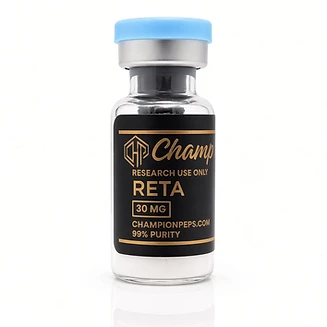
Research use only. Listing a supplier is not an endorsement of any protocol on this site, and nothing sold there is approved for human use.
Related protocols
View allRetatrutide 60mg
First-in-class triple agonist targeting GLP-1, GIP, and glucagon receptors investigated for substantial weight reduction and metabolic control.
View ProtocolRetatrutide 12mg
Synthetic multi-incretin peptide targeting GLP-1, GIP, and glucagon receptors for metabolic and weight-regulation investigations.
View ProtocolRetatrutide 10mg
Experimental unimolecular triple agonist targeting GLP-1, GIP, and glucagon receptors for metabolic and adiposity research.
View Protocol