Retatrutide 60mg
First-in-class triple agonist targeting GLP-1, GIP, and glucagon receptors investigated for substantial weight reduction and metabolic control.
Mechanism
Retatrutide exerts profound metabolic control through simultaneous triple agonism of GLP-1, GIP, and glucagon receptors to coordinate appetite suppression, enhance insulin dynamics, and elevate fat oxidation.
Dosing
Published research frameworks document an initial exploratory dose of 2 mg administered once weekly to evaluate baseline subject tolerability.
Reconstitution
Reconstituting a 60 mg vial with 3.0 mL of bacteriostatic water yields an operational working solution of 20 mg/mL.
Storage
Preserve unmixed lyophilized vials frozen at -20 °C, and store reconstituted solutions under refrigeration at 2–8 °C away from light for up to 2 to 4 weeks.
Mix & measure Retatrutide 60mg
Pre-filled with this protocol's recommended BAC water and documented starting dose — edit any field to run your own numbers.
Mix & measure Retatrutide 60mg
Vial strength → BAC water → target dose
Total doses in vial: 30.0
U-100 syringe: 100 units = 1 mL
Reconstitution math only — not dosing advice. U-100 syringe: 100 units = 1 mL. Advanced calculator →
Dosing Chart
| Phase / Day(s) | Dose & Frequency | Volume (U-100 units / mL) |
|---|---|---|
| Weeks 1–4 | 2 mg once weekly | 10 units (0.10 mL) |
| Weeks 5–8 | 4 mg once weekly | 20 units (0.20 mL) |
| Weeks 9–12 | 8 mg once weekly | 40 units (0.40 mL) |
| Weeks 13+ | 12 mg once weekly | 60 units (0.60 mL) |
Reconstitution Steps
- 1
Draw 3.0 mL of sterile bacteriostatic water into a dedicated mixing syringe.
- 2
Gently inject the diluent along the interior glass wall of the Retatrutide vial to limit agitating the lyophilized cake.
- 3
Slowly roll or swirl the vial until the peptide matrix is fully clarified without creating vigorous foam.
- 4
Record the date of reconstitution on the vial label and place it in refrigerated storage at 2–8 °C protected from light.
Supplies Needed


Peptide Vial
Retatrutide 60 mg lyophilized powder supply for research evaluation


Insulin Syringes (U-100)
Calibrated 1 mL syringes used to accurately draw weekly research volumes


Bacteriostatic Water
3.0 mL sterile diluent required to reconstitute the peptide into a 20 mg/mL concentration


Alcohol Swabs
Antiseptic wipes used to sterilize the rubber vial stopper and injection site prior to drawing and delivery
Why researchers study it
Substantial body weight reduction models
Triple-incretin appetite regulation and satiety signaling
Glycemic regulation and type 2 diabetes pathology
Hepatic steatosis and lipid profile modulation
These describe what is being studied, not proven benefits, approved uses, or promised results.
Overview
Retatrutide is an experimental unimolecular multi-target peptide engineered to concurrently bind and stimulate three critical metabolic endocrine pathways: GLP-1, GIP, and glucagon receptors. By acting on these distinct hormonal cascades in unison, the molecule demonstrates synergistic regulation over satiety centers, glycemic homeostasis, and basal energy expenditure, achieving biological activity that surpasses conventional mono- or dual-agonist therapies in preclinical and clinical testing. Investigational studies demonstrate that Retatrutide offers favorable pharmacokinetics, characterized by an extended elimination half-life of roughly six days that supports a once-weekly administration model in controlled settings. The large 60 mg vial configuration provides researchers with high volumetric utility for prolonged titration protocols, accommodating progressive step-up regimens without frequent vial changes while maintaining consistent working concentrations.
References
- 1.Jastreboff et al., New England Journal of Medicine, 2023 — Triple-Hormone-Receptor Agonist Retatrutide for Obesity
- 2.JAMA Network, 2023 — Retatrutide Phase 2 Obesity Trial: detailed efficacy and safety data
- 3.Rosenstock et al., The Lancet, 2023 — Retatrutide in type 2 diabetes: Phase 2 trial
- 4.NEJM, 2023 — Retatrutide dosing and tolerability: starting at 2 mg vs 4 mg reduces GI adverse events
- 5.Metabolites, 2025 — Retatrutide—A Game Changer in Obesity Pharmacotherapy
- 6.Baylor University Medical Center Proceedings, 2025 — Efficacy and safety of retatrutide for obesity: meta-analysis of RCTs
Supplies Needed
Suggested supplier
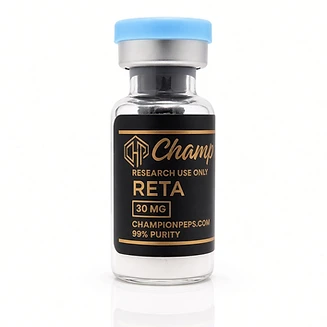
Research use only. Listing a supplier is not an endorsement of any protocol on this site, and nothing sold there is approved for human use.
Related protocols
View allRetatrutide 20mg
First-in-class GLP-1/GIP/glucagon triple agonist studied in metabolic research for weight regulation and glycemic control.
View ProtocolRetatrutide 12mg
Synthetic multi-incretin peptide targeting GLP-1, GIP, and glucagon receptors for metabolic and weight-regulation investigations.
View ProtocolRetatrutide 10mg
Experimental unimolecular triple agonist targeting GLP-1, GIP, and glucagon receptors for metabolic and adiposity research.
View Protocol