Retatrutide 10mg
Experimental unimolecular triple agonist targeting GLP-1, GIP, and glucagon receptors for metabolic and adiposity research.
Mechanism
Unimolecular triple agonist targeting GLP-1, GIP, and glucagon receptors to coordinate incretin signaling, glycemic control, and glucagon-mediated hepatic lipid metabolism.
Dosing
Documented research titration begins at 2 mg once weekly with gradual dose escalation up to target maintenance levels.
Reconstitution
Add 2.0 mL bacteriostatic water to one 10 mg vial resulting in a final concentration of 5 mg/mL.
Storage
Lyophilized: store at −20 °C; after reconstitution, refrigerate at 2–8 °C and use within 2–4 weeks.
Mix & measure Retatrutide 10mg
Pre-filled with this protocol's recommended BAC water and documented starting dose — edit any field to run your own numbers.
Mix & measure Retatrutide 10mg
Vial strength → BAC water → target dose
Total doses in vial: 5.0
U-100 syringe: 100 units = 1 mL
Reconstitution math only — not dosing advice. U-100 syringe: 100 units = 1 mL. Advanced calculator →
Dosing Chart
| Phase / Day(s) | Dose & Frequency | Volume (U-100 units / mL) |
|---|---|---|
| Weeks 1–4 (Initiation) | 2 mg once weekly | 40 units (0.40 mL) |
| Weeks 5–8 (Titration Step 1) | 4 mg once weekly | 80 units (0.80 mL) |
| Weeks 9+ (Escalation / Maintenance) | 8–10 mg once weekly | 160–200 units (1.60–2.00 mL) |
Reconstitution Steps
- 1
Remove the 10 mg lyophilized retatrutide vial from −20 °C storage and allow it to equilibrate to room temperature for 15–20 minutes.
- 2
Clean the rubber stopper of both the peptide vial and the bacteriostatic water vial using a fresh alcohol swab and let them air dry.
- 3
Aseptically draw exactly 2.0 mL of bacteriostatic water into a reconstitution syringe.
- 4
Insert the needle at a slight angle and inject the 2.0 mL of bacteriostatic water slowly down the inner glass wall to prevent foaming.
- 5
Gently swirl and roll the vial between your palms until the powder is fully dissolved into a clear solution, avoiding vigorous shaking.
- 6
Affix a label indicating the reconstitution date and concentration (5 mg/mL), then transfer immediately to refrigerated storage at 2–8 °C.
Supplies Needed


Peptide Vial
Provides 10 mg of lyophilized retatrutide peptide, sufficient for approximately 2 to 5 experimental doses depending on the titration phase.


Insulin Syringes (U-100)
Used to accurately measure and draw low-volume research aliquots, requiring approximately 4 to 8 syringes for a typical evaluation period.


Bacteriostatic Water
Supplies sterile diluent containing 0.9% benzyl alcohol, with 2.0 mL required for reconstituting one 10 mg peptide vial.


Alcohol Swabs
Used to sterilize vial septums and laboratory contact points prior to reconstitution and extraction, utilizing roughly 8 to 12 swabs per protocol.
Why researchers study it
Substantial weight reduction and adiposity regulation
Triple-receptor incretin and glucagon metabolic effects
Glucagon-driven hepatic fat clearance and energy expenditure
Body composition and glycemic control research
These describe what is being studied, not proven benefits, approved uses, or promised results.
Overview
Retatrutide (LY3437943) is an investigational 39-amino-acid synthetic peptide engineered to simultaneously activate the glucagon-like peptide-1 (GLP-1), glucose-dependent insulinotropic polypeptide (GIP), and glucagon (GCGR) receptors. By combining incretin-mediated insulin secretion and central appetite suppression with glucagon-driven thermogenesis and hepatic lipid clearance, the molecule demonstrates a distinct multi-pathway profile compared to single- or dual-incretin agonists. In preclinical and clinical research, retatrutide has exhibited substantial biological activity, notably documented in phase 2 trials and the broad TRIUMPH clinical investigation program evaluating body weight regulation, glycemic parameters, and metabolic-associated steatohepatitis. The compound remains strictly restricted to laboratory investigation and clinical research, and is not approved for therapeutic use or human administration.
References
- 1.Jastreboff AM et al., N Engl J Med, 2023 — Triple–Hormone-Receptor Agonist Retatrutide for Obesity: A Phase 2 Trial
- 2.Rosenstock J et al., Lancet, 2023 — Retatrutide, a GIP, GLP-1 and glucagon receptor agonist, for people with type 2 diabetes: a randomised, double-blind, placebo and active-controlled, parallel-group, phase 2 trial
- 3.Coskun T et al., Cell Metab, 2022 — LY3437943, a novel triple GIP, GLP-1, and glucagon receptor agonist in preclinical models and first-in-human studies
- 4.Li W et al., Nature, 2024 — Structural insights into the mechanism of the triple hormone receptor agonist retatrutide
Supplies Needed
Suggested supplier
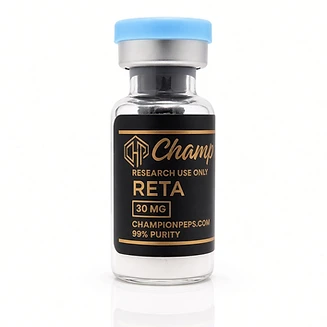
Research use only. Listing a supplier is not an endorsement of any protocol on this site, and nothing sold there is approved for human use.
Related protocols
View allRetatrutide 6mg
First-in-class triple agonist peptide targeting GLP-1, GIP, and glucagon receptors for profound metabolic and weight regulation research.
View ProtocolRetatrutide 24mg
Novel triple-hormone receptor agonist studied for metabolic regulation and body weight reduction via GLP-1, GIP, and glucagon pathways.
View ProtocolRetatrutide 30mg
Investigational triple-receptor agonist targeting GLP-1, GIP, and glucagon pathways to evaluate metabolic rate and body mass reduction.
View Protocol