Retatrutide 24mg
Novel triple-hormone receptor agonist studied for metabolic regulation and body weight reduction via GLP-1, GIP, and glucagon pathways.
Mechanism
Simultaneously activates GLP-1, GIP, and glucagon receptors to orchestrate insulin release, suppress appetite, and enhance lipid oxidation and energy expenditure.
Dosing
Standard investigational protocols initiate dosing at 2 mg injected subcutaneously once every 7 days.
Reconstitution
Reconstitute the 24 mg vial using 2.4 mL of bacteriostatic water to create a stock concentration of 10 mg/mL.
Storage
Keep lyophilized vials frozen at -20 °C or lower, and store the reconstituted peptide solution refrigerated at 2–8 °C away from light for up to 4 weeks.
Mix & measure Retatrutide 24mg
Pre-filled with this protocol's recommended BAC water and documented starting dose — edit any field to run your own numbers.
Mix & measure Retatrutide 24mg
Vial strength → BAC water → target dose
Total doses in vial: 12.0
U-100 syringe: 100 units = 1 mL
Reconstitution math only — not dosing advice. U-100 syringe: 100 units = 1 mL. Advanced calculator →
Dosing Chart
| Phase / Day(s) | Dose & Frequency | Volume (U-100 units / mL) |
|---|---|---|
| Weeks 1–4 | 2 mg once weekly | 20 units (0.20 mL) |
| Weeks 5–8 | 4 mg once weekly | 40 units (0.40 mL) |
| Weeks 9–12 | 8 mg once weekly | 80 units (0.80 mL) |
| Weeks 13+ | 12 mg once weekly | 120 units (1.20 mL) |
Reconstitution Steps
- 1
Aspirate 2.4 mL of bacteriostatic water into a sterile syringe.
- 2
Introduce the diluent slowly against the inner glass wall of the vial to minimize turbulent agitation and foaming.
- 3
Gently rotate or swirl the vial until the lyophilized cake is fully dissolved without vigorous shaking.
- 4
Label the vial with the preparation date and place in refrigerated storage at 2–8 °C shielded from light.
Supplies Needed


Peptide Vial
Supplies 24 mg of lyophilized Retatrutide for laboratory experimentation.


Insulin Syringes (U-100)
Used for precise measurement and subcutaneous administration of the reconstituted solution.


Bacteriostatic Water
Serves as the sterile, preserved diluent to reconstitute the peptide into a 10 mg/mL solution.


Alcohol Swabs
Required to maintain aseptic conditions on vial stoppers and injection sites.
Why researchers study it
Weight loss and adiposity reduction
Glycemic control and glucose homeostasis
Appetite suppression and satiety signaling
Hepatic lipid clearance in metabolic dysfunction
These describe what is being studied, not proven benefits, approved uses, or promised results.
Overview
Retatrutide represents an emerging class of multi-receptor metabolic peptides designed to mimic and activate several endocrine pathways simultaneously. By co-targeting the glucagon-like peptide-1 (GLP-1), glucose-dependent insulinotropic polypeptide (GIP), and glucagon receptors, it facilitates complex metabolic signaling beyond conventional mono- or dual-incretin mimetics. In preclinical and clinical research, this multi-pathway agonism has demonstrated substantial influence on nutrient metabolism, insulin secretion, and appetite centers in the central nervous system. Additionally, the activation of glucagon receptors encourages thermogenic activity and lipid oxidation, leading to deeper metabolic alterations. This 24 mg lyophilized presentation is typically employed in extended laboratory protocols where incremental titration curves require a higher vial capacity to sustain multi-week regimens efficiently while minimizing batch variance.
References
- 1.Jastreboff et al., New England Journal of Medicine, 2023 — Triple-Hormone-Receptor Agonist Retatrutide for Obesity
- 2.Rosenstock et al., The Lancet, 2023 — Retatrutide in type 2 diabetes: Phase 2 trial
- 3.Metabolites, 2025 — Retatrutide—A Game Changer in Obesity Pharmacotherapy
- 4.Baylor University Medical Center Proceedings, 2025 — Efficacy and safety of retatrutide for obesity: meta-analysis of RCTs
Supplies Needed
Suggested supplier
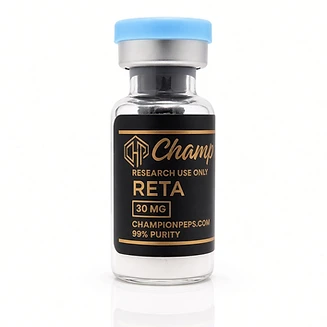
Research use only. Listing a supplier is not an endorsement of any protocol on this site, and nothing sold there is approved for human use.