Retatrutide 30mg
Investigational triple-receptor agonist targeting GLP-1, GIP, and glucagon pathways to evaluate metabolic rate and body mass reduction.
Mechanism
Retatrutide acts as a unimolecular triple agonist at the GLP-1, GIP, and glucagon receptors to simultaneously suppress appetite, enhance insulin secretion, and elevate energy expenditure.
Dosing
Clinical research schedules initiate evaluation at a starting benchmark of 2 mg administered subcutaneously once per week.
Reconstitution
Reconstituting a 30 mg vial with 3.0 mL of bacteriostatic water yields a standard working concentration of 10 mg/mL.
Storage
Store unmixed lyophilized vials frozen at -20 °C (-4 °F), and keep reconstituted solutions refrigerated at 2–8 °C (35.6–46.4 °F) protected from light for up to 2–4 weeks.
Mix & measure Retatrutide 30mg
Pre-filled with this protocol's recommended BAC water and documented starting dose — edit any field to run your own numbers.
Mix & measure Retatrutide 30mg
Vial strength → BAC water → target dose
Total doses in vial: 15.0
U-100 syringe: 100 units = 1 mL
Reconstitution math only — not dosing advice. U-100 syringe: 100 units = 1 mL. Advanced calculator →
Dosing Chart
| Phase / Day(s) | Dose & Frequency | Volume (U-100 units / mL) |
|---|---|---|
| Weeks 1–4 | 2 mg once weekly | 20 units (0.20 mL) |
| Weeks 5–8 | 4 mg once weekly | 40 units (0.40 mL) |
| Weeks 9–12 | 8 mg once weekly | 80 units (0.80 mL) |
| Weeks 13+ | 12 mg once weekly | 120 units (1.20 mL) |
Reconstitution Steps
- 1
Draw 3.0 mL of bacteriostatic water into a sterile syringe using aseptic technique.
- 2
Gently inject the diluent along the interior glass wall of the Retatrutide vial to prevent agitation.
- 3
Carefully swirl or roll the vial between hands until the lyophilized powder dissolves completely without vigorous shaking.
- 4
Record the date of reconstitution and store the refrigerated vial between 2–8 °C (35.6–46.4 °F) shielded from light.
Supplies Needed


Peptide Vial
Lyophilized Retatrutide containing 30 mg of active compound per vial.


Insulin Syringes (U-100)
Standard 1 mL syringes utilized for precise measurement and subcutaneous administration.


Bacteriostatic Water
Sterile diluent (3.0 mL per vial) preserved with benzyl alcohol used for reconstitution.


Alcohol Swabs
Antiseptic wipes used to sanitize vial stoppers and the designated injection sites.
Why researchers study it
Substantial body weight reduction in obesity models
Enhanced appetite suppression via tri-receptor synergy
Glycemic regulation and HbA1c reduction in metabolic dysfunction
Hepatic lipid clearance and improvement in cardiovascular lipid profiles
These describe what is being studied, not proven benefits, approved uses, or promised results.
Overview
Retatrutide (LY3437943) is an advanced investigational peptide engineered to trigger three separate metabolic neuroendocrine pathways simultaneously. Functioning as a triple agonist, it coordinates activity across glucagon-like peptide-1 (GLP-1), glucose-dependent insulinotropic polypeptide (GIP), and glucagon receptors. This multifaceted interaction produces a distinctive synergy that suppresses appetite while concurrently elevating baseline energy expenditure and metabolic flux. Preclinical and clinical trial models have highlighted Retatrutide for its remarkable capacity to modulate energy balance and promote profound adipose reduction. In extended investigations, it demonstrated substantial efficacy in lowering body weight, improving glycemic control markers such as HbA1c, and favorable alterations in liver fat and lipid profiles, surpassing traditional single- or dual-incretin mimetics. Due to an extended elimination half-life of roughly six days, laboratory regimens evaluate the molecule using once-weekly administration schedules. Standard protocols prioritize a conservative initial baseline dose followed by stepwise escalation over multiple months to optimize physiological tolerability, particularly regarding gastrointestinal signaling pathways.
References
- 1.Jastreboff et al., New England Journal of Medicine, 2023 — Triple-Hormone-Receptor Agonist Retatrutide for Obesity
- 2.Rosenstock et al., JAMA Network, 2023 — Retatrutide Phase 2 Obesity Trial efficacy and safety
- 3.Rosenstock et al., The Lancet, 2023 — Retatrutide in type 2 diabetes Phase 2 trial
- 4.Frias et al., NEJM, 2023 — Retatrutide dosing and tolerability with 2 mg vs 4 mg escalation
- 5.Metabolites, PMC, 2025 — Retatrutide mechanism and obesity pharmacotherapy review
- 6.Baylor University Medical Center Proceedings, PMC, 2025 — Meta-analysis of retatrutide clinical trials for obesity
- 7.Molecular Metabolism, 2025 — Preclinical tri-agonist mechanisms and pharmacokinetics
- 8.Nature Reviews Endocrinology, 2024 — Triple agonist therapies for obesity and diabetes
Supplies Needed
Suggested supplier
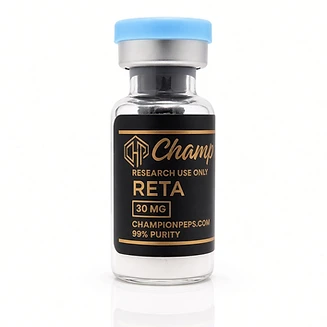
Research use only. Listing a supplier is not an endorsement of any protocol on this site, and nothing sold there is approved for human use.
Related protocols
View allGHRP-6 5mg
Synthetic hexapeptide secretagogue targeting the ghrelin receptor to stimulate pulsatile GH release alongside pronounced appetite enhancement.
View ProtocolRetatrutide 5mg
Investigational triple-hormone receptor agonist targeting GLP-1, GIP, and glucagon receptors for metabolic and adiposity research.
View ProtocolMOTS-C 20mg
Mitochondrial-derived peptide investigated in preclinical models for AMPK activation, glucose regulation, and metabolic homeostasis.
View Protocol