GHRP-6 5mg
Synthetic hexapeptide secretagogue targeting the ghrelin receptor to stimulate pulsatile GH release alongside pronounced appetite enhancement.
Mechanism
GHRP-6 functions by binding the pituitary GHS-R1a ghrelin receptor to trigger growth hormone release while suppressing somatostatin influence.
Dosing
Standard laboratory protocols initiate observation at 100 mcg per injection, administered one to three times daily on an empty stomach.
Reconstitution
Adding 3.0 mL of bacteriostatic water into a 5 mg vial yields a final working concentration of approximately 1.67 mg/mL.
Storage
Store the unmixed lyophilized powder at -20 °C, and once reconstituted, keep refrigerated at 2 to 8 °C without freezing.
Mix & measure GHRP-6 5mg
Pre-filled with this protocol's recommended BAC water and documented starting dose — edit any field to run your own numbers.
Mix & measure GHRP-6 5mg
Vial strength → BAC water → target dose
Total doses in vial: 50.0
U-100 syringe: 100 units = 1 mL
Reconstitution math only — not dosing advice. U-100 syringe: 100 units = 1 mL. Advanced calculator →
Dosing Chart
| Phase / Day(s) | Dose & Frequency | Volume (U-100 units / mL) |
|---|---|---|
| Weeks 1–2 | 100 mcg (1–3× daily) | ~6 units (0.06 mL) |
| Weeks 3–4 | 200 mcg (1–3× daily) | ~12 units (0.12 mL) |
| Weeks 5–12 | 300 mcg (1–3× daily) | ~18 units (0.18 mL) |
Reconstitution Steps
- 1
Draw 3.0 mL of bacteriostatic water into a sterile mixing syringe.
- 2
Introduce the fluid gradually along the inner glass wall of the GHRP-6 vial to avoid turbulent agitation.
- 3
Gently roll or swirl the vial until the lyophilized cake is fully dissolved, avoiding shaking.
- 4
Label the vial with reconstitution date and resulting concentration, then place in refrigerated storage at 2–8 °C.
Supplies Needed


Peptide Vial
Supplies the lyophilized GHRP-6 (5 mg) compound.


Insulin Syringes (U-100)
Measures microgram aliquots accurately using clear unit graduations.


Bacteriostatic Water
Provides sterile, multi-dose diluent for peptide reconstitution.


Alcohol Swabs
Sanitizes the vial stopper and target injection sites before handling.
Why researchers study it
Appetite stimulation via ghrelin receptor signaling
Pulsatile growth hormone and downstream IGF-1 induction
Tissue cytoprotection and cellular repair pathways
Preclinical body composition and lipid metabolism models
These describe what is being studied, not proven benefits, approved uses, or promised results.
Overview
GHRP-6 (Growth Hormone Releasing Peptide-6) is a synthetic hexapeptide recognized primarily for its role as an agonist at the growth hormone secretagogue receptor (GHS-R1a), which is also the native target for ghrelin. By activating these hypothalamic and pituitary pathways, it provokes rapid, episodic discharges of endogenous growth hormone. Unlike several other GH-releasing secretagogues, GHRP-6 frequently initiates intense orexigenic signaling, resulting in a marked spike in appetite. In investigative laboratory models, this peptide is regularly utilized to evaluate the mechanics of somatotropic signaling, neuroendocrine balance, and cellular cytoprotection. While it efficiently triggers downstream cascades including IGF-1 generation, researchers also monitor modest, transient fluctuations in secondary markers like prolactin and cortisol. Most observational literature identifies an intrinsic ceiling effect on acute growth hormone discharge around lower microgram thresholds, shaping contemporary laboratory design. Because GHRP-6 is strictly an investigational compound without regulatory authorization for clinical therapy, its properties remain restricted to preclinical and translational investigations. In-depth characterization continues around its regenerative signaling, potential metabolic impacts on body composition, and tissue preservation under controlled laboratory conditions.
References
- 1.Endocrinology, PubMed — Pharmacology of GHRP-6 as a growth-hormone-releasing peptide acting at the ghrelin/GHS-R1a receptor
- 2.Journal of Clinical Endocrinology & Metabolism, PubMed — GHRP-6 stimulates growth-hormone secretion via the ghrelin receptor in human subjects
- 3.WADA Scientific Research, — Appetite stimulation and dose-response of GH-releasing peptides such as GHRP-6
- 4.Growth Hormone & IGF Research, PubMed — GH-response plateau and dosing characteristics of GH secretagogues including GHRP-6
- 5.Journal of Endocrinology, PubMed — GHRP-6 induces growth-hormone release in preclinical models via the GHS receptor
- 6.Peptides, PubMed — Structure and GH-releasing activity of GHRP-6 and related ghrelin-receptor agonists
- 7.Clinical Endocrinology, PubMed — GHRP-6 effects on cortisol, prolactin and appetite alongside the growth-hormone pulse
- 8.European Journal of Endocrinology, PubMed — Dose-response of GHRP-6 showing the growth-hormone plateau near ~100 mcg per dose
Supplies Needed
Suggested supplier
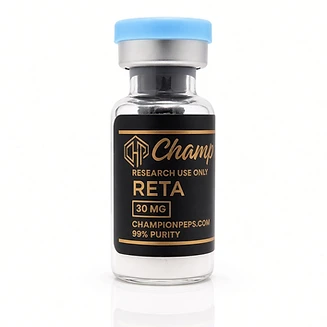
Research use only. Listing a supplier is not an endorsement of any protocol on this site, and nothing sold there is approved for human use.
Related protocols
View allRetatrutide 5mg
Investigational triple-hormone receptor agonist targeting GLP-1, GIP, and glucagon receptors for metabolic and adiposity research.
View ProtocolMOTS-C 20mg
Mitochondrial-derived peptide investigated in preclinical models for AMPK activation, glucose regulation, and metabolic homeostasis.
View ProtocolGHRP-6 2mg
Synthetic hexapeptide secretagogue targeting the ghrelin receptor to induce episodic growth hormone release and marked appetite stimulation.
View Protocol