Retatrutide 5mg
Investigational triple-hormone receptor agonist targeting GLP-1, GIP, and glucagon receptors for metabolic and adiposity research.
Mechanism
Triple agonist targeting GLP-1, GIP, and glucagon receptors to coordinate incretin-mediated glycemic control, satiety regulation, and glucagon-driven energy expenditure.
Dosing
Standard laboratory titration protocols initiate at 1 mg once weekly to evaluate baseline receptor tolerability.
Reconstitution
Add 2.0 mL bacteriostatic water to achieve a working concentration of 2.5 mg/mL.
Storage
Lyophilized: −20 °C; reconstituted: refrigerate 2–8 °C, use within 2–4 weeks.
Mix & measure Retatrutide 5mg
Pre-filled with this protocol's recommended BAC water and documented starting dose — edit any field to run your own numbers.
Mix & measure Retatrutide 5mg
Vial strength → BAC water → target dose
Total doses in vial: 5.0
U-100 syringe: 100 units = 1 mL
Reconstitution math only — not dosing advice. U-100 syringe: 100 units = 1 mL. Advanced calculator →
Dosing Chart
| Phase / Day(s) | Dose & Frequency | Volume (U-100 units / mL) |
|---|---|---|
| Initiation (Weeks 1–4) | 1.0 mg once weekly | 40 units (0.40 mL) |
| Titration Step 1 (Weeks 5–8) | 2.0 mg once weekly | 80 units (0.80 mL) |
| Titration Step 2 (Weeks 9+) | 2.5 mg once weekly | 100 units (1.00 mL) |
Reconstitution Steps
- 1
Remove the Retatrutide 5mg vial from frozen storage (−20 °C) and allow it to equilibrate to room temperature for 15–20 minutes.
- 2
Disinfect the rubber stoppers of both the peptide vial and the bacteriostatic water vial using sterile alcohol swabs.
- 3
Draw exactly 2.0 mL of bacteriostatic water using a sterile syringe.
- 4
Insert the needle into the peptide vial at an angle and inject the liquid slowly down the inner glass wall to prevent vigorous foaming or shearing.
- 5
Gently swirl and roll the vial between your palms until the lyophilized cake is fully dissolved into a clear solution without shaking.
- 6
Label the vial with the reconstitution date and resulting concentration (2.5 mg/mL), then store immediately in refrigeration at 2–8 °C.
Supplies Needed


Peptide Vial
Provides 5 mg of lyophilized Retatrutide powder, sufficient for 2 to 5 experimental doses depending on the titration schedule.


Insulin Syringes (U-100)
Calibrated 100-unit (1 mL) syringes used for accurate liquid measurement and administration, requiring approximately 4 to 5 syringes per 5 mg vial cycle.


Bacteriostatic Water
Serves as the sterile, preserved reconstitution diluent, requiring 2.0 mL per vial to achieve a 2.5 mg/mL solution.


Alcohol Swabs
Used for aseptic wiping of rubber stoppers and procedural surfaces, requiring 2 swabs per reconstitution or extraction session.
Why researchers study it
Weight reduction kinetics
Triple-receptor metabolic synergistic effects
Titration starting phase and tolerability assessment
Hepatic lipid mobilization and steatosis resolution
These describe what is being studied, not proven benefits, approved uses, or promised results.
Overview
Retatrutide (LY3437943) is an investigational synthetic peptide designed to simultaneously engage three major metabolic receptor systems: glucagon-like peptide-1 (GLP-1), glucose-dependent insulinotropic polypeptide (GIP), and glucagon (GCG). By integrating incretin signaling with glucagon receptor activation, it expands on earlier single-agonist and dual-agonist models to study multi-pathway endocrine regulation of energy balance. The pharmacological rationale for triple agonism centers on combining complementary physiological actions. Agonism at GLP-1 and GIP receptors coordinates glucose-dependent insulin secretion, glycemic modulation, and central satiety pathways, while glucagon receptor activation is investigated for its role in stimulating hepatic lipid oxidation, promoting thermogenesis, and accelerating energy expenditure. In preclinical models and clinical trial evaluations, retatrutide has demonstrated marked dose-dependent reductions in body weight, improvements in glycemic control, and resolution of hepatic steatosis. The 5mg vial presentation is primarily utilized in early-phase laboratory dosing models and low-dose titration schedules to evaluate tolerability, multi-receptor kinetics, and metabolic responses.
References
- 1.Jastreboff AM et al., New England Journal of Medicine, 2023 — Triple–Hormone-Receptor Agonist Retatrutide for Obesity
- 2.Sanyal AJ et al., Nature Medicine, 2024 — Phase 2 study of retatrutide for nonalcoholic fatty liver disease and metabolic parameters
- 3.Katsi V et al., Endocrine, Metabolic & Immune Disorders - Drug Targets, 2025 — Retatrutide: A Game Changer in Obesity Pharmacotherapy
- 4.Bisson A et al., New England Journal of Medicine, 2023 — Correspondence on cardiovascular and metabolic mechanisms of retatrutide
Supplies Needed
Suggested supplier
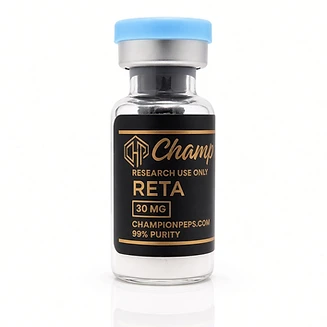
Research use only. Listing a supplier is not an endorsement of any protocol on this site, and nothing sold there is approved for human use.