Retatrutide 12mg
Synthetic multi-incretin peptide targeting GLP-1, GIP, and glucagon receptors for metabolic and weight-regulation investigations.
Mechanism
Triple agonist that simultaneously activates GLP-1, GIP, and glucagon receptors to modulate incretin signaling and energy expenditure.
Dosing
Maintenance dose of 10–12 mg once weekly after titration, documented in research protocols targeting peak metabolic response.
Reconstitution
Add 2.0 mL bacteriostatic water to yield a final concentration of 6 mg/mL.
Storage
Store lyophilized peptide at −20 °C; once reconstituted, refrigerate at 2–8 °C and protect from light.
Mix & measure Retatrutide 12mg
Pre-filled with this protocol's recommended BAC water and documented starting dose — edit any field to run your own numbers.
Mix & measure Retatrutide 12mg
Vial strength → BAC water → target dose
Total doses in vial: 1.0
U-100 syringe: 100 units = 1 mL
Reconstitution math only — not dosing advice. U-100 syringe: 100 units = 1 mL. Advanced calculator →
Dosing Chart
| Phase / Day(s) | Dose & Frequency | Volume (U-100 units / mL) |
|---|---|---|
| Titration Step 1 (Weeks 1–4) | 2 mg once weekly | ~33.3 units (0.33 mL) |
| Titration Step 2 (Weeks 5–8) | 4 mg once weekly | ~66.7 units (0.67 mL) |
| Titration Step 3 (Weeks 9–12) | 8 mg once weekly | 133.3 units (1.33 mL) |
| Full Research Dose (Week 13+) | 12 mg once weekly | 200 units (2.0 mL) |
Reconstitution Steps
- 1
Remove the 12 mg retatrutide vial from −20 °C freezer storage and allow it to equilibrate to room temperature for 15 to 20 minutes.
- 2
Disinfect the rubber stoppers of both the retatrutide vial and the bacteriostatic water vial using sterile alcohol swabs.
- 3
Draw precisely 2.0 mL of bacteriostatic water into a sterile syringe.
- 4
Insert the needle into the retatrutide vial at an angle and slowly inject the diluent down the inner glass wall, avoiding direct jetting onto the lyophilized powder.
- 5
Gently swirl or roll the vial between hands until the lyophilizate fully dissolves into a clear solution; do not shake vigorously.
- 6
Label the vial with the reconstitution date and concentration (6 mg/mL), then transfer immediately to refrigerated storage at 2–8 °C.
Supplies Needed


Peptide Vial
Provides 12 mg of lyophilized retatrutide peptide for laboratory research reconstitution.


Insulin Syringes (U-100)
Used for precise measurement and administration of aliquots during weekly research sampling cycles.


Bacteriostatic Water
Serves as the sterile antimicrobial diluent (2.0 mL required) to achieve the 6 mg/mL target working concentration.


Alcohol Swabs
Used to sterilize vial stoppers and work surfaces prior to each reconstitution and extraction step.
Why researchers study it
Maintenance-phase weight reduction
Triple-receptor metabolic effects
Hepatic lipid clearance and steatosis modulation
Energy expenditure regulation via glucagon signaling
These describe what is being studied, not proven benefits, approved uses, or promised results.
Overview
Retatrutide (LY3437943) is an engineered single-peptide triple hormone receptor agonist designed to co-activate glucagon-like peptide-1 (GLP-1), glucose-dependent insulinotropic polypeptide (GIP), and glucagon receptors. Structurally modified with a C20 fatty diacid moiety that facilitates reversible albumin binding, it exhibits an extended elimination half-life of roughly six days, rendering it suitable for once-weekly research dosing models. By concurrently stimulating all three distinct receptor nodes, retatrutide serves as an advanced investigational tool to explore synergistic metabolic control. Mechanistically, the compound balances distinct physiological pathways. While GLP-1 and GIP receptor activation potentiates glucose-stimulated insulin secretion, delays gastric emptying, and centrally curtails appetite, the incorporation of glucagon receptor agonism promotes hepatic lipid oxidation and enhances baseline energy expenditure. This coordinated tri-receptor activity mitigates the hyperglycemic liability traditionally associated with isolated glucagon signaling through robust insulinotropic counter-regulation. Retatrutide remains an investigational research agent and is not authorized or approved for clinical or human consumption. Preclinical trials and early-to-mid phase clinical evaluations have characterized significant dose-dependent metabolic shifts, appetite modulation, and reductions in hepatic steatosis markers. Phase 3 trials and ongoing laboratory studies continue to evaluate its long-term safety profile, cardiovascular influence, and molecular pharmacology across experimental cohorts.
References
- 1.Jastreboff AM et al., New England Journal of Medicine, 2023 — Triple–Hormone-Receptor Agonist Retatrutide for Obesity
- 2.Rosenstock J et al., The Lancet, 2023 — Retatrutide, a GIP, GLP-1 and glucagon receptor agonist, for people with type 2 diabetes
- 3.Coskun T et al., Cell Metabolism, 2022 — LY3437943, a novel triple GIP, GLP-1, and glucagon receptor agonist
Supplies Needed
Suggested supplier
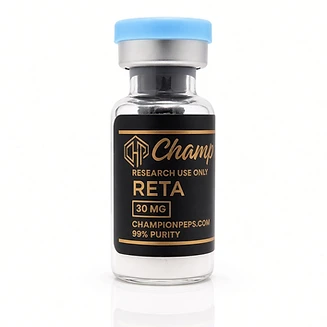
Research use only. Listing a supplier is not an endorsement of any protocol on this site, and nothing sold there is approved for human use.
Related protocols
View allRetatrutide 10mg
Experimental unimolecular triple agonist targeting GLP-1, GIP, and glucagon receptors for metabolic and adiposity research.
View ProtocolRetatrutide 6mg
First-in-class triple agonist peptide targeting GLP-1, GIP, and glucagon receptors for profound metabolic and weight regulation research.
View ProtocolRetatrutide 24mg
Novel triple-hormone receptor agonist studied for metabolic regulation and body weight reduction via GLP-1, GIP, and glucagon pathways.
View Protocol