Retatrutide 20mg
First-in-class GLP-1/GIP/glucagon triple agonist studied in metabolic research for weight regulation and glycemic control.
Mechanism
Simultaneously engages GLP-1, GIP, and glucagon receptors to synergistically curb appetite, improve glycemic regulation, and enhance energy expenditure.
Dosing
Protocols document an introductory dose of 2 mg administered once weekly for the initial four weeks.
Reconstitution
Reconstituting the 20 mg vial with 2.0 mL of bacteriostatic water yields a peptide concentration of 10 mg/mL.
Storage
Store the unmixed lyophilized vial frozen at -20 °C, and keep the reconstituted liquid refrigerated at 2–8 °C away from light for up to 2 to 4 weeks.
Mix & measure Retatrutide 20mg
Pre-filled with this protocol's recommended BAC water and documented starting dose — edit any field to run your own numbers.
Mix & measure Retatrutide 20mg
Vial strength → BAC water → target dose
Total doses in vial: 10.0
U-100 syringe: 100 units = 1 mL
Reconstitution math only — not dosing advice. U-100 syringe: 100 units = 1 mL. Advanced calculator →
Dosing Chart
| Phase / Day(s) | Dose & Frequency | Volume (U-100 units / mL) |
|---|---|---|
| Weeks 1–4 | 2 mg once weekly | 20 units (0.20 mL) |
| Weeks 5–8 | 4 mg once weekly | 40 units (0.40 mL) |
| Weeks 9–12 | 8 mg once weekly | 80 units (0.80 mL) |
| Weeks 13+ | 12 mg once weekly | 120 units (1.20 mL) |
Reconstitution Steps
- 1
Draw 2.0 mL of bacteriostatic water into a sterile syringe.
- 2
Introduce the liquid slowly down the interior glass wall of the 20 mg Retatrutide vial to prevent agitation.
- 3
Gently swirl or roll the vial until the lyophilized powder has completely dissolved, avoiding vigorous shaking.
- 4
Record the date of reconstitution and transfer the vial to refrigerated storage at 2–8 °C protected from direct light.
Supplies Needed


Peptide Vial
20 mg lyophilized Retatrutide powder


Insulin Syringes (U-100)
1 mL sterile syringes for weekly draw and administration


Bacteriostatic Water
2.0 mL diluent for reconstituting the lyophilized peptide


Alcohol Swabs
Sanitization of vial stopper and subcutaneous injection site
Why researchers study it
Investigation of substantial body-weight reduction
Appetite modulation and caloric intake signaling
Glycemic regulation and HbA1c dynamics in diabetes models
Hepatic lipid clearance and cardiometabolic parameters
These describe what is being studied, not proven benefits, approved uses, or promised results.
Overview
Retatrutide is an investigational synthetic peptide designed to act as a unimolecular triple agonist across three critical metabolic endocrine pathways: GLP-1, GIP, and glucagon receptors. By coordinating signaling across these distinct targets, it has demonstrated unprecedented efficacy in preclinical models and clinical trials focused on severe adiposity and type 2 diabetes management. In human clinical trials, the compound has displayed an extended biological half-life of approximately six days, facilitating a once-weekly dosing schedule. The concurrent engagement of glucagon receptors promotes energy expenditure and hepatic lipid turnover, complementing the satiety, delayed gastric emptying, and insulinotropic effects driven by the incretin components GLP-1 and GIP. Research implementations prioritize conservative initial dosing and systematic multi-week escalation intervals. This titration approach maintains tolerability while allowing experimental models to adapt progressively to multi-hormone metabolic signaling.
References
- 1.Jastreboff et al., New England Journal of Medicine, 2023 — Triple-Hormone-Receptor Agonist Retatrutide for Obesity
- 2.JAMA Network, 2023 — Retatrutide Phase 2 Obesity Trial: detailed efficacy and safety data
- 3.Rosenstock et al., The Lancet, 2023 — Retatrutide in type 2 diabetes: Phase 2 trial
- 4.PubMed / NEJM, 2023 — Retatrutide dosing and tolerability: starting at 2 mg vs 4 mg reduces GI adverse events
- 5.Metabolites (PMC), 2025 — Retatrutide—A Game Changer in Obesity Pharmacotherapy
- 6.Baylor University Medical Center Proceedings (PMC), 2025 — Efficacy and safety of retatrutide for obesity: meta-analysis of RCTs
- 7.PubMed, 2025 — Meta-analysis: Retatrutide achieves ~14% greater weight reduction vs placebo with no increase in adverse events
- 8.Molecular Metabolism, 2025 — Preclinical tri-agonist NN1706 (related compound): mechanism and pharmacokinetics
- 9.Nature Reviews Endocrinology, 2024 — Triple agonist therapies for obesity and diabetes: clinical landscape review
Supplies Needed
Suggested supplier
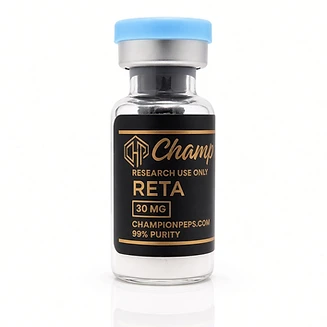
Research use only. Listing a supplier is not an endorsement of any protocol on this site, and nothing sold there is approved for human use.
Related protocols
View allRetatrutide 10mg
Experimental unimolecular triple agonist targeting GLP-1, GIP, and glucagon receptors for metabolic and adiposity research.
View ProtocolRetatrutide 6mg
First-in-class triple agonist peptide targeting GLP-1, GIP, and glucagon receptors for profound metabolic and weight regulation research.
View ProtocolRetatrutide 24mg
Novel triple-hormone receptor agonist studied for metabolic regulation and body weight reduction via GLP-1, GIP, and glucagon pathways.
View Protocol