Tirzepatide 15mg
Dual GLP-1/GIP receptor agonist investigated for substantial glycemic management, food intake suppression, and metabolic body weight modulation.
Mechanism
Engages both GLP-1 and GIP incretin receptors simultaneously to stimulate glucose-mediated insulin secretion, attenuate glucagon output, decelerate gastric digestion, and blunt central appetite signals.
Dosing
Initial research protocols document an introductory exposure of 2.5 mg administered subcutaneously once every 7 days.
Reconstitution
Reconstituting the 15 mg vial with 2.0 mL of bacteriostatic water yields an operational working concentration of 7.5 mg/mL.
Storage
Store the unmixed lyophilized powder at -20°C; following reconstitution, maintain between 2°C and 8°C away from light and utilize within 2 to 4 weeks.
Mix & measure Tirzepatide 15mg
Pre-filled with this protocol's recommended BAC water and documented starting dose — edit any field to run your own numbers.
Mix & measure Tirzepatide 15mg
Vial strength → BAC water → target dose
Total doses in vial: 6.0
U-100 syringe: 100 units = 1 mL
Reconstitution math only — not dosing advice. U-100 syringe: 100 units = 1 mL. Advanced calculator →
Dosing Chart
| Phase / Day(s) | Dose & Frequency | Volume (U-100 units / mL) |
|---|---|---|
| Weeks 1–4 | 2.5 mg once weekly | 33 units (0.33 mL) × 1 injection |
| Weeks 5–8 | 5 mg once weekly | 67 units (0.67 mL) × 1 injection |
| Weeks 9–12 | 7.5 mg once weekly | 100 units (1.0 mL) × 1 injection |
| Weeks 13–16 | 10 mg once weekly | 67 units (0.67 mL) × 2 injections |
Reconstitution Steps
- 1
Aspirate 2.0 mL of sterile bacteriostatic water using a fresh syringe.
- 2
Introduce the diluent slowly down the interior glass wall of the 15 mg vial to avoid agitation and foaming.
- 3
Gently rotate or roll the vial until the lyophilized cake is fully dissolved, strictly avoiding vigorous shaking.
- 4
Record the date of preparation on the vial label and place in refrigerated storage at 2–8 °C protected from light.
Supplies Needed


Peptide Vial
Lyophilized Tirzepatide 15 mg cake for reconstitution


Insulin Syringes (U-100)
Calibrated 1 mL syringes utilized for precise measurement and subcutaneous administration


Bacteriostatic Water
Preserved sterile diluent required to reconstitute the peptide cake


Alcohol Swabs
Disinfecting vial rubber septums and test site barriers prior to access
Why researchers study it
Weight loss & obesity
Blood sugar & glycemic control
Appetite & food intake
Cardiometabolic markers
These describe what is being studied, not proven benefits, approved uses, or promised results.
Overview
Tirzepatide represents a prominent therapeutic candidate within metabolic science, operating as a dual agonist targeting both glucose-dependent insulinotropic polypeptide (GIP) and glucagon-like peptide-1 (GLP-1) pathways. By acting across these dual incretin mechanisms, scientific models observe enhanced beta-cell responsiveness alongside significant delays in gastrointestinal transit time, leading to suppressed energy intake. In extensive preclinical and human clinical study cohorts, this unified receptor activation yields substantial improvements in glycated hemoglobin concentrations and pronounced mass reduction compared to monotherapy incretins. Its engineered pharmacokinetic stability delivers a half-life of roughly six days, enabling researchers to maintain sustained exposure through weekly subcutaneous delivery models. Research environments regularly evaluate graduated escalation schedules to assess systemic tolerance while examining metabolic parameters. The 15 mg lyophilized format provides an adaptable platform for investigators charting low-dose introductory phases up through advanced maintenance endpoints.
References
- 1.SURMOUNT program, New England Journal of Medicine, 2023 — Once-Weekly Tirzepatide for Weight Management (72-week results)
- 2.SURMOUNT obesity trials, JAMA Network, 2023 — Efficacy and safety data (~20% weight loss at 15 mg weekly)
- 3.Phase 2 trial, The Lancet, 2023 — Tirzepatide in type 2 diabetes: weight loss and glycemic outcomes at 36 weeks
- 4.PubMed / NEJM, 2023 — Tirzepatide dosing and tolerability: starting at 2 mg vs 4 mg reduces GI adverse events
- 5.Review, Metabolites (PMC), 2025 — Tirzepatide—A Game Changer in Obesity Pharmacotherapy (mechanism and trials)
- 6.SURMOUNT-1, New England Journal of Medicine, 2022 — Tirzepatide once weekly for the treatment of obesity
- 7.Meta-analysis, PubMed, 2025 — Tirzepatide achieves ~14% greater weight reduction vs placebo with no increase in adverse events
- 8.Molecular Metabolism, 2025 — Preclinical tri-agonist NN1706 (related compound): mechanism and pharmacokinetics
- 9.Nature Reviews Endocrinology, 2024 — Dual GIP/GLP-1 receptor agonists for obesity and diabetes: a clinical landscape review
- 10.Journal of Cachexia, Sarcopenia and Muscle (PMC), 2020 — Protein requirements during weight loss: preserving lean mass
- 11.GenScript Technical Bulletin, 2024 — Peptide Storage and Handling Guidelines for lyophilized and reconstituted peptides
- 12.Bachem Knowledge Center, 2024 — Handling and Storage Guidelines for Peptides: stability and freeze-thaw cycles
- 13.CDC Guidance, 2024 — Vaccine Administration: Subcutaneous Injection technique, angle, and site guidance
- 14.NCBI Bookshelf, 2024 — Injection Administration Best Practices: aseptic technique, sharps disposal, and safety
- 15.PMC Review, 2019 — Pharmacologic Considerations of the Subcutaneous Route: injection technique and site rotation to prevent lipohypertrophy
Supplies Needed
Suggested supplier
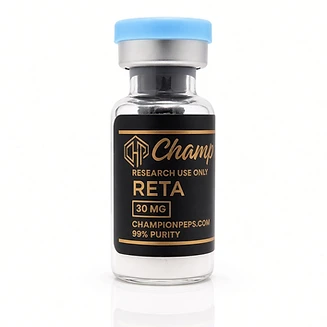
Research use only. Listing a supplier is not an endorsement of any protocol on this site, and nothing sold there is approved for human use.
Related protocols
View allTirzepatide 60mg
Dual GIP and GLP-1 receptor agonist studied for body weight management, insulin sensitivity, and metabolic regulation.
View Protocol5-Amino-1MQ 10mg
Synthetic small-molecule NNMT inhibitor explored in preclinical models for cellular energy balance, NAD+ preservation, and adipocyte metabolism.
View Protocol5-Amino-1MQ 50mg
Small-molecule NNMT inhibitor studied for cellular energy regulation, adipocyte remodeling, and metabolic research.
View Protocol