Oxytocin 10mg
Endogenous nonapeptide neurohormone studied for its impact on social cognition, pair bonding, anxiety pathways, and sexual function.
Mechanism
Selectively binds and activates the G-protein coupled oxytocin receptor (OXTR), stimulating downstream inositol triphosphate pathways to modulate cellular calcium and central neuroendocrine signalling.
Dosing
Standard experimental protocols begin with a conservative dose of 100 mcg administered once daily.
Reconstitution
Reconstituting a 10 mg vial with 3.0 mL of bacteriostatic water results in a final working concentration of approximately 3.33 mg/mL (3,333 mcg/mL).
Storage
Store the unmixed lyophilized powder frozen at -20 °C, and preserve the reconstituted liquid under refrigeration at 2–8 °C without freezing.
Mix & measure Oxytocin 10mg
Pre-filled with this protocol's recommended BAC water and documented starting dose — edit any field to run your own numbers.
Mix & measure Oxytocin 10mg
Vial strength → BAC water → target dose
Total doses in vial: 100.0
U-100 syringe: 100 units = 1 mL
Reconstitution math only — not dosing advice. U-100 syringe: 100 units = 1 mL. Advanced calculator →
Dosing Chart
| Phase / Day(s) | Dose & Frequency | Volume (U-100 units / mL) |
|---|---|---|
| Weeks 1–2 | 100 mcg (1× daily) | 3 units (0.03 mL) |
| Weeks 3–4 | 200 mcg (1× daily) | 6 units (0.06 mL) |
| Weeks 5–6 | 300 mcg (1× daily) | 9 units (0.09 mL) |
| Weeks 7–8 | 400 mcg (1× daily) | 12 units (0.12 mL) |
| Weeks 9–12 | 500 mcg (1× daily) | 15 units (0.15 mL) |
Reconstitution Steps
- 1
Aspirate 3.0 mL of bacteriostatic water using a sterile syringe.
- 2
Introduce the diluent slowly against the inside glass wall of the vial to minimize agitation and foaming.
- 3
Gently swirl and rotate the vial until the lyophilized cake is fully dissolved, avoiding shaking.
- 4
Label the vial with the preparation date and maintain in refrigerated storage at 2–8 °C protected from light.
Supplies Needed


Peptide Vial
Oxytocin 10 mg lyophilized powder supply for research protocol duration


Insulin Syringes (U-100)
0.5 mL or 1.0 mL U-100 syringes for precise measurement of low microgram volumes


Bacteriostatic Water
Sterile diluent containing 0.9% benzyl alcohol used to reconstitute the peptide


Alcohol Swabs
70% isopropyl alcohol pads used for sanitizing vial septa and injection surfaces
Why researchers study it
Social bonding & trust
Anxiety & stress response
Libido & sexual function
Social cognition & autism
These describe what is being studied, not proven benefits, approved uses, or promised results.
Overview
Oxytocin is an endogenous cyclic nonapeptide produced within the paraventricular and supraoptic nuclei of the hypothalamus and stored in the posterior pituitary gland. Classically recognized for its role in mammalian obstetrics and lactation, oxytocin acts primarily through the oxytocin receptor (OXTR), a G-protein-coupled receptor broadly expressed across both peripheral tissues and specific neural circuits. In clinical medicine, regulated preparations are strictly approved for intravenous or intramuscular induction of labor and control of postpartum hemorrhage. In preclinical and experimental settings, investigational research has concentrated on oxytocin's influence as a central neuromodulator affecting complex behaviors. Investigators study its downstream interactions with mesolimbic dopamine networks, serotonin transmission, and the hypothalamic-pituitary-adrenal (HPA) axis, examining how receptor agonism modulates trust, anxiety modulation, and social recognition. While experimental models explore various delivery pathways, peripheral pharmacokinetics are characterized by rapid clearance and minimal permeability across the blood-brain barrier. Research protocols employing subcutaneous routes generally evaluate acute peripheral tolerability and systemic biological interactions. Because commercial research-grade oxytocin is intended strictly for in vitro and non-human laboratory experimentation, protocols utilize careful titration matrices to systematically monitor receptor activity while mitigating non-target smooth muscle stimulation.
References
- 1.StatPearls / NCBI Bookshelf, 2023 — Oxytocin nonapeptide physiology, OXTR signalling, and obstetric mechanics
- 2.Psychoneuroendocrinology, 2020 — Overview of oxytocin modulation of social behaviour and bonding
- 3.Clinical Pharmacokinetics, 2018 — Pharmacokinetic profile and short half-life parameters of exogenous oxytocin
- 4.Journal of Neuroendocrinology, 2019 — Bioavailability and dosing route comparisons in neuroendocrine models
- 5.Sikich et al., NEJM, 2021 — SOARS-B randomized trial evaluating intranasal oxytocin on social function in autism
- 6.Frontiers in Neuroscience, 2021 — Oxytocin interaction with HPA stress reactivity and reward pathways
- 7.Neuropsychopharmacology, 2020 — Investigation into blood-brain barrier penetration limitations of peripheral peptides
Supplies Needed
Suggested supplier
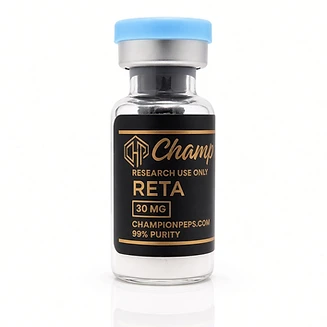
Research use only. Listing a supplier is not an endorsement of any protocol on this site, and nothing sold there is approved for human use.
Related protocols
View allSemaglutide 5mg
Synthetic GLP-1 receptor agonist studied for glycemic regulation, delayed gastric motility, and metabolic weight management pathways.
View ProtocolFOXO4-DRI 10mg
FOXO4-DRI is an investigational D-retro-inverso peptide researched as a senolytic targeting p53 interactions in non-viable cells.
View ProtocolGHRP-2 10mg
A synthetic hexapeptide ghrelin receptor agonist investigated for eliciting pulsatile growth hormone and IGF-1 secretion.
View Protocol