Semaglutide 5mg
Synthetic GLP-1 receptor agonist studied for glycemic regulation, delayed gastric motility, and metabolic weight management pathways.
Mechanism
Selective glucagon-like peptide-1 (GLP-1) receptor agonist that stimulates glucose-dependent insulin release, downregulates glucagon secretion, and slows gastric motility.
Dosing
Standard laboratory titration starts at 0.25 mg administered once weekly.
Reconstitution
Add 2.0 mL bacteriostatic water to achieve a working concentration of 2.5 mg/mL.
Storage
Lyophilized: −20 °C; reconstituted: refrigerate 2–8 °C.
Mix & measure Semaglutide 5mg
Pre-filled with this protocol's recommended BAC water and documented starting dose — edit any field to run your own numbers.
Mix & measure Semaglutide 5mg
Vial strength → BAC water → target dose
Total doses in vial: 20.0
U-100 syringe: 100 units = 1 mL
Reconstitution math only — not dosing advice. U-100 syringe: 100 units = 1 mL. Advanced calculator →
Dosing Chart
| Phase / Day(s) | Dose & Frequency | Volume (U-100 units / mL) |
|---|---|---|
| Weeks 1–4 (Initiation) | 0.25 mg once weekly | 10 units (0.10 mL) |
| Weeks 5–8 (Step-up) | 0.50 mg once weekly | 20 units (0.20 mL) |
| Weeks 9–12 (Titration) | 1.00 mg once weekly | 40 units (0.40 mL) |
| Weeks 13+ (Target/Maintenance) | 1.70–2.40 mg once weekly | 68–96 units (0.68–0.96 mL) |
Reconstitution Steps
- 1
Remove the lyophilized 5 mg semaglutide vial from −20 °C storage and allow it to equilibrate to room temperature for 15–20 minutes.
- 2
Sterilize the rubber stoppers of both the semaglutide vial and bacteriostatic water vial using fresh alcohol swabs.
- 3
Draw exactly 2.0 mL of bacteriostatic water into a clean reconstitution syringe.
- 4
Insert the needle at an angle and slowly inject the diluent down the inner glass wall of the vial to minimize shearing and frothing.
- 5
Gently swirl or roll the vial between the palms until the lyophilized powder is completely dissolved into a clear solution; do not shake vigorously.
- 6
Affix a laboratory label indicating the final concentration (2.5 mg/mL) and reconstitution date, then store the solution in refrigerated conditions at 2–8 °C.
Supplies Needed


Peptide Vial
Provides 5 mg of lyophilized semaglutide cake for laboratory reconstitution, sufficient for multiple research doses depending on the study phase.


Insulin Syringes (U-100)
Utilized for precise volumetric withdrawal and dosing, requiring 1 syringe per administration event (e.g., 4 syringes for a 4-week 0.25 mg phase).


Bacteriostatic Water
Serves as the sterile, preserved reconstituting diluent, requiring 2.0 mL per 5 mg vial to yield a 2.5 mg/mL concentration.


Alcohol Swabs
Used to maintain aseptic laboratory technique on vial septa and injection surfaces, typically requiring 2 swabs per dosing session.
Why researchers study it
Weight management
Glycemic control
Appetite suppression
Cardiovascular research
These describe what is being studied, not proven benefits, approved uses, or promised results.
Overview
Semaglutide is a modified peptide analogue of native human glucagon-like peptide-1 (GLP-1), synthesized to evaluate metabolic signaling pathways. Its primary structural engineering incorporates an amino acid substitution at position 8 to prevent cleavage by dipeptidyl peptidase-4 (DPP-4), alongside a C18 diacid fatty-acid chain linked via a hydrophilic spacer that enhances non-covalent binding to serum albumin. These chemical alterations dramatically extend its biological half-life compared to endogenous incretin peptides, making it a critical research tool for long-duration receptor stimulation studies. At the receptor level, semaglutide stimulates the GLP-1 receptor to potentiate glucose-dependent insulin secretion from pancreatic beta cells while concurrently repressing glucagon output from alpha cells. In addition to endocrine signaling within the pancreas, research indicates central nervous system interaction, particularly within hypothalamic and hindbrain nuclei governing appetite and satiety cascades. In experimental animal and translational human trials, this pathway triggers downstream delays in gastric motility, resulting in pronounced alterations in energy balance and nutrient absorption dynamics. Broadly investigated under multicenter clinical development programs such as SUSTAIN, PIONEER, and STEP, semaglutide serves as an established benchmark in investigations covering type 2 diabetes pathology, adiposity modulation, and cardiovascular risk factor reductions. Ongoing pre-clinical and translational inquiries continue to evaluate its multi-organ impact across hepatic steatosis, vascular endothelial biology, and chronic renal preservation.
References
- 1.Wilding et al., N Engl J Med, 2021 — Once-weekly semaglutide in adults with overweight or obesity (STEP 1)
- 2.Marso et al., N Engl J Med, 2016 — Semaglutide and cardiovascular outcomes in patients with type 2 diabetes (SUSTAIN-6)
- 3.Lincoff et al., N Engl J Med, 2023 — Semaglutide and cardiovascular outcomes in obesity without diabetes (SELECT)
- 4.Davies et al., Lancet, 2021 — Efficacy and safety of once-weekly semaglutide versus placebo in people with type 2 diabetes and overweight or obesity (STEP 2)
Supplies Needed
Suggested supplier
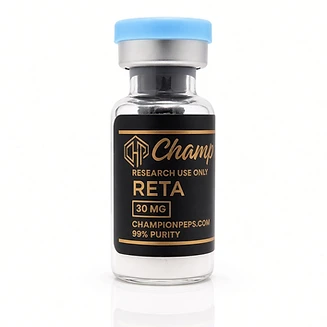
Research use only. Listing a supplier is not an endorsement of any protocol on this site, and nothing sold there is approved for human use.
Related protocols
View allFOXO4-DRI 10mg
FOXO4-DRI is an investigational D-retro-inverso peptide researched as a senolytic targeting p53 interactions in non-viable cells.
View ProtocolGHRP-2 10mg
A synthetic hexapeptide ghrelin receptor agonist investigated for eliciting pulsatile growth hormone and IGF-1 secretion.
View ProtocolSLU-PP-332 5mg
Preclinical synthetic pan-ERR agonist studied as an exercise mimetic for mitochondrial oxidation and metabolic regulation.
View Protocol