Adamax 10mg
Adamax is an adamantane-modified Semax analog investigated in neurobiology models for cognitive enhancement and BDNF upregulation.
Mechanism
Adamax is hypothesized to upregulate BDNF expression and TrkB signaling pathways while modulating central monoaminergic transmission to promote neuroprotection and synaptic plasticity.
Dosing
Standard laboratory protocols document an initial starting dose of 300 mcg administered subcutaneously once daily during the initial two-week observation period.
Reconstitution
Reconstituting a 10 mg vial with 3.0 mL of bacteriostatic water produces a final solution concentration of approximately 3.33 mg/mL (33.3 mcg per U-100 unit).
Storage
Store the lyophilized peptide at -20 °C in a dry environment, and maintain reconstituted solutions refrigerated between 2 °C and 8 °C without refreezing.
Mix & measure Adamax 10mg
Pre-filled with this protocol's recommended BAC water and documented starting dose — edit any field to run your own numbers.
Mix & measure Adamax 10mg
Vial strength → BAC water → target dose
Common vial sizes
Label claim
Total doses in vial: 33.3
U-100 syringe: 100 units = 1 mL
Need supplies for this protocol?
Research-grade peptides, fast shipping, competitive pricing
Reconstitution math only — not dosing advice. U-100 syringe: 100 units = 1 mL. Advanced calculator →
Track my protocol
Log each dose, build a streak, and watch your progress through this protocol's schedule.
Dosing Chart
| Phase / Day(s) | Dose & Frequency | Volume (U-100 units / mL) |
|---|---|---|
| Weeks 1–2 | 300 mcg (1× daily) | 9 units (0.09 mL) |
| Weeks 3–4 | 500 mcg (1× daily) | 15 units (0.15 mL) |
| Weeks 5–6 | 750 mcg (1× daily) | 22.5 units (0.225 mL) |
| Weeks 7–8 | 1000 mcg (1× daily) | 30 units (0.30 mL) |
Reconstitution Steps
- 1
Draw 3.0 mL of bacteriostatic water into a sterile syringe.
- 2
Inject the bacteriostatic water slowly down the interior wall of the vial to minimize foaming.
- 3
Gently swirl or roll the vial until the lyophilized powder is completely dissolved, avoiding vigorous shaking.
- 4
Record the date and resulting concentration on the vial label.
- 5
Store immediately in a refrigerator at 2–8 °C (35.6–46.4 °F) protected from light.
Supplies Needed


Peptide Vial
Adamax 10 mg lyophilized powder vial for experimental preparation


Insulin Syringes (U-100)
1 mL U-100 syringes used to measure precise micro-volume doses (1 unit = ~33.3 mcg)


Bacteriostatic Water
Reconstitution diluent containing 0.9% benzyl alcohol, adding 3.0 mL per vial


Alcohol Swabs
Antiseptic wipes used to sanitize the vial rubber stopper and injection sites
Why researchers study it
Cognitive enhancement and memory acquisition
Neuronal protection against ischemic and oxidative stress
BDNF and TrkB signaling pathway modulation
Attentional focus and mental stamina evaluation
Stress resilience and monoamine system interaction
These describe what is being studied, not proven benefits, approved uses, or promised results.
Overview
Adamax represents an experimental analog derived from the synthetic heptapeptide Semax, which itself originates from an ACTH(4-10) fragment. By attaching an adamantane moiety to the terminal structure, researchers aim to increase lipophilicity and molecular stability, theoretically facilitating improved penetration across the blood-brain barrier. The compound remains strictly an experimental research peptide without clinical approvals from global regulatory authorities. Preclinical interest centers largely on the modulation of central nervous system targets, including brain-derived neurotrophic factor (BDNF) expression and TrkB receptor activation. Investigations examine its prospective capacity to bolster synaptic plasticity, enhance mental stamina, and shield neuronal architectures against oxidative and ischemic insults. Outside of specialized laboratory settings and early biochemical papers, robust human trial data regarding Adamax specifically remain absent. In laboratory protocols, handling requires precise reconstitution practices to avoid degradation of the peptide sequence. Although related regulatory-approved compounds in Eastern Europe were traditionally evaluated via nasal administration, published research sequences frequently reference subcutaneous administration schedules using standard insulin syringe increments.
References
- 1.Journal of Neurochemistry — Semax increases BDNF protein and modulates TrkB signalling in rat brain
- 2.Neuroscience and Behavioral Physiology — BDNF and TrkB modulation by ACTH analogs
- 3.Bulletin of Experimental Biology and Medicine — Semax improves learning and memory in animal models
Supplies Needed
Suggested supplier
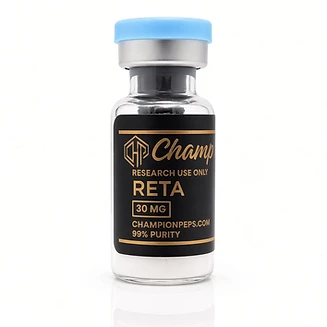
Research use only. Listing a supplier is not an endorsement of any protocol on this site, and nothing sold there is approved for human use.
Related protocols
View allOrforglipron 6mg
An oral, non-peptide GLP-1 receptor agonist studied for daily metabolic regulation and body-weight management without injection.
View ProtocolVK2735 10mg
Investigational dual GIP and GLP-1 receptor agonist studied for significant dose-dependent weight loss and metabolic regulation.
View ProtocolCagrilintide 5mg
Synthetic, long-acting dual amylin and calcitonin receptor agonist under investigation for metabolic regulation and weight reduction.
View Protocol