Ovagen 20mg
Synthetic tripeptide bioregulator (EDL) studied for hepatocyte function and digestive system cellular modulation in laboratory models.
Mechanism
Hypothesized to directly interact with complementary DNA sequences to modulate tissue-specific gene expression and support cellular homeostasis in hepatic and gastrointestinal tissues.
Dosing
Standard laboratory regimens document a starting dosage of 800 mcg administered once daily, titrating progressively over the course of study.
Reconstitution
Reconstituting a 20 mg vial with 3.0 mL of bacteriostatic water produces a final concentration of approximately 6.67 mg/mL (6,667 mcg/mL).
Storage
Store lyophilized vials frozen at -20 °C protected from moisture, and keep the reconstituted solution refrigerated between 2 °C and 8 °C for up to 28 days without freezing.
Mix & measure Ovagen 20mg
Pre-filled with this protocol's recommended BAC water and documented starting dose — edit any field to run your own numbers.
Mix & measure Ovagen 20mg
Vial strength → BAC water → target dose
Common vial sizes
Label claim
Total doses in vial: 25.0
U-100 syringe: 100 units = 1 mL
Need supplies for this protocol?
Research-grade peptides, fast shipping, competitive pricing
Reconstitution math only — not dosing advice. U-100 syringe: 100 units = 1 mL. Advanced calculator →
Track my protocol
Log each dose, build a streak, and watch your progress through this protocol's schedule.
Dosing Chart
| Phase / Day(s) | Dose & Frequency | Volume (U-100 units / mL) |
|---|---|---|
| Weeks 1–2 | 800 mcg (1× daily) | ~12 units (0.12 mL) |
| Weeks 3–4 | 1,200 mcg (1× daily) | ~18 units (0.18 mL) |
| Weeks 5–6 | 1,600 mcg (1× daily) | ~24 units (0.24 mL) |
| Weeks 7–12 | 2,000 mcg (1× daily) | ~30 units (0.30 mL) |
Reconstitution Steps
- 1
Aseptically draw 3.0 mL of bacteriostatic water into a sterile syringe.
- 2
Slowly dispense the liquid down the inner glass wall of the Ovagen vial to avoid agitation and foaming.
- 3
Gently rotate or roll the vial between your palms until the lyophilized powder is entirely dissolved without shaking.
- 4
Record the date and concentration on the vial label, then place in refrigerated storage at 2–8 °C away from light.
Supplies Needed


Peptide Vial
Lyophilized Ovagen (20 mg) for research administration.


Insulin Syringes (U-100)
Calibrated 1 mL syringes for precise volume extraction and measurement.


Bacteriostatic Water
3.0 mL per vial to achieve the recommended working dilution.


Alcohol Swabs
Sterilizing the rubber vial stopper and the intended administration site.
Why researchers study it
Hepatic cellular function and tissue resilience
Gastrointestinal tract cellular regulation
Peptide-mediated tissue repair mechanisms
Bioregulatory pathways in cellular aging models
These describe what is being studied, not proven benefits, approved uses, or promised results.
Overview
Ovagen is a synthetic short-chain bioregulator composed of the tripeptide sequence glutamic acid, aspartic acid, and leucine (Glu-Asp-Leu or EDL). Developed as part of the Khavinson peptide model, it is designed to target visceral tissues, with primary research emphasis placed on hepatic parenchyma and gastrointestinal mucosal cells. In preclinical laboratory investigations, researchers analyze the peptide for potential tissue-specific cellular interactions and its capacity to modulate basic transcriptional processes. Current scientific documentation originates almost exclusively from specialized bioregulator research groups, meaning the compound remains investigational and lacks regulatory confirmation in human clinical trials. It is essential to distinguish this synthetic tripeptide bioregulator from veterinary formulations that share a similar trade name used for mammalian ovulation synchronization. This protocol addresses exclusively the synthetic peptide intended for controlled in vitro and in vivo scientific evaluation.
References
- 1.Khavinson et al., PubMed, 2020 — Overview of Khavinson short-peptide bioregulators and proposed peptide-DNA interactions
- 2.Khavinson et al., PubMed, 2014 — Structural and functional analysis of Glu-Asp-Leu (EDL) peptide activity in hepatic models
- 3.Khavinson et al., PubMed, 2017 — Review of synthetic peptide bioregulators and standard course protocols
Supplies Needed
Suggested supplier
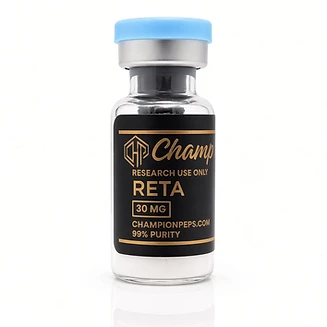
Research use only. Listing a supplier is not an endorsement of any protocol on this site, and nothing sold there is approved for human use.
Related protocols
View allTB-500 10mg
Synthetic fragment of Thymosin Beta-4 evaluated in preclinical models for actin regulation, wound healing, and soft-tissue repair.
View ProtocolPemvidutide 5mg
Investigational GLP-1/glucagon dual agonist evaluated in clinical models for targeted hepatic fat clearance and metabolic regulation.
View ProtocolSermorelin 10mg
A truncated synthetic GHRH analog studied for its ability to stimulate endogenous pituitary growth hormone secretion in nightly research protocols.
View Protocol