GHRP-6 10mg
A synthetic hexapeptide growth hormone secretagogue and ghrelin receptor agonist investigated for appetite and pulsatile somatotropin release.
Mechanism
GHRP-6 binds and activates the ghrelin receptor (GHS-R1a) within the pituitary and hypothalamus, triggering pulsatile growth hormone secretion while suppressing somatostatinergic inhibition.
Dosing
Standard experimental protocols initiate administration at 100 mcg delivered one to three times daily on an empty stomach.
Reconstitution
Reconstitution of a 10 mg vial with 3.0 mL of bacteriostatic water achieves a final working concentration of approximately 3.33 mg/mL (33.3 mcg per U-100 unit).
Storage
Store the unmixed lyophilized vial at -20 °C protected from light, and maintain the reconstituted liquid at 2–8 °C without freezing for up to 28 days.
Mix & measure GHRP-6 10mg
Pre-filled with this protocol's recommended BAC water and documented starting dose — edit any field to run your own numbers.
Mix & measure GHRP-6 10mg
Vial strength → BAC water → target dose
Common vial sizes
Label claim
Total doses in vial: 100.0
U-100 syringe: 100 units = 1 mL
Need supplies for this protocol?
Research-grade peptides, fast shipping, competitive pricing
Reconstitution math only — not dosing advice. U-100 syringe: 100 units = 1 mL. Advanced calculator →
Track my protocol
Log each dose, build a streak, and watch your progress through this protocol's schedule.
Dosing Chart
| Phase / Day(s) | Dose & Frequency | Volume (U-100 units / mL) |
|---|---|---|
| Weeks 1–2 | 100 mcg (1–3× daily) | ~3 units (0.03 mL) |
| Weeks 3–4 | 200 mcg (1–3× daily) | ~6 units (0.06 mL) |
| Weeks 5–12 | 300 mcg (1–3× daily) | ~9 units (0.09 mL) |
Reconstitution Steps
- 1
Draw exactly 3.0 mL of bacteriostatic water into a sterile mixing syringe.
- 2
Introduce the diluent slowly along the inner glass wall of the 10 mg GHRP-6 vial to avoid excessive agitative foaming.
- 3
Gently swirl and roll the vial between palms until all lyophilized powder is completely dissolved, avoiding vigorous shaking.
- 4
Affix a label indicating the reconstitution date and working concentration (~3.33 mg/mL), then transfer immediately to refrigerated storage at 2–8 °C away from light.
Supplies Needed


Peptide Vial
Contains 10 mg of lyophilized GHRP-6 powder for experimental dilution.


Insulin Syringes (U-100)
Calibrated 1 mL syringes used to accurately draw and dispense micro-volume doses.


Bacteriostatic Water
Sterile multi-dose diluent containing 0.9% benzyl alcohol used to reconstitute the peptide cake.


Alcohol Swabs
Antiseptic prep pads used to sanitize the vial rubber septum and experimental contact points prior to entry.
Why researchers study it
Appetite stimulation and orexigenic signaling pathways
Pulsatile growth hormone and IGF-1 axis modulation
Preclinical tissue repair and cellular recovery dynamics
Experimental cardioprotection and cytoprotective mechanisms
These describe what is being studied, not proven benefits, approved uses, or promised results.
Overview
GHRP-6 (Growth Hormone Releasing Peptide-6) is a first-generation synthetic hexapeptide that selectively interacts with the growth hormone secretagogue receptor (GHS-R1a), which also serves as the endogenous receptor for ghrelin. Through this signaling cascade, it stimulates the anterior pituitary gland to release episodic pulses of somatotropin while concomitantly suppressing the inhibitory feedback of somatostatin. Due to its potent affinity for ghrelin pathways, experimental models frequently demonstrate rapid and noticeable increases in orexigenic activity alongside downstream endocrine shifts. In investigative laboratory protocols, the compound is noted for exhibiting a distinct ceiling effect, where single administrations beyond approximately 100 mcg yield diminishing returns in growth hormone output while potentially increasing minor off-target elevations in prolactin and cortisol. Most current preclinical evaluations center on short-course somatotropic pulsatility, systemic tissue repair kinetics, and cytoprotection rather than persistent long-term elevation. As with all investigational peptides, it is strictly intended for laboratory experimentation and in vitro or animal models rather than clinical therapeutics.
References
- 1.Endocrinology, PubMed — Pharmacology of GHRP-6 as a growth-hormone-releasing peptide acting at the ghrelin/GHS-R1a receptor
- 2.Journal of Clinical Endocrinology & Metabolism, PubMed — GHRP-6 stimulates growth-hormone secretion via the ghrelin receptor in human subjects
- 3.WADA Scientific Research — Appetite stimulation and dose-response of GH-releasing peptides such as GHRP-6
- 4.Growth Hormone & IGF Research, PubMed — GH-response plateau and dosing characteristics of GH secretagogues including GHRP-6
- 5.Journal of Endocrinology, PubMed — GHRP-6 induces growth-hormone release in preclinical models via the GHS receptor
- 6.Peptides, PubMed — Structure and GH-releasing activity of GHRP-6 and related ghrelin-receptor agonists
- 7.Clinical Endocrinology, PubMed — GHRP-6 effects on cortisol, prolactin and appetite alongside the growth-hormone pulse
- 8.European Journal of Endocrinology, PubMed — Dose-response of GHRP-6 showing the growth-hormone plateau near ~100 mcg per dose
Supplies Needed
Suggested supplier
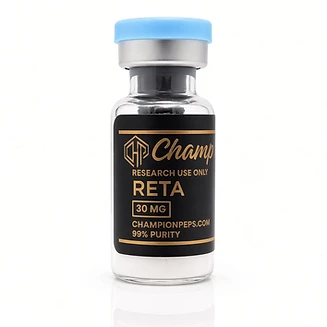
Research use only. Listing a supplier is not an endorsement of any protocol on this site, and nothing sold there is approved for human use.
Related protocols
View allCagrilintide + Semaglutide 10mg
Investigational dual amylin analog and GLP-1 receptor agonist peptide blend modeled after clinical trials in metabolic research.
View ProtocolLiraglutide 10mg
A long-acting GLP-1 receptor agonist investigated in metabolic research models for appetite regulation, glycemic control, and weight loss.
View ProtocolPemvidutide 5mg
Investigational GLP-1/glucagon dual agonist evaluated in clinical models for targeted hepatic fat clearance and metabolic regulation.
View Protocol