Cagrilintide + Semaglutide 10mg
Investigational dual amylin analog and GLP-1 receptor agonist peptide blend modeled after clinical trials in metabolic research.
Mechanism
Engages dual neuroendocrine pathways by combining GLP-1 receptor-mediated insulinotropic signaling with amylin receptor-mediated central satiety and delayed gastric emptying.
Dosing
Standard research titration protocols initiate at a documented starting dose of 0.25 mg of aggregate blend administered once weekly.
Reconstitution
Reconstituting a 10 mg blend vial with 3.0 mL of bacteriostatic water yields an approximate working concentration of 3.33 mg/mL of total peptide.
Storage
Store the unmixed lyophilized vial at -20 °C protected from moisture and light, and maintain the reconstituted liquid at 2–8 °C for up to 28 days without freezing.
Mix & measure Cagrilintide + Semaglutide 10mg
Pre-filled with this protocol's recommended BAC water and documented starting dose — edit any field to run your own numbers.
Mix & measure Cagrilintide + Semaglutide 10mg
Vial strength → BAC water → target dose
Total doses in vial: 40.0
U-100 syringe: 100 units = 1 mL
Reconstitution math only — not dosing advice. U-100 syringe: 100 units = 1 mL. Advanced calculator →
Dosing Chart
| Phase / Day(s) | Dose & Frequency | Volume (U-100 units / mL) |
|---|---|---|
| Weeks 1–4 | 0.25 mg total blend (1× weekly) | ~7.5 units (0.075 mL) |
| Weeks 5–8 | 0.5 mg total blend (1× weekly) | ~15 units (0.15 mL) |
| Weeks 9–12 | 1.0 mg total blend (1× weekly) | ~30 units (0.30 mL) |
| Weeks 13–16 | 1.7 mg total blend (1× weekly) | ~51 units (0.51 mL) |
| Week 17+ (Maintenance) | 2.4 mg total blend (1× weekly) | ~72 units (0.72 mL) |
Reconstitution Steps
- 1
Draw 3.0 mL of sterile bacteriostatic water into a clean reconstitution syringe.
- 2
Introduce the fluid gradually along the inner glass surface of the vial to minimize excessive agitation and frothing.
- 3
Gently roll or invert the vial until the lyophilized cake is fully dissolved, strictly avoiding vigorous shaking.
- 4
Clearly label the vial with the preparation date and resulting concentration (~3.33 mg/mL), and transfer immediately to dark refrigeration at 2–8 °C.
Supplies Needed


Peptide Vial
Supplies 10 mg of combined lyophilized Cagrilintide and Semaglutide research blend.


Insulin Syringes (U-100)
Utilized for measuring precise fractional-volume subcutaneous doses on a weekly schedule.


Bacteriostatic Water
Provides 3.0 mL of sterile preserved diluent required to reconstitute the peptide cake.


Alcohol Swabs
Employed to sanitize the vial rubber stopper and test injection sites prior to administration.
Why researchers study it
Weight loss / obesity
Appetite & satiety
Glycemic control
Fat metabolism / body composition
These describe what is being studied, not proven benefits, approved uses, or promised results.
Overview
Cagrilintide and Semaglutide is an experimental peptide blend designed to evaluate the concurrent activation of distinct neuroendocrine pathways involved in metabolic homeostasis. Semaglutide functions as an acylated glucagon-like peptide-1 (GLP-1) receptor agonist that promotes glucose-dependent insulin secretion, inhibits inappropriate glucagon release, and reduces appetite signaling. Concurrently, cagrilintide acts as a stable, long-acting analog of human amylin, an islet hormone co-secreted with insulin that regulates postprandial glycemic excursions and delays gastric emptying via independent central circuits. In preclinical and translational investigations, combining an amylin analog with an incretin mimetic has demonstrated complementary and synergistic actions on central satiety centers, including the area postrema and the arcuate nucleus. While pharmaceutical formulations of this pairing (known generically as CagriSema) remain under active clinical investigation for severe obesity and glycemic dysregulation, research-grade blended vials supply the two agents together at an aggregate mass without disclosing individual component ratios. Because the vial consists of an undivided combined total mass, researchers typically calibrate experimental titrations relative to the aggregate milligrams of the blended solution. Laboratory investigations aim to determine how this concurrent dual-agonist receptor engagement impacts overall metabolic rate, lipolysis, caloric intake moderation, and lean-to-fat mass preservation relative to GLP-1 receptor mono-agonism alone.
References
- 1.FDA, Prescribing Information, 2021 — Wegovy (semaglutide) chronic weight management labeling
- 2.Wilding et al., NEJM, 2021 — Semaglutide and Weight Loss (STEP trials)
- 3.Lau et al., The Lancet, 2021 — Cagrilintide, a long-acting amylin analogue for weight management
- 4.Novo Nordisk, Trials, 2023 — CagriSema investigational combination data
- 5.Enebo et al., The Lancet, 2023 — CagriSema weight-loss outcomes and trial efficacy
- 6.DeBlock et al., Diabetes Obes Metab, 2022 — Dual GLP-1 and amylin agonism mechanisms
Supplies Needed
Suggested supplier
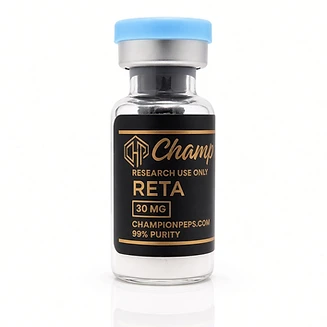
Research use only. Listing a supplier is not an endorsement of any protocol on this site, and nothing sold there is approved for human use.
Related protocols
View allCJC-1295 NO DAC 5mg
Short-acting synthetic GHRH analog engineered to stimulate physiological, pulsatile growth hormone secretion in laboratory models.
View ProtocolFollistatin-344 1mg
Recombinant glycoprotein studied for myostatin inhibition, ActRIIB pathway modulation, and muscle hypertrophy in preclinical models.
View ProtocolPalmitoyl Tripeptide-5 200mg
Topical synthetic lipopeptide studied for collagen stimulation via thrombospondin-1 mimicry, utilized in cosmetic formulation research.
View Protocol