Endoluten 20mg
An oral animal-derived pineal bioregulator peptide complex studied for pineal gland support, circadian rhythm, and longevity pathways.
Mechanism
Proposed to act via tissue-specific epigenetic signaling wherein short pineal peptide fractions modulate nuclear gene transcription to support pineal cellular function and circadian melatonin homeostasis.
Dosing
Standard laboratory protocols evaluate an initial oral dose of 20 mg (1 capsule) administered daily over a discrete 10-to-30-day course.
Reconstitution
As an oral encapsulated peptide complex, Endoluten requires no reconstitution or diluent addition prior to research administration.
Storage
Store sealed capsules at controlled room temperature in a dry, cool location protected from moisture and direct light.
Mix & measure Endoluten 20mg
Pre-filled with this protocol's recommended BAC water and documented starting dose — edit any field to run your own numbers.
Mix & measure Endoluten 20mg
Vial strength → BAC water → target dose
Total doses in vial: —
U-100 syringe: 100 units = 1 mL
Reconstitution math only — not dosing advice. U-100 syringe: 100 units = 1 mL. Advanced calculator →
Dosing Chart
| Phase / Day(s) | Dose & Frequency | Volume (U-100 units / mL) |
|---|---|---|
| Initial Course (Days 1–10) | 20 mg once daily | N/A (Oral 1 capsule) |
| Extended Course (Days 11–30) | 20–40 mg once daily | N/A (Oral 1–2 capsules) |
| Repeat Cycle (After 3–6 months) | 20–40 mg daily for 10–30 days | N/A (Oral 1–2 capsules) |
Reconstitution Steps
- 1
Verify the intact packaging and capsule integrity of the Endoluten research supply.
- 2
Determine the total targeted milligram amount required for the experimental evaluation period.
- 3
Bypass liquid reconstitution procedures entirely, as oral peptide complexes do not utilize bacteriostatic diluents.
- 4
Administer the pre-measured dry capsule whole using laboratory grade water.
- 5
Re-seal the primary supply container immediately to prevent atmospheric humidity exposure.
Supplies Needed


Peptide Vial
Supplies the standardized 20 mg oral pineal peptide complex capsules for study.


Insulin Syringes (U-100)
Not required for oral peptide bioregulator administration protocols.


Bacteriostatic Water
Not required as the encapsulated compound is formulated for dry oral delivery.


Alcohol Swabs
Used to maintain sanitary surface conditions during sample handling and preparation.
Why researchers study it
Circadian rhythm and endogenous melatonin modulation
Pineal gland cellular maintenance and functional recovery
Geroprotection and biological aging pathways
Comparative analysis against synthetic pineal analogs like Epitalon
These describe what is being studied, not proven benefits, approved uses, or promised results.
Overview
Endoluten is a natural peptide bioregulator belonging to the Cytomax family, developed under the peptide geroprotection paradigm pioneered by V. Kh. Khavinson. Purified from juvenile animal pineal gland tissue, it represents a proprietary, organ-specific peptide mixture rather than a singular synthesized amino acid sequence. Within biological research, tissue-extracted bioregulators are investigated for their theoretical capacity to interact with cellular chromatin and modulate tissue-specific protein expression. Scientific interest in Endoluten largely mirrors the empirical literature surrounding defined pineal analogs, namely the calf-derived extract Epithalamin and the synthetic tetrapeptide Epitalon. These benchmark preparations have shown measurable influence over nocturnal melatonin secretion, oxidative stress reduction, and systemic endocrine balance in preclinical models. In contrast, Endoluten itself is primarily distributed as an oral parapharmaceutical, with literature predominantly restricted to regional, open-label investigations. In experimental and observational models, Endoluten is administered orally across distinct cyclical intervals rather than through continuous exposure. Because it functions as an unrefined biological complex without Western regulatory clearance as an active pharmaceutical ingredient, contemporary research prioritizes verifying composition integrity, comparative bioequivalence against pure synthetic peptides, and the boundaries of oral peptide bioavailability.
References
- 1.Khavinson, Neuroendocrinology Letters, 2002 — Peptides and Ageing
- 2.Anisimov et al., Mechanisms of Ageing and Development, 1998 — Pineal peptide preparation Epithalamin increases the lifespan of fruit flies, mice and rats
- 3.Khavinson et al., Advances in Gerontology, 2013 — Peptide bioregulators: a new class of geroprotectors (clinical studies results)
- 4.Khavinson et al., Molecules, 2020 — Peptides: prospects for use in the treatment of COVID-19
Supplies Needed
Suggested supplier
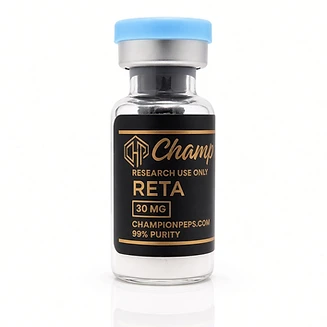
Research use only. Listing a supplier is not an endorsement of any protocol on this site, and nothing sold there is approved for human use.
Related protocols
View allGHK-Cu 100mg
Naturally occurring copper tripeptide studied for extracellular matrix remodeling, collagen synthesis, and tissue regeneration.
View ProtocolCrystagen 20mg
Synthetic tripeptide bioregulator (Glu-Asp-Pro) studied in Khavinson models for immune system modulation and cellular gene expression.
View ProtocolHCG 5000 IU
Human chorionic gonadotropin acts as an LH mimetic to support testicular Leydig cell function, spermatogenesis, and hormonal regulation.
View Protocol