Tesofensine 0.5mg
An investigational oral triple monoamine reuptake inhibitor researched in Phase II clinical trials for weight regulation and appetite suppression.
Mechanism
Tesofensine functions as a triple monoamine reuptake inhibitor that concurrently blocks transporters for dopamine, noradrenaline, and serotonin to prolong central neurotransmitter signaling.
Dosing
Published experimental trials initiated research arms at 0.25 mg taken orally once daily before evaluating higher concentrations.
Reconstitution
Tesofensine is formulated as an oral solid preparation that requires no reconstitution or dilution with bacteriostatic water.
Storage
Keep oral capsules sealed in their original dry container at controlled room temperature, shielded from moisture, direct sunlight, and excessive heat.
Mix & measure Tesofensine 0.5mg
Pre-filled with this protocol's recommended BAC water and documented starting dose — edit any field to run your own numbers.
Mix & measure Tesofensine 0.5mg
Vial strength → BAC water → target dose
Total doses in vial: —
U-100 syringe: 100 units = 1 mL
Reconstitution math only — not dosing advice. U-100 syringe: 100 units = 1 mL. Advanced calculator →
Dosing Chart
| Phase / Day(s) | Dose & Frequency | Volume (U-100 units / mL) |
|---|---|---|
| Lowest active arm | 0.25 mg (1× daily, oral) | N/A (Oral Capsule) |
| Balance-point arm | 0.5 mg (1× daily, oral) | N/A (Oral Capsule) |
| Highest active arm | 1.0 mg (1× daily, oral) | N/A (Oral Capsule) |
Reconstitution Steps
- 1
Inspect the packaging to confirm capsule identity, intact seals, and documented milligram potency.
- 2
Prepare clean laboratory measurement tools or dispense the intact oral pre-formulated capsule directly.
- 3
No liquid mixing is required; do not introduce bacteriostatic water, antimicrobial diluents, or syringe needles.
- 4
Store remaining capsules tightly sealed with a desiccant pack in a dry, room-temperature environment.
Supplies Needed


Peptide Vial
Provides pre-metered tesofensine oral capsules for laboratory research analysis.


Insulin Syringes (U-100)
Not required for oral solid-dose investigational compounds.


Bacteriostatic Water
Not required; tesofensine does not undergo aqueous reconstitution.


Alcohol Swabs
Used for sanitizing laboratory prep surfaces and equipment handling areas.
Why researchers study it
Obesity and weight management investigations
Hypothalamic appetite suppression and satiety signaling
Syndromic obesity models including Prader-Willi research
Neurodegenerative pathways and monoaminergic modulation
These describe what is being studied, not proven benefits, approved uses, or promised results.
Overview
Tesofensine (NS2330) is an investigational small molecule belonging to the phenyltropane chemical class rather than a true peptide structure. Originally explored for potential neuroprotective roles in Parkinson's and Alzheimer's disease research, it was subsequently pivoted toward metabolic science following observations of robust appetite modulation and substantial weight loss in preclinical and clinical models. Unlike conventional metabolic peptides that interface with peripheral incretin receptors, tesofensine operates directly within the central nervous system to alter neurotransmitter dynamics. Its pharmacokinetic profile is defined by an unusually sustained elimination half-life of roughly nine days, which results in cumulative systemic exposure across several weeks before a steady-state concentration is achieved in experimental subjects. Because of its small-molecule formulation, tesofensine is supplied and evaluated in oral solid-dosage preparations, bypassing the sterile reconstitution procedures required for injectable research peptides. Scientific evaluation focuses on balancing central satiety stimulation against sympathetic activation markers such as heart rate and arterial pressure.
References
- 1.Astrup et al., The Lancet, 2008 — 24-week randomised, double-blind, placebo-controlled Phase II trial of tesofensine for bodyweight loss in obese patients
- 2.Sjödin et al., International Journal of Obesity, 2010 — effect of tesofensine on energy metabolism and appetite in overweight and moderately obese men
- 3.Gilbert et al., Obesity (Silver Spring), 2011 — tesofensine effects on appetite sensations and satiety mechanisms
- 4.Bello & Zahner, Current Opinion in Investigational Drugs, 2009 — review of tesofensine mechanism, pharmacology, and cardiovascular signals
- 5.Lehr et al., British Journal of Clinical Pharmacology, 2007 — population pharmacokinetic modelling of NS2330 demonstrating long half-life and accumulation
- 6.Schoedel et al., Clinical Pharmacology & Therapeutics, 2010 — subjective and objective effects of tesofensine in recreational stimulant users assessing abuse liability
- 7.Hauser et al., Movement Disorders, 2007 — randomised trial of NS 2330 in early Parkinson's disease neurodegeneration research
- 8.ClinicalTrials.gov, Tesomet Trials, 2021 — registered studies combining tesofensine and metoprolol in hypothalamic obesity and Prader-Willi syndrome
Supplies Needed
Suggested supplier
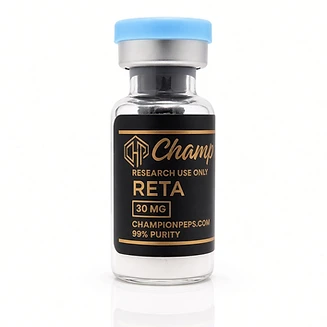
Research use only. Listing a supplier is not an endorsement of any protocol on this site, and nothing sold there is approved for human use.
Related protocols
View allThymosin Alpha-1 5mg
Thymosin Alpha-1 is a 28-amino-acid peptide studied for T-cell maturation, dendritic function, and immune system modulation.
View ProtocolThymosin Beta-4 10mg
Endogenous 43-amino-acid peptide evaluated in preclinical models for actin regulation, dermal healing, and cardioprotective signaling.
View ProtocolSemaglutide 10mg
A long-acting GLP-1 receptor agonist investigated for metabolic regulation, glycemic parameters, and appetite suppression in laboratory research.
View Protocol