Cortagen 20mg
Synthetic brain-cortex tetrapeptide bioregulator (AEDP) researched for potential neuroprotective and nerve regenerative properties.
Mechanism
Hypothesized to bind specific regulatory regions of DNA within cortical neural tissues to influence gene transcription and support neuronal repair mechanisms.
Dosing
A documented weight-scaled model starting dose is 0.70 mg daily (scaled at 0.01 mg/kg for a standard 70 kg subject) administered over a 10-day period.
Reconstitution
Reconstituting a 20 mg vial with 3.0 mL of bacteriostatic water yields an active working concentration of 6.67 mg/mL.
Storage
Store the unmixed lyophilized powder at -20 °C, and maintain the reconstituted liquid between 2 °C and 8 °C protected from light without freezing.
Mix & measure Cortagen 20mg
Pre-filled with this protocol's recommended BAC water and documented starting dose — edit any field to run your own numbers.
Mix & measure Cortagen 20mg
Vial strength → BAC water → target dose
Total doses in vial: 28.6
U-100 syringe: 100 units = 1 mL
Reconstitution math only — not dosing advice. U-100 syringe: 100 units = 1 mL. Advanced calculator →
Dosing Chart
| Phase / Day(s) | Dose & Frequency | Volume (U-100 units / mL) |
|---|---|---|
| Days 1–7 | 0.70 mg once daily | ~10.5 units (0.105 mL) |
| Days 8–10 | 0.70 mg once daily | ~10.5 units (0.105 mL) |
| Days 1–5 (Advanced) | 2.10 mg once daily | ~31.5 units (0.315 mL) |
Reconstitution Steps
- 1
Clean the rubber stopper of the 20 mg Cortagen vial using a sterile alcohol pad and let it air-dry.
- 2
Draw 3.0 mL of bacteriostatic water using an appropriate sterile reconstitution syringe.
- 3
Introduce the needle into the vial and dispense the diluent slowly down the glass wall to minimize aeration and foaming.
- 4
Gently rotate or roll the vial between your hands until the lyophilized cake fully dissolves; do not shake.
- 5
Document the reconstitution date and target concentration (6.67 mg/mL) on the vial label.
- 6
Place the reconstituted solution into refrigeration at 2–8 °C, shielded from direct light.
Supplies Needed


Peptide Vial
Supplies 20 mg of lyophilized Cortagen (AEDP) for research reconstitution.


Insulin Syringes (U-100)
Employed for precise micro-volume extraction and administration (100 units = 1.0 mL).


Bacteriostatic Water
Serves as the preserved sterile diluent (3.0 mL per 20 mg vial) for solubilization.


Alcohol Swabs
Used to sanitize vial stoppers and administration surfaces prior to sampling.
Why researchers study it
Neuroprotective cellular signaling
Peripheral nerve repair and regeneration
Cognitive and behavioral modulation models
Gene-expression regulation in cortical neurons
These describe what is being studied, not proven benefits, approved uses, or promised results.
Overview
Cortagen is an ultrashort synthetic peptide consisting of four amino acids with the sequence Ala-Glu-Asp-Pro (AEDP). Developed within the framework of Khavinson peptide bioregulation research, it was engineered as a purified synthetic counterpart to crude bovine cerebral cortex extracts known as Cortexin. Unlike complex tissue extracts, Cortagen provides a single defined chemical identity for laboratory investigation. Preclinical research frequently explores Cortagen in animal models of neural tissue trauma, peripheral nerve recovery, and behavioral performance. Investigations examine how such regulatory short peptides interact with neural systems during acute injury or degenerative stress. It remains strictly an unapproved laboratory compound with no established Western clinical efficacy or approval. Laboratory models generally assess Cortagen across short administration periods, often scaled from preclinical rodent models of nerve injury or cognitive behavior. The peptide is distinct from other bioregulators such as Epitalon and is evaluated purely within specialized in vitro and animal research settings.
References
- 1.Turchaninova LN et al., Preclinical Report, 2000 — Cortagen 0.01 mg/kg i.m. over ~10 days in a rat sciatic-nerve regeneration model
- 2.Adriani W et al., Bentham Open, 2009 — Cortagen 0.01–0.10 mg/kg i.p. once daily for 5 days in mouse behavioral models
- 3.Kraskovskaya N et al., MDPI/PMC, 2024 — Ultrashort peptides protect induced cortical neurons in vitro
- 4.Khavinson VK et al., Preclinical Review, 2020 — EDR and short-peptide gene-expression mechanisms
- 5.Anisimov SV et al., PubMed, 2004 — Cortagen (Ala-Glu-Asp-Pro) and gene expression profiling
- 6.Kurkin DV et al., PMC, 2021 — Neuroprotective action of peptide drugs in ischemia models
Supplies Needed
Suggested supplier
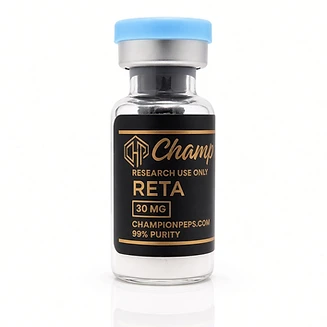
Research use only. Listing a supplier is not an endorsement of any protocol on this site, and nothing sold there is approved for human use.
Related protocols
View allTesamorelin 5mg
A stabilized GHRH analog investigated for physiological growth hormone stimulation and targeted reduction of visceral abdominal adipose tissue.
View ProtocolPNC-27 30mg
Preclinical chimeric peptide targeting HDM-2 on cell membranes, investigated for membrane-lytic activity in oncological models.
View ProtocolVK2735 10mg
Investigational dual GIP and GLP-1 receptor agonist studied for significant dose-dependent weight loss and metabolic regulation.
View Protocol