GHRP-6 2mg
Synthetic hexapeptide secretagogue targeting the ghrelin receptor to induce episodic growth hormone release and marked appetite stimulation.
Mechanism
GHRP-6 acts as an agonist at the pituitary and hypothalamic GHS-R1a (ghrelin) receptors, suppressing somatostatin and stimulating pulsatile growth hormone secretion.
Dosing
Documented starting laboratory regimens evaluate 100 mcg administered 1 to 3 times daily on an empty stomach.
Reconstitution
Reconstituting a 2 mg vial with 3.0 mL of bacteriostatic water yields an approximate working concentration of 0.67 mg/mL (667 mcg/mL).
Storage
Store lyophilized vials frozen at -20 °C, and once reconstituted, maintain refrigerated at 2–8 °C protected from light without refreezing.
Mix & measure GHRP-6 2mg
Pre-filled with this protocol's recommended BAC water and documented starting dose — edit any field to run your own numbers.
Mix & measure GHRP-6 2mg
Vial strength → BAC water → target dose
Total doses in vial: 20.0
U-100 syringe: 100 units = 1 mL
Reconstitution math only — not dosing advice. U-100 syringe: 100 units = 1 mL. Advanced calculator →
Dosing Chart
| Phase / Day(s) | Dose & Frequency | Volume (U-100 units / mL) |
|---|---|---|
| Weeks 1–2 | 100 mcg (1–3× daily) | ~15 units (0.15 mL) |
| Weeks 3–4 | 200 mcg (1–3× daily) | ~30 units (0.30 mL) |
| Weeks 5–12 | 300 mcg (1–3× daily) | ~45 units (0.45 mL) |
Reconstitution Steps
- 1
Draw 3.0 mL of bacteriostatic water into a sterile syringe.
- 2
Introduce the diluent slowly down the inside glass wall of the vial to minimize agitation and foaming.
- 3
Gently swirl or roll the vial until the lyophilized powder is entirely dissolved; do not shake.
- 4
Clearly label the vial with the date and concentration, and refrigerate immediately between 2–8 °C away from light.
Supplies Needed


Peptide Vial
2 mg GHRP-6 lyophilized peptide vial for laboratory study.


Insulin Syringes (U-100)
1 mL U-100 syringes used for precise measurement and subcutaneous administration.


Bacteriostatic Water
Preserved solvent used to reconstitute lyophilized peptide cakes (3.0 mL required per vial).


Alcohol Swabs
Used for sanitizing vial rubber stoppers and application sites prior to needle insertion.
Why researchers study it
Appetite stimulation and hunger signaling
Pulsatile GH and downstream IGF-1 elevation
Body composition and lipid metabolism alterations
Cytoprotective pathways and tissue repair mechanisms
These describe what is being studied, not proven benefits, approved uses, or promised results.
Overview
GHRP-6 (Growth Hormone Releasing Peptide-6) is a first-generation synthetic hexapeptide classified as a growth hormone secretagogue. It functions primarily as an agonist at the growth hormone secretagogue receptor (GHS-R1a), mimicking the physiological signaling of ghrelin. Through this target pathway, it stimulates the anterior pituitary gland to release endogenous growth hormone in distinct pulses, alongside minor secondary elevations in prolactin and cortisol levels. Unlike selective modern alternatives such as Ipamorelin, a prominent pharmacological characteristic of GHRP-6 is its profound capacity to stimulate orexigenic pathways, leading to notable increases in hunger. In laboratory investigations, researchers frequently study its cellular mechanics, downstream IGF-1 induction, and influence on metabolic pathways, while evaluating its unique receptor binding kinetics across diverse tissue models. In experimental models, GHRP-6 exhibits a defined dose-dependent plateau, where elevating individual doses beyond specific thresholds yields diminishing returns in peak growth hormone release. Consequently, research frameworks generally focus on frequency optimization rather than escalated single administration amounts.
References
- 1.Endocrinology, PubMed — Pharmacology of GHRP-6 as a growth-hormone-releasing peptide acting at the ghrelin/GHS-R1a receptor
- 2.Journal of Clinical Endocrinology & Metabolism, PubMed — GHRP-6 stimulates growth-hormone secretion via the ghrelin receptor in human subjects
- 3.Growth Hormone & IGF Research, PubMed — GH-response plateau and dosing characteristics of GH secretagogues including GHRP-6
- 4.Journal of Endocrinology, PubMed — GHRP-6 induces growth-hormone release in preclinical models via the GHS receptor
- 5.Peptides, PubMed — Structure and GH-releasing activity of GHRP-6 and related ghrelin-receptor agonists
- 6.Clinical Endocrinology, PubMed — GHRP-6 effects on cortisol, prolactin and appetite alongside the growth-hormone pulse
- 7.European Journal of Endocrinology, PubMed — Dose-response of GHRP-6 showing the growth-hormone plateau near ~100 mcg per dose
Supplies Needed
Suggested supplier
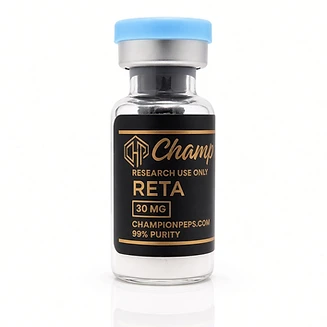
Research use only. Listing a supplier is not an endorsement of any protocol on this site, and nothing sold there is approved for human use.
Related protocols
View allMOTS-C 5mg
Mitochondrial-derived peptide investigated for AMPK signaling activation, metabolic regulation, and age-related physical performance.
View ProtocolMOTS-C 40mg
A mitochondrial-derived peptide studied for AMPK activation, glucose homeostasis, lipid oxidation, and exercise-mimetic potential.
View ProtocolRetatrutide 60mg
First-in-class triple agonist targeting GLP-1, GIP, and glucagon receptors investigated for substantial weight reduction and metabolic control.
View Protocol