BPC-157 + TB-500 10mg Blend
A 1:1 dual-peptide blend combining BPC-157 and TB-500 formulated to investigate complementary soft-tissue and wound-healing pathways.
Mechanism
BPC-157 promotes angiogenesis and collagen organization via nitric oxide and growth-factor pathways, while TB-500 sequesters G-actin to facilitate cell motility and cytoskeletal remodeling.
Dosing
Standard laboratory protocols administer 600 to 1000 mcg total blend once daily over an 8- to 12-week observational course delivering an equal 1:1 ratio of both peptides.
Reconstitution
Reconstitute the 10 mg blend vial by adding 3.0 mL of bacteriostatic water to achieve a total peptide concentration of 3.33 mg/mL (1.67 mg/mL BPC-157 and 1.67 mg/mL TB-500).
Storage
Store lyophilized vials at −20 °C; after reconstitution, refrigerate at 2–8 °C, protect from light, and utilize within approximately 28 days without freezing.
Mix & measure BPC-157 + TB-500 10mg Blend
Pre-filled with this protocol's recommended BAC water and documented starting dose — edit any field to run your own numbers.
Mix & measure BPC-157 + TB-500 10mg Blend
Vial strength → BAC water → target dose
Total doses in vial: 16.7
U-100 syringe: 100 units = 1 mL
Reconstitution math only — not dosing advice. U-100 syringe: 100 units = 1 mL. Advanced calculator →
Dosing Chart
| Phase / Day(s) | Dose & Frequency | Volume (U-100 units / mL) |
|---|---|---|
| Weeks 1–2 (Initial Phase) | 600 mcg total blend (300 mcg each) once daily | 18 units (0.18 mL) |
| Weeks 3–4 (Load Phase) | 800 mcg total blend (400 mcg each) once daily | 24 units (0.24 mL) |
| Weeks 5–8+ (Maintenance Phase) | 600 mcg total blend (300 mcg each) once daily | 18 units (0.18 mL) |
Reconstitution Steps
- 1
Remove the 10 mg blend vial and bacteriostatic water from storage and allow them to equilibrate to room temperature for 10–15 minutes.
- 2
Sanitize the rubber stoppers of both vials using fresh alcohol swabs and let them air-dry completely.
- 3
Using a sterile syringe, draw exactly 3.0 mL of bacteriostatic water.
- 4
Insert the needle at an angle and slowly inject the diluent down the inner glass wall of the blend vial to minimize turbulence and foaming.
- 5
Gently swirl and roll the vial between your palms until the lyophilized cake is fully dissolved; avoid shaking or vigorous agitation.
- 6
Label the vial with the reconstitution date and concentration (3.33 mg/mL total), and store upright in refrigeration at 2–8 °C.
Supplies Needed


Peptide Vial
Provides 10 mg of total lyophilized peptide (5 mg BPC-157 / 5 mg TB-500), typically requiring 4 to 6 vials for an 8- to 12-week study.


Insulin Syringes (U-100)
Used for precise measurement and subcutaneous administration of daily doses (0.18–0.24 mL), requiring roughly 56 to 84 syringes per protocol.


Bacteriostatic Water
Serves as the sterile antimicrobial diluent for reconstitution, requiring approximately 12 to 18 mL across a full experimental course.


Alcohol Swabs
Employed to maintain aseptic technique on vial stoppers and injection sites, requiring approximately 112 to 168 pads for the protocol.
Why researchers study it
Soft-tissue and musculoskeletal injury repair
Microvascular angiogenesis and tissue perfusion
Inflammatory cascade modulation
Extracellular matrix remodeling and cytoskeletal dynamics
These describe what is being studied, not proven benefits, approved uses, or promised results.
Overview
The BPC-157 and TB-500 10mg blend provides an equimolar formulation containing 5mg of pentadecapeptide BPC-157 and 5mg of TB-500, a synthetic peptide related to the active actin-sequestering region of thymosin beta-4. In preclinical investigation, both peptides are widely explored for their distinct yet theoretically complementary roles in structural tissue repair, wound healing, and cytoprotection. While BPC-157 is primarily investigated for its effects on nitric oxide signaling, focal adhesion formation, and vascular endothelial growth factor pathways, TB-500 focuses largely on actin regulation, cell migration, and myofibroblast activity. Researchers study this blend to determine whether co-administration exerts an additive or synergistic effect in experimental models of musculoskeletal injury, ischemic insult, and tissue repair. BPC-157 appears to stabilize local microvasculature and modulate the early inflammatory response, while TB-500 may promote cellular mobility and structural remodeling across extracellular matrices. Despite substantial preclinical enthusiasm, the combined blend has not been clinically validated in controlled human trials, and pharmacokinetic interactions between the two entities in a single solution remain an ongoing subject of laboratory investigation.
References
- 1.Sikiric et al., Journal of Physiology and Pharmacology, 2010 — Stable gastric pentadecapeptide BPC 157 in tissue healing and vascular response
- 2.Bock-Marquette et al., Nature, 2004 — Thymosin beta 4 activates integrin-linked kinase to promote cardiomyocyte survival and cell migration
- 3.Chang et al., Journal of Applied Physiology, 2011 — The promoting effect of pentadecapeptide BPC 157 on tendon healing via cell outgrowth
- 4.Philp et al., American Journal of Pathology, 2004 — Thymosin beta 4 accelerates wound healing through cell migration and matrix remodeling
Supplies Needed
Suggested supplier
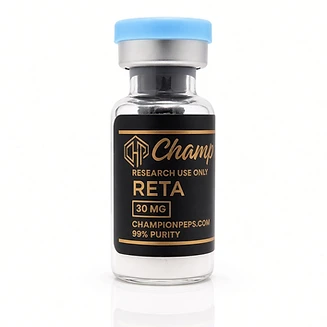
Research use only. Listing a supplier is not an endorsement of any protocol on this site, and nothing sold there is approved for human use.
Related protocols
View allBPC-157 + TB-500 20mg
A 1:1 dual-peptide blend combining BPC-157 and TB-500 targeting complementary pathways in preclinical soft-tissue and wound healing models.
View ProtocolMelanotan II 10mg
Synthetic melanocortin receptor agonist evaluated in preclinical models for skin pigmentation, libido stimulation, and appetite modulation.
View ProtocolBPC-157 + TB-500 10mg
Co-formulated 1:1 dual peptide blend designed to investigate synergistic mechanisms in soft-tissue repair and cellular migration models.
View Protocol