Ipamorelin + Tesamorelin 20mg
Dual-action GH secretagogue research blend pairing a selective ghrelin agonist with a stabilized GHRH analog in a 1:1 ratio.
Mechanism
This dual-peptide formulation combines a stabilized GHRH analogue to activate pituitary GHRH receptors alongside a selective GHS-R1a ghrelin receptor agonist to provoke distinct, additive pulsatile growth hormone secretion.
Dosing
Common investigational models establish a preliminary daily starting amount of 330 mcg total blend administered via subcutaneous injection.
Reconstitution
Adding 3.0 mL of bacteriostatic water to the 20 mg blend vial yields a total peptide concentration of approximately 6.67 mg/mL.
Storage
Store unmixed lyophilized vials at -20 °C, and once reconstituted, maintain refrigerated at 2 to 8 °C protected from light without freezing.
Mix & measure Ipamorelin + Tesamorelin 20mg
Pre-filled with this protocol's recommended BAC water and documented starting dose — edit any field to run your own numbers.
Mix & measure Ipamorelin + Tesamorelin 20mg
Vial strength → BAC water → target dose
Total doses in vial: 60.6
U-100 syringe: 100 units = 1 mL
Reconstitution math only — not dosing advice. U-100 syringe: 100 units = 1 mL. Advanced calculator →
Dosing Chart
| Phase / Day(s) | Dose & Frequency | Volume (U-100 units / mL) |
|---|---|---|
| Weeks 1–4 | 330 mcg total (1× daily) | 5 units (0.05 mL) |
| Weeks 5–8 | 500 mcg total (1× daily) | 7.5 units (0.075 mL) |
Reconstitution Steps
- 1
Draw 3.0 mL of bacteriostatic water using a sterile syringe.
- 2
Introduce the bacteriostatic water slowly along the inner glass wall of the vial to minimize agitation and foaming.
- 3
Gently rotate or roll the vial between your hands until the lyophilized cake is fully dissolved without shaking.
- 4
Record the date and concentration on the vial label and transfer immediately to cold storage at 2–8 °C.
Supplies Needed


Peptide Vial
20 mg combined blend vial (Ipamorelin 10 mg + Tesamorelin 10 mg)


Insulin Syringes (U-100)
1 mL syringes for precise measurement and subcutaneous research administration


Bacteriostatic Water
Reconstitution diluent containing 0.9% benzyl alcohol


Alcohol Swabs
Antiseptic preparation of vial stoppers and injection sites
Why researchers study it
GH & IGF-1 support
Visceral fat / lipolysis
Body composition
Sleep & recovery
These describe what is being studied, not proven benefits, approved uses, or promised results.
Overview
The Ipamorelin and Tesamorelin blend provides an experimental platform designed to explore concurrent pituitary stimulation across separate receptor pathways. By uniting an engineered growth-hormone-releasing hormone analogue with a selective growth hormone secretagogue receptor agonist in an equal ratio, investigators can examine potential synergistic increases in endogenous somatotroph output. While Tesamorelin possesses clinical data demonstrating visceral adipose reduction in specific human models, Ipamorelin provides targeted somatotropic signaling without significantly disturbing adrenal or prolactin axes. In combination, these peptides allow researchers to analyze composite effects on body composition, recovery models, and systemic growth factor modulation without administering recombinant human growth hormone directly. This formulation is supplied as a lyophilized mixture holding ten milligrams of each constituent, demanding careful laboratory reconstitution and volume calculations. Investigational assessments center primarily on evaluating baseline tolerance, pulsatile hormonal responses, and long-term metabolic markers over defined multi-week experimental cycles.
References
- 1.FDA Label, Egrifta Prescribing Information, 2010 — tesamorelin approved for excess abdominal fat reduction in HIV-associated lipodystrophy
- 2.Falutz et al., New England Journal of Medicine, 2007 — randomized trials showing visceral adipose tissue reduction and IGF-1 increase with tesamorelin
- 3.Falutz et al., Clinical Infectious Diseases, 2010 — long-term tesamorelin safety, visceral fat, and IGF-1 outcomes
- 4.Raun et al., European Journal of Endocrinology, 1998 — characterization of ipamorelin as a selective GHS-R1a ghrelin receptor agonist
- 5.CDC, Clinical Safety Guidance, 2023 — injection safety, needle angles, and sharps containment
- 6.World Health Organization, WHO Guidelines, 2010 — best practices for injections and subcutaneous delivery
- 7.World Anti-Doping Agency, WADA Prohibited List, 2024 — peptide hormones, growth factors, and related substances (Class S2)
Supplies Needed
Suggested supplier
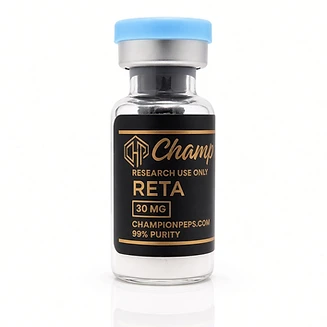
Research use only. Listing a supplier is not an endorsement of any protocol on this site, and nothing sold there is approved for human use.
Related protocols
View allTirzepatide 10mg
Dual GIP and GLP-1 receptor agonist engineered to study synergistic incretin pathways in glycemic control and energy homeostasis.
View ProtocolIpamorelin + Tesamorelin 10mg
Dual-action GH secretagogue blend combining a selective ghrelin agonist with a stabilized GHRH analog for investigational metabolic research.
View ProtocolIpamorelin + Tesamorelin 10mg Blend (5mg + 5mg)
A dual-action 1:1 secretagogue blend combining GHRH analog tesamorelin and selective ghrelin agonist ipamorelin for GH-axis study.
View Protocol