Ipamorelin + Tesamorelin 10mg Blend (5mg + 5mg)
A dual-action 1:1 secretagogue blend combining GHRH analog tesamorelin and selective ghrelin agonist ipamorelin for GH-axis study.
Mechanism
Stimulates the pituitary somatotropic axis via complementary dual-receptor pathways by binding both GHRH receptors (tesamorelin) and ghrelin GHS-R1a receptors (ipamorelin) to induce pulsatile growth hormone secretion.
Dosing
Standard laboratory protocols document an initial daily administration of 330 mcg total blend (10 units on a U-100 syringe) administered subcutaneously.
Reconstitution
Reconstituting a 10 mg blend vial with 3.0 mL of bacteriostatic water yields an approximate working concentration of 3.33 mg/mL (or roughly 1.67 mg/mL of each active peptide).
Storage
Store the unmixed lyophilized vial at -20 °C protected from moisture, and once reconstituted, keep refrigerated at 2–8 °C away from light without freezing.
Mix & measure Ipamorelin + Tesamorelin 10mg Blend (5mg + 5mg)
Pre-filled with this protocol's recommended BAC water and documented starting dose — edit any field to run your own numbers.
Mix & measure Ipamorelin + Tesamorelin 10mg Blend (5mg + 5mg)
Vial strength → BAC water → target dose
Total doses in vial: 30.3
U-100 syringe: 100 units = 1 mL
Reconstitution math only — not dosing advice. U-100 syringe: 100 units = 1 mL. Advanced calculator →
Dosing Chart
| Phase / Day(s) | Dose & Frequency | Volume (U-100 units / mL) |
|---|---|---|
| Weeks 1–4 | 330 mcg total (1× daily) | 10 units (0.10 mL) |
| Weeks 5–8 | 500 mcg total (1× daily) | 15 units (0.15 mL) |
Reconstitution Steps
- 1
Draw 3.0 mL of bacteriostatic water into a sterile syringe.
- 2
Slowly introduce the diluent against the internal glass wall of the blend vial to minimize turbulence and foaming.
- 3
Gently roll or swirl the container until all lyophilized powder is visibly dissolved without vigorous shaking.
- 4
Record the date and resulting concentration on the vial label and place into refrigerated storage at 2–8 °C.
Supplies Needed


Peptide Vial
Lyophilized Ipamorelin 5 mg + Tesamorelin 5 mg blend vial for reconstitution


Insulin Syringes (U-100)
Calibrated 1 mL syringes for precise volumetric measurement and subcutaneous administration


Bacteriostatic Water
Sterile diluent with 0.9% benzyl alcohol used to dissolve the lyophilized peptide cake


Alcohol Swabs
Disinfection of the rubber vial stopper and the injection surface prior to withdrawal and administration
Why researchers study it
Dual-pathway stimulation of the GH and IGF-1 somatotropic axis
Visceral adipose tissue reduction and lipolytic signaling pathways
Evaluation of body composition and lean muscle mass retention
Nocturnal growth hormone pulsatility and deep-stage sleep recovery
These describe what is being studied, not proven benefits, approved uses, or promised results.
Overview
The Ipamorelin + Tesamorelin blend combines two distinct growth hormone secretagogues into a single 1:1 ratio research vial. By co-formulating a stabilized growth hormone-releasing hormone (GHRH) derivative with a selective growth hormone secretagogue receptor (GHS-R1a) agonist, this blend allows laboratory investigators to evaluate dual-pathway activation of the somatotropic axis simultaneously without preparing multiple injections. Tesamorelin drives endogenous growth hormone release by activating pituitary GHRH receptors, while ipamorelin functions downstream via the ghrelin receptor to amplify pulsatile secretion with minimal influence on prolactin or cortisol levels. Research models frequently assess whether the combined activation yields complementary or synergistic increases in circulating IGF-1 concentrations, lipolysis, and lean tissue preservation compared to single-agent administration.
References
- 1.FDA Label — Egrifta (tesamorelin), Prescribing information for visceral adipose reduction in HIV-associated lipodystrophy
- 2.Falutz et al., New England Journal of Medicine, 2007 — Randomized clinical trials evaluating tesamorelin effects on visceral fat and IGF-1
- 3.Falutz et al., Clinical Infectious Diseases, 2010 — Long-term tesamorelin safety, visceral adipose tissue, and IGF-1 dynamics
- 4.Raun et al., European Journal of Endocrinology, 1998 — Selective GH-releasing properties of the ghrelin agonist ipamorelin
Supplies Needed
Suggested supplier
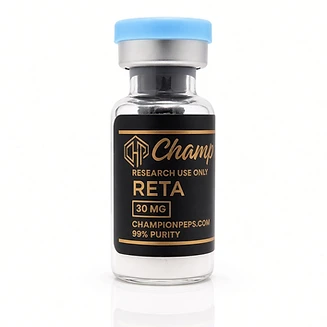
Research use only. Listing a supplier is not an endorsement of any protocol on this site, and nothing sold there is approved for human use.
Related protocols
View allIpamorelin + Tesamorelin 16mg
A 16 mg GH secretagogue blend containing 13 mg tesamorelin and 3 mg ipamorelin for investigating dual-pathway pituitary stimulation.
View ProtocolTirzepatide 30mg
Dual GIP and GLP-1 receptor agonist studied for glycemic control, profound weight reduction, and metabolic health.
View ProtocolTirzepatide 5mg
Dual GLP-1/GIP receptor agonist peptide engineered for research on glycemic control, energy homeostasis, and body composition.
View Protocol