Testagen 20mg
Synthetic Khavinson tetrapeptide bioregulator investigated for its role in male reproductive health and endocrine signaling modulation.
Mechanism
Hypothesized to function as a short-chain epigenetic bioregulator that directly interacts with nucleosomal DNA sequences to selectively modulate reproductive-tissue gene expression.
Dosing
Standard laboratory protocols document an initial administration level of 100 mcg injected subcutaneously once daily.
Reconstitution
Reconstitute the 20 mg vial by introducing 3.0 mL of bacteriostatic water to achieve a final working concentration of approximately 6.67 mg/mL (6,667 mcg/mL).
Storage
Store the unmixed lyophilized vial at -20 °C protected from moisture and light; keep reconstituted solution refrigerated between 2 and 8 °C for up to 28 days without freezing.
Mix & measure Testagen 20mg
Pre-filled with this protocol's recommended BAC water and documented starting dose — edit any field to run your own numbers.
Mix & measure Testagen 20mg
Vial strength → BAC water → target dose
Total doses in vial: 200.0
U-100 syringe: 100 units = 1 mL
Reconstitution math only — not dosing advice. U-100 syringe: 100 units = 1 mL. Advanced calculator →
Dosing Chart
| Phase / Day(s) | Dose & Frequency | Volume (U-100 units / mL) |
|---|---|---|
| Weeks 1–2 | 100 mcg (1× daily) | ~1.5 units (0.015 mL) |
| Weeks 3–4 | 150 mcg (1× daily) | ~2.25 units (0.0225 mL) |
| Weeks 5–8 | 200 mcg (1× daily) | ~3 units (0.03 mL) |
| Weeks 9–12 | 250–300 mcg (1× daily, optional) | ~3.75–4.5 units (0.0375–0.045 mL) |
Reconstitution Steps
- 1
Aseptically draw 3.0 mL of sterile bacteriostatic water using an appropriate reconstitution syringe.
- 2
Carefully introduce the diluent into the 20 mg Testagen vial, directing the stream against the interior glass wall to minimize agitation.
- 3
Swirl and rotate the vial smoothly until all lyophilized cake is fully dissolved, strictly avoiding vigorous shaking.
- 4
Label the reconstituted vial with preparation date and calculated concentration (6.67 mg/mL), then transfer directly to refrigerated storage at 2–8 °C.
Supplies Needed


Peptide Vial
Supplies the lyophilized Testagen peptide (20 mg active compound) for reconstitution.


Insulin Syringes (U-100)
Enables precise daily micro-volume delivery, ideally using 30-unit or 50-unit gradations.


Bacteriostatic Water
Provides 3.0 mL of sterile antimicrobial solvent for peptide dissolution.


Alcohol Swabs
Maintains sterile technique for sanitizing vial stoppers and application sites.
Why researchers study it
Reproductive and testicular tissue cellular signaling
Endogenous testosterone pathway regulation
Mechanisms of spermatogenesis and male fertility
Age-associated endocrine and gonadal functional decline
These describe what is being studied, not proven benefits, approved uses, or promised results.
Overview
Testagen is a synthetic peptide bioregulator corresponding to the amino acid sequence Lys-Glu-Asp-Gly (KEDG). Stemming from the pioneering peptide research of Vladimir Khavinson, this short peptide was designed to mimic endogenous tissue-specific factors within the male reproductive system. Most laboratory investigations center around its affinity for testicular tissues and potential epigenetic interactions with reproductive chromatin structures. In preclinical research models, Testagen is primarily explored for its ability to regulate cellular metabolism in male gonadal tissue and influence downstream endocrine pathways. While some experimental contexts evaluate its relationship to the pituitary-gonadal axis, empirical findings remain limited largely to animal models and cell culture frameworks. It has not undergone formal pharmacokinetic or phase-specific clinical evaluation in Western regulatory systems. All documentation concerning Testagen is intended strictly for experimental bench science and in vitro investigation. The compound is not an approved medication, diagnostic tool, or dietary substance, and it should never be administered to humans or animals outside rigorous scientific protocols.
References
- 1.Khavinson et al., Biogerontology, 2014 — Review of short-peptide bioregulator sequences and cellular mechanisms
- 2.Khavinson et al., Bulletin of Experimental Biology and Medicine, 2003 — Peptide-DNA interaction hypothesis and tissue-specific gene regulation
Supplies Needed
Suggested supplier
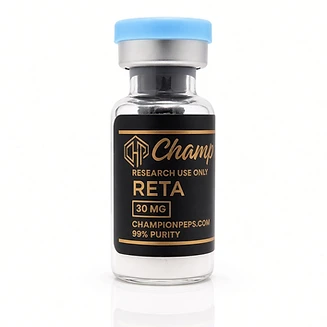
Research use only. Listing a supplier is not an endorsement of any protocol on this site, and nothing sold there is approved for human use.