Tesamorelin 10mg
Tesamorelin is a stabilized synthetic GHRH analog researched for visceral adipose tissue reduction and endogenous growth hormone release.
Mechanism
Binds pituitary GHRH receptors to stimulate pulsatile endogenous growth hormone secretion, elevating serum IGF-1 and selectively promoting visceral adipose lipolysis.
Dosing
Documented laboratory protocols evaluate 2 mg (2000 mcg) administered subcutaneously once daily, occasionally preceded by a 1 mg once-daily titration phase.
Reconstitution
Add 3.0 mL bacteriostatic water to one 10 mg vial to produce an approximate concentration of 3.33 mg/mL (3,333 mcg/mL).
Storage
Lyophilized vials should be refrigerated at 2–8 °C; once reconstituted, maintain at 2–8 °C and do not freeze.
Mix & measure Tesamorelin 10mg
Pre-filled with this protocol's recommended BAC water and documented starting dose — edit any field to run your own numbers.
Mix & measure Tesamorelin 10mg
Vial strength → BAC water → target dose
Total doses in vial: 5.0
U-100 syringe: 100 units = 1 mL
Reconstitution math only — not dosing advice. U-100 syringe: 100 units = 1 mL. Advanced calculator →
Dosing Chart
| Phase / Day(s) | Dose & Frequency | Volume (U-100 units / mL) |
|---|---|---|
| Acclimation (Days 1–7) | 1.0 mg once daily | 30 units (0.30 mL) |
| Standard Protocol (Day 8+) | 2.0 mg once daily | 60 units (0.60 mL) |
Reconstitution Steps
- 1
Remove the 10 mg Tesamorelin vial and bacteriostatic water from cold storage and allow them to equilibrate to room temperature.
- 2
Disinfect the rubber stoppers of both vials using sterile alcohol prep pads.
- 3
Using a sterile reconstitution syringe, draw exactly 3.0 mL of bacteriostatic water.
- 4
Insert the needle into the Tesamorelin vial and slowly discharge the diluent down the inner glass wall to prevent shearing the peptide.
- 5
Gently swirl or roll the vial between your palms until the lyophilizate fully dissolves into a clear solution; avoid vigorous shaking.
- 6
Label the vial with the reconstitution date and calculated concentration (3.33 mg/mL), then store upright in refrigeration at 2–8 °C.
Supplies Needed


Peptide Vial
Provides 10 mg of lyophilized Tesamorelin peptide powder, yielding 5 days of research at the 2 mg daily schedule.


Insulin Syringes (U-100)
Utilized for measuring experimental aliquots, requiring a 100-unit syringe calibrated to 60 units per 2 mg dose.


Bacteriostatic Water
Supplies the sterile 0.9% benzyl alcohol diluent, requiring 3.0 mL to dissolve one 10 mg vial.


Alcohol Swabs
Used to sanitize vial stoppers and injection surfaces prior to every fluid transfer, requiring roughly 2 swabs daily.
Why researchers study it
Visceral (abdominal) fat reduction
Growth hormone & IGF-1 elevation
Hepatic lipid content & metabolic parameters
Body composition & healthy-aging research
These describe what is being studied, not proven benefits, approved uses, or promised results.
Overview
Tesamorelin is a synthetic peptide consisting of the 44-amino acid sequence of human growth hormone-releasing hormone (GHRH) modified with a trans-3-hexenoyl group at the N-terminus. This structural capping confers resistance to enzymatic degradation by dipeptidyl peptidase-4 (DPP-4), significantly extending its half-life and bioactivity compared to native GHRH while preserving receptor binding affinity. Upon administration, the peptide binds to specific GHRH receptors on pituitary somatotrophs, promoting the pulsatile synthesis and release of endogenous growth hormone without blunting negative feedback mechanisms. Elevated circulating growth hormone signals the hepatic generation of insulin-like growth factor 1 (IGF-1), which triggers lipolysis in metabolically active visceral adipose depots and enhances lean tissue accretion. Tesamorelin remains an extensively studied GHRH analog in metabolic literature, initially gaining regulatory clearance for lipodystrophy-associated visceral adiposity. Ongoing translational research explores its physiological impact on non-alcoholic hepatic steatosis, metabolic dysregulation, and age-related declines in the somatotropic axis.
References
- 1.Falutz et al., N Engl J Med, 2007 — Metabolic effects of a growth hormone-releasing factor in patients with HIV
- 2.Stanley et al., JAMA, 2014 — Effect of tesamorelin on visceral fat and liver fat in HIV-associated abdominal adiposity
- 3.Fourman et al., AIDS, 2017 — Visceral fat reduction with tesamorelin and improvements in transaminase levels
- 4.González-Sales et al., J Pharmacokinet Pharmacodyn, 2015 — Population pharmacokinetic and pharmacodynamic modeling of tesamorelin
Supplies Needed
Suggested supplier
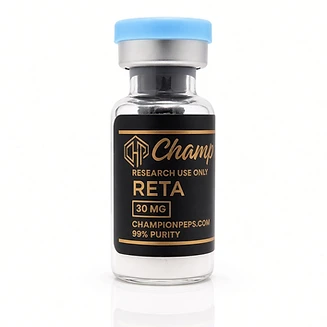
Research use only. Listing a supplier is not an endorsement of any protocol on this site, and nothing sold there is approved for human use.
Related protocols
View allDulaglutide 5mg
A long-acting GLP-1 receptor agonist fusion protein engineered for weekly metabolic, glycemic, and cardiovascular research applications.
View ProtocolOvagen 20mg
Synthetic tripeptide bioregulator (EDL) studied for hepatocyte function and digestive system cellular modulation in laboratory models.
View ProtocolTB-500 10mg
Synthetic fragment of Thymosin Beta-4 evaluated in preclinical models for actin regulation, wound healing, and soft-tissue repair.
View Protocol