Selank 5mg
Synthetic tuftsin-derived heptapeptide investigated for non-sedating anxiolysis, cognitive support, and neurotrophic modulation.
Mechanism
Tuftsin analogue studied for anxiety modulation and cognitive support.
Dosing
Research references of 250–500 mcg, often intranasal.
Reconstitution
Add 2.0 mL bacteriostatic water → 2.5 mg/mL.
Storage
Lyophilized: −20 °C; reconstituted: refrigerate 2–8 °C.
Mix & measure Selank 5mg
Pre-filled with this protocol's recommended BAC water and documented starting dose — edit any field to run your own numbers.
Mix & measure Selank 5mg
Vial strength → BAC water → target dose
Total doses in vial: 20.0
U-100 syringe: 100 units = 1 mL
Reconstitution math only — not dosing advice. U-100 syringe: 100 units = 1 mL. Advanced calculator →
Dosing Chart
| Phase / Day(s) | Dose & Frequency | Volume (U-100 units / mL) |
|---|---|---|
| Day 1 – 3 | 250 mcg once daily | 10 units (0.10 mL) |
| Day 4 – 14 | 250 mcg twice daily | 10 units (0.10 mL) per administration |
| Day 15 – 21 | 500 mcg once to twice daily | 20 units (0.20 mL) per administration |
Reconstitution Steps
- 1
Remove the lyophilized Selank 5mg vial from cold storage (-20 °C) and allow it to equilibrate to room temperature for approximately 15 minutes.
- 2
Clean the rubber septums of both the peptide vial and the bacteriostatic water vial using sterile alcohol swabs.
- 3
Draw exactly 2.0 mL of bacteriostatic water into a sterile syringe.
- 4
Insert the needle at an angle into the Selank vial and inject the bacteriostatic water slowly down the inner glass wall to prevent shearing.
- 5
Gently swirl or roll the vial between your palms until the lyophilizate fully dissolves into a clear solution; do not shake vigorously.
- 6
Label the vial with the final concentration (2.5 mg/mL) and date of reconstitution, then store protected from light in refrigeration at 2–8 °C.
Supplies Needed


Peptide Vial
Provides 5 mg of lyophilized Selank peptide for laboratory investigation, sufficient for 10 to 20 experimental administrations at 250–500 mcg.


Insulin Syringes (U-100)
Calibrated 100-unit syringes used for precise measurement and withdrawal of reconstituted solution, requiring approximately 10 to 20 syringes per evaluation block.


Bacteriostatic Water
Sterile diluent containing 0.9% benzyl alcohol used to reconstitute the peptide; 2.0 mL is required per 5 mg vial.


Alcohol Swabs
Sterile 70% isopropyl alcohol wipes used for aseptic preparation of rubber vial septums before puncture, requiring approximately 15 to 25 wipes.
Why researchers study it
Anxiety modulation and allosteric GABA signaling
Cognitive support and BDNF expression
Neuroendocrine stress response and adaptation
Neuroimmune interactions and enkephalin stabilization
These describe what is being studied, not proven benefits, approved uses, or promised results.
Overview
Selank is a synthetic heptapeptide (Thr-Lys-Pro-Arg-Pro-Gly-Pro) engineered by extending the naturally occurring immunomodulatory tetrapeptide tuftsin with a C-terminal Pro-Gly-Pro sequence to enhance enzymatic stability. Developed by the Institute of Molecular Genetics of the Russian Academy of Sciences, it was synthesized to combine central nervous system anxiolytic actions with neuroprotective and nootropic properties, distinguishing it from conventional sedative compounds. Pharmacologically, research indicates that Selank acts via allosteric modulation of GABAergic transmission, upregulation of brain-derived neurotrophic factor (BDNF) within hippocampal structures, and inhibition of enkephalin-degrading enzymes. Unlike traditional benzodiazepines, it appears to modify anxiety-related behaviors in animal and clinical models without inducing sedation, motor impairment, or documented physical dependence, while also exhibiting mild immunomodulatory and antiviral characteristics in laboratory challenges. While approved as a clinical prescription in Russia for generalized anxiety and neurasthenia, Selank remains an unapproved investigational compound in the United States and other Western regions. It is actively utilized in preclinical neuroscience to study neuroinflammation, neuroplasticity under chronic stress, and receptor crosstalk within the central nervous system.
References
- 1.Zozulya AA et al., Bull Exp Biol Med, 2001 — The inhibitory effect of Selank on enkephalin-degrading enzymes as a possible mechanism of its anxiolytic activity
- 2.Semenova TP et al., Dokl Biol Sci, 2010 — Selank and short peptides of the tuftsin family in the regulation of adaptive behavior in stress and BDNF expression
- 3.Volkova A et al., BMC Genomics, 2016 — Selank administration affects the expression of some genes involved in GABAergic neurotransmission
- 4.Kasian A et al., Behav Neurol, 2017 — Peptide Selank enhances the effect of diazepam in reducing anxiety in unpredictable chronic mild stress conditions in rats
- 5.Zozulia AA et al., Zh Nevrol Psikhiatr Im S S Korsakova, 2008 — Efficacy and possible mechanisms of action of a new peptide anxiolytic selank in generalized anxiety disorder
Supplies Needed
Suggested supplier
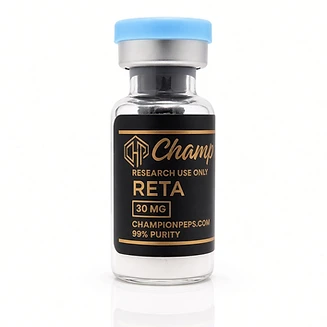
Research use only. Listing a supplier is not an endorsement of any protocol on this site, and nothing sold there is approved for human use.
Related protocols
View allThymogen 10mg
Synthetic thymic dipeptide researched for its configuration-dependent immunomodulatory and bone marrow regenerative properties.
View ProtocolIpamorelin 5mg
Selective pentapeptide GH secretagogue acting on the GHS-R1a receptor to trigger somatotropic release without elevating cortisol or prolactin.
View ProtocolTuftsin 5mg
Endogenous IgG-derived tetrapeptide studied for macrophage modulation, neuropilin-1 signaling, and neuroinflammatory regulation.
View Protocol