PTD-DBM 5mg
Topical peptide designed to block CXXC5-Dishevelled binding, de-repressing Wnt/β-catenin signaling to study follicle neogenesis and repair.
Mechanism
PTD-DBM functions as a competitive peptide decoy that disrupts the binding of the negative regulator CXXC5 to Dishevelled, thereby de-repressing the Wnt/β-catenin signaling cascade.
Dosing
Preclinical models examine topical applications referencing a 100 µM concentration (approximately 0.31 mg/mL), with laboratory reference volumetric titrations frequently evaluating 100 mcg aliquots.
Reconstitution
Reconstituting a 5 mg vial with 2.0 mL of bacteriostatic water creates an 810 µM (2.5 mg/mL) concentrated stock solution.
Storage
Store the lyophilized powder and reconstituted aqueous stock refrigerated between 2°C and 8°C, guarded against freeze-thaw cycles and direct light exposure.
Mix & measure PTD-DBM 5mg
Pre-filled with this protocol's recommended BAC water and documented starting dose — edit any field to run your own numbers.
Mix & measure PTD-DBM 5mg
Vial strength → BAC water → target dose
Total doses in vial: 50.0
U-100 syringe: 100 units = 1 mL
Reconstitution math only — not dosing advice. U-100 syringe: 100 units = 1 mL. Advanced calculator →
Dosing Chart
| Phase / Day(s) | Dose & Frequency | Volume (U-100 units / mL) |
|---|---|---|
| Micro-volume Reference | 100 mcg daily | 4 units (0.04 mL) |
| Low Concentration | 250 mcg daily | 10 units (0.10 mL) |
| Moderate Concentration | 500 mcg daily | 20 units (0.20 mL) |
| High Laboratory Stock | 1 mg daily | 40 units (0.40 mL) |
Reconstitution Steps
- 1
Clean the rubber stoppers of both the PTD-DBM vial and the bacteriostatic water container using fresh, sterile alcohol swabs and allow them to air dry thoroughly.
- 2
Draw exactly 2.0 mL of bacteriostatic water into a calibrated syringe.
- 3
Insert the syringe needle into the peptide vial at an angle, directing the fluid slowly down the glass interior wall to minimize shear forces on the powder.
- 4
Allow the mixture to stand undisturbed for 30 seconds to initiate passive dissolution.
- 5
Gently swirl or roll the vial between the palms until the lyophilized cake is fully dissolved, strictly avoiding vigorous shaking.
- 6
Store the completed stock solution inside a dedicated laboratory refrigerator held steadily between 2°C and 8°C.
Supplies Needed


Peptide Vial
Supplies 5 mg of lyophilized synthetic PTD-DBM peptide.


Insulin Syringes (U-100)
Enables precision volume measurement and handling for micro-aliquots of the reconstituted stock.


Bacteriostatic Water
Provides 2.0 mL of sterile, preserved diluent to establish a stable working peptide solution.


Alcohol Swabs
Disinfects vial stoppers and tools to maintain sterility during the reconstitution sequence.
Why researchers study it
Hair follicle neogenesis and cycle activation
CXXC5 pathway inhibition in androgenetic alopecia models
Cutaneous wound repair and reduced scar tissue formation
Targeted de-repression of Wnt/β-catenin signaling
These describe what is being studied, not proven benefits, approved uses, or promised results.
Overview
PTD-DBM (Protein Transduction Domain-Dishevelled Binding Motif) is a synthetic laboratory-engineered peptide built to target the negative feedback loop governing Wnt/β-catenin pathway activity. By incorporating an octa-arginine cell-penetrating peptide tethered to a distinct regulatory peptide sequence, it serves as a competitive antagonist against the CXXC5 protein. Because CXXC5 naturally binds Dishevelled to shut down ongoing regenerative signals, the decoy peptide prevents this interaction and permits sustained activation of downstream cellular cascades. Preclinical interest centers largely on the modulation of anagen hair cycle induction, epidermal wound healing, and follicle neogenesis. Disruption of CXXC5 function has been correlated with reduced fibrotic scarring and rescued hair follicle growth in rodent models exposed to miniaturization triggers such as prostaglandin D2 and dihydrotestosterone. Despite wide discussion within non-clinical and cosmetic science communities, in vivo research remains preclinical, originating predominantly from animal model experiments without human trial validation. Laboratory handling requires careful consideration of its topical formulation and biochemical vulnerabilities. Containing two sensitive cysteine residues, the molecule is susceptible to oxidative degradation in aqueous diluents. Most protocols rely on immediate serial dilution or incorporation into topical hydrogels and carriers rather than classical parenteral methods, demanding strict low-temperature maintenance and clean preparation standards.
References
- 1.Lee SH, et al., J Exp Med, 2015 — Dishevelled-binding protein CXXC5 negatively regulates cutaneous wound healing; introduces PTD-DBM at 100 µM topical dosing.
- 2.Lee SH, et al., J Invest Dermatol, 2017 — CXXC5 targeting by competitor peptide accelerates hair regrowth and wound-induced hair follicle neogenesis in mice.
- 3.Ryu YC, et al., Cells, 2023 — CXXC5 downstream mediation of DHT and PGD2 in alopecia models, with rescue via PTD-DBM.
- 4.Lee SH, et al., Adv Healthc Mater, 2023 — Hyaluronic-acid hydrogel patch delivery of PTD-DBM combined with valproic acid for regenerative wound healing.
- 5.Kim HY, et al., EMBO Mol Med, 2016 — Small molecule inhibitors targeting the Dishevelled-CXXC5 interface for bone anabolism.
- 6.Seo SH, et al., Clin Transl Med, 2022 — CXXC5 interaction inhibition via small molecules reversing metabolic dysfunction.
- 7.Mehta A, et al., Cells, 2025 — Review on hair follicle neogenesis and Wnt/β-catenin pathway modulators.
- 8.Ma S, et al., J Comput Aided Mol Des, 2018 — Structural characterization and computational modeling of the Dvl-CXXC5 binding domain.
Supplies Needed
Suggested supplier
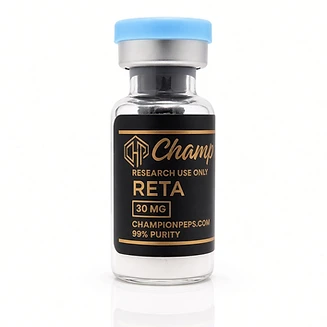
Research use only. Listing a supplier is not an endorsement of any protocol on this site, and nothing sold there is approved for human use.
Related protocols
View allBPC-157 10mg
A 15-amino-acid synthetic peptide researched in preclinical models for soft-tissue recovery, angiogenesis, and gastrointestinal protection.
View ProtocolNAD+ 1000mg
Cellular coenzyme vital for mitochondrial bioenergetics, sirtuin activation, and systemic metabolic maintenance in research models.
View ProtocolBPC-157 5mg
Synthetic gastric pentadecapeptide investigated in preclinical models for soft tissue repair, gut cytoprotection, and angiogenesis.
View Protocol