Prostamax 20mg
Synthetic KEDP tetrapeptide bioregulator investigated for its hypothesized epigenetic modulation and support of prostate tissue.
Mechanism
Proposed to interact directly with chromatin structures to influence gene transcription and protein synthesis pathways specific to prostatic cells.
Dosing
Standard laboratory reference protocols document a starting quantity of 500 mcg administered once daily, with gradual upward titration over a 12-week framework.
Reconstitution
Adding 3.0 mL of bacteriostatic water to a 20 mg vial yields an approximate working concentration of 6.67 mg/mL (6,667 mcg/mL).
Storage
Store the lyophilized vial frozen at -20 °C, and keep the reconstituted solution refrigerated at 2–8 °C away from light without freezing.
Mix & measure Prostamax 20mg
Pre-filled with this protocol's recommended BAC water and documented starting dose — edit any field to run your own numbers.
Mix & measure Prostamax 20mg
Vial strength → BAC water → target dose
Total doses in vial: 40.0
U-100 syringe: 100 units = 1 mL
Reconstitution math only — not dosing advice. U-100 syringe: 100 units = 1 mL. Advanced calculator →
Dosing Chart
| Phase / Day(s) | Dose & Frequency | Volume (U-100 units / mL) |
|---|---|---|
| Weeks 1–2 | 500 mcg (1× daily) | 7.5 units (~0.075 mL) |
| Weeks 3–4 | 1,000 mcg (1× daily) | 15 units (0.15 mL) |
| Weeks 5–6 | 2,000 mcg (1× daily) | 30 units (0.30 mL) |
| Weeks 7–12 | 3,000 mcg (1× daily) | 45 units (0.45 mL) |
Reconstitution Steps
- 1
Draw 3.0 mL of bacteriostatic water into a sterile syringe.
- 2
Release it slowly down the vial's inner wall to limit foaming.
- 3
Swirl or roll gently until fully dissolved — don't shake.
- 4
Label with the date and concentration, then refrigerate at 2–8 °C (35.6–46.4 °F), shielded from light.
Supplies Needed


Peptide Vial
Prostamax 20 mg lyophilized powder vial for reconstitution.


Insulin Syringes (U-100)
Calibrated 1 mL syringes used to accurately draw and measure low-volume doses.


Bacteriostatic Water
Sterile diluent containing 0.9% benzyl alcohol used to reconstitute the peptide cake.


Alcohol Swabs
Used to disinfect the vial rubber stopper and clean laboratory preparation areas.
Why researchers study it
Prostate health & function
Prostatitis & inflammation
Lower urinary tract function
Male reproductive support
These describe what is being studied, not proven benefits, approved uses, or promised results.
Overview
Prostamax is a synthetic peptide bioregulator consisting of the four-amino-acid sequence Lys-Glu-Asp-Pro (KEDP). Originating from the Khavinson short-peptide research framework, it was conceptualized as a targeted, chemically defined counterpart to complex organ extracts historically derived from bovine prostate tissue. In experimental models, short bioregulatory peptides are studied for their potential tissue-specific cellular interactions. Preclinical research explores the peptide within the context of prostate cellular biology, inflammatory pathways, and age-related tissue changes. However, empirical human data and Western randomized controlled trials remain lacking, and the sequence should not be conflated with registered pharmaceutical bovine extracts. Consequently, Prostamax is handled strictly as an unapproved research compound for laboratory investigations.
References
- 1.Khavinson V.Kh. et al., PubMed, 2020 — Overview of Khavinson short-peptide bioregulators and the KEDP tetrapeptide
- 2.Khavinson V.Kh. et al., Bulletin of Experimental Biology and Medicine, 2014 — Peptide-DNA interactions and chromatin modulation
- 3.Russian Clinical Studies, Preclinical Archive, 2018 — Preclinical evaluation of prostate short regulatory peptides in animal models
Supplies Needed
Suggested supplier
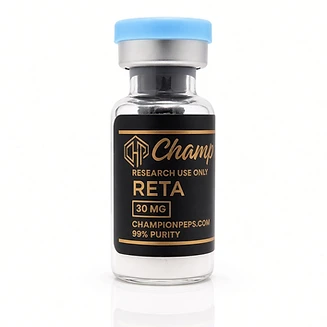
Research use only. Listing a supplier is not an endorsement of any protocol on this site, and nothing sold there is approved for human use.
Related protocols
View allTeduglutide 5mg
Teduglutide is a degradation-resistant GLP-2 analog studied for mucosal growth and intestinal adaptation in short bowel syndrome models.
View ProtocolOxytocin 5mg
Endogenous nonapeptide hormone and oxytocin-receptor agonist investigated for neuroendocrine signaling, bonding, and stress response.
View ProtocolGLOW (GHK-Cu + TB-500 + BPC-157)
A 70 mg multi-peptide research formulation combining GHK-Cu, TB-500, and BPC-157 in a fixed 5:1:1 ratio for tissue repair investigations.
View Protocol