Teduglutide 5mg
Teduglutide is a degradation-resistant GLP-2 analog studied for mucosal growth and intestinal adaptation in short bowel syndrome models.
Mechanism
Binds to GLP-2 receptors on subepithelial myofibroblasts and enteric neurons to trigger the paracrine release of growth mediators like IGF-1, stimulating crypt cell proliferation and mucosal expansion.
Dosing
The documented baseline protocol is 0.05 mg/kg body weight administered once daily via subcutaneous injection without titration.
Reconstitution
Reconstitute the 5 mg lyophilized vial with 0.5 mL of sterile diluent to establish a working concentration of 10 mg/mL.
Storage
Store unopened lyophilized vials at 20°C to 25°C away from direct light, and use reconstituted solutions within 3 hours without freezing.
Mix & measure Teduglutide 5mg
Pre-filled with this protocol's recommended BAC water and documented starting dose — edit any field to run your own numbers.
Mix & measure Teduglutide 5mg
Vial strength → BAC water → target dose
Total doses in vial: 100.0
U-100 syringe: 100 units = 1 mL
Reconstitution math only — not dosing advice. U-100 syringe: 100 units = 1 mL. Advanced calculator →
Dosing Chart
| Phase / Day(s) | Dose & Frequency | Volume (U-100 units / mL) |
|---|---|---|
| Baseline (40 kg) | 2.0 mg once daily (0.05 mg/kg) | 20 units (0.20 mL) |
| Baseline (60 kg) | 3.0 mg once daily (0.05 mg/kg) | 30 units (0.30 mL) |
| Baseline (~76 kg ceiling) | 3.8 mg once daily (0.05 mg/kg) | 38 units (0.38 mL) |
| Renal Adjustment (eGFR <60) | 0.025 mg/kg once daily | Half standard volume |
Reconstitution Steps
- 1
Cleanse the rubber stoppers of both the lyophilized teduglutide vial and the diluent vial with fresh alcohol swabs, permitting them to air-dry completely.
- 2
Draw precisely 0.5 mL of sterile diluent using an appropriate research syringe.
- 3
Insert the needle at a slight angle and direct the stream gently down the interior glass wall to prevent shearing the peptide.
- 4
Allow the vial to rest undisturbed for approximately 30 seconds, then roll smoothly between the hands until the cake is fully dissolved.
- 5
Inspect the finished 10 mg/mL solution to ensure it is entirely clear and free of particulates before administration within the 3-hour stability window.
Supplies Needed


Peptide Vial
5 mg lyophilized teduglutide cake


Insulin Syringes (U-100)
Subcutaneous measurement and administration calibrated to 100 units per mL


Bacteriostatic Water
Sterile diluent used to reconstitute the lyophilized powder (0.5 mL required)


Alcohol Swabs
Antiseptic preparation of vial tops and injection research surfaces
Why researchers study it
Investigation of GLP-2 receptor-driven mucosal hypertrophy
Parenteral nutrition weaning models in intestinal resection
Analysis of paracrine growth factor cascades (IGF-1, KGF) in gut repair
Assessment of non-genotoxic trophic acceleration risks
These describe what is being studied, not proven benefits, approved uses, or promised results.
Overview
Teduglutide is a synthetic 33-amino-acid peptide engineered as an analog of glucagon-like peptide-2 (GLP-2), a primary physiological regulator of intestinal epithelial growth and mucosal integrity. By substituting alanine with glycine at position 2, the peptide resists enzymatic cleavage by dipeptidyl peptidase-4 (DPP-4), dramatically extending its biological half-life compared to endogenous GLP-2. In clinical medicine, this molecule represents the standard of care for adult and pediatric short bowel syndrome dependent on parenteral nutrition, where it functions to expand intestinal absorptive surface area. In investigative laboratories, teduglutide serves as a targeted tool for examining enterocyte proliferation, mucosal architecture preservation, and gut barrier kinetics under severe structural deficits. Because its biological impact is potently trophic, experimental exploration requires rigorous oversight to balance mucosal hypertrophy with cellular surveillance models. It remains exclusively documented within structured intestinal failure investigations, with no empirical basis supporting off-target systemic or mild gastrointestinal applications.
References
- 1.DailyMed / FDA, Prescribing Information, 2025 — GATTEX (teduglutide) label specifications and safety protocols
- 2.Jeppesen et al., Gastroenterology, 2012 — Pivotal STEPS trial demonstrating reduced parenteral support requirements in short bowel syndrome
- 3.Jeppesen et al., Gut, 2011 — Phase 3 dose-ranging investigation of teduglutide efficacy and villus adaptation
- 4.Schwartz et al., Clinical and Translational Gastroenterology, 2016 — STEPS-2 long-term safety and enteral autonomy extension study
- 5.Rowland & Brubaker, American Journal of Physiology: Gastrointestinal and Liver Physiology, 2011 — Paracrine mechanisms and non-crypt localization of GLP-2 receptors
- 6.Buchman et al., Inflammatory Bowel Disease, 2010 — Evaluation of teduglutide in moderate to severe Crohn's disease
- 7.Marier et al., Expert Opinion on Investigational Drugs, 2008 — Molecular modifications and DPP-4 degradation resistance of ALX-0600
- 8.Wong et al., BMC Gastroenterology, 2014 — Assessment of teduglutide on gastric emptying rates in healthy volunteers
Supplies Needed
Suggested supplier
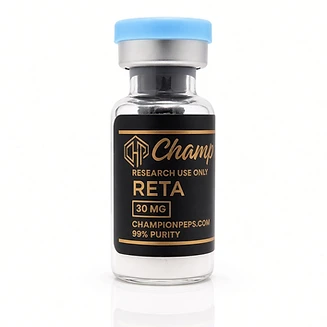
Research use only. Listing a supplier is not an endorsement of any protocol on this site, and nothing sold there is approved for human use.
Related protocols
View allOxytocin 5mg
Endogenous nonapeptide hormone and oxytocin-receptor agonist investigated for neuroendocrine signaling, bonding, and stress response.
View ProtocolGLOW (GHK-Cu + TB-500 + BPC-157)
A 70 mg multi-peptide research formulation combining GHK-Cu, TB-500, and BPC-157 in a fixed 5:1:1 ratio for tissue repair investigations.
View ProtocolAmycretin 5mg
Dual GLP-1 and amylin receptor agonist investigated for potent satiety induction and body weight regulation.
View Protocol