Oxytocin 5mg
Endogenous nonapeptide hormone and oxytocin-receptor agonist investigated for neuroendocrine signaling, bonding, and stress response.
Mechanism
Acts as a selective agonist at the oxytocin receptor (OXTR), a G-protein-coupled receptor that mediates peripheral smooth muscle contraction and modulates central neuroendocrine pathways involved in social affiliation and stress signaling.
Dosing
Standard experimental protocols document an initial daily dose of 100 mcg administered subcutaneously.
Reconstitution
Reconstituting a 5 mg vial with 3.0 mL of bacteriostatic water yields an approximate working concentration of 1.67 mg/mL (1,667 mcg/mL).
Storage
Store the unmixed lyophilized vial frozen at -20 °C, and once reconstituted, maintain refrigerated at 2–8 °C for up to 28 days without freezing.
Mix & measure Oxytocin 5mg
Pre-filled with this protocol's recommended BAC water and documented starting dose — edit any field to run your own numbers.
Mix & measure Oxytocin 5mg
Vial strength → BAC water → target dose
Total doses in vial: 50.0
U-100 syringe: 100 units = 1 mL
Reconstitution math only — not dosing advice. U-100 syringe: 100 units = 1 mL. Advanced calculator →
Dosing Chart
| Phase / Day(s) | Dose & Frequency | Volume (U-100 units / mL) |
|---|---|---|
| Weeks 1–2 | 100 mcg (1× daily) | 6 units (0.06 mL) |
| Weeks 3–4 | 200 mcg (1× daily) | 12 units (0.12 mL) |
| Weeks 5–6 | 300 mcg (1× daily) | 18 units (0.18 mL) |
| Weeks 7–8 | 400 mcg (1× daily) | 24 units (0.24 mL) |
| Weeks 9–12 | 500 mcg (1× daily) | 30 units (0.30 mL) |
Reconstitution Steps
- 1
Draw 3.0 mL of bacteriostatic water using a sterile syringe.
- 2
Gently inject the diluent along the interior glass wall of the 5 mg oxytocin vial to avoid turbulence and foaming.
- 3
Slowly roll or swirl the vial between your palms until the lyophilized powder fully dissolves; avoid shaking.
- 4
Record the date and resulting concentration (~1.67 mg/mL) on the vial label.
- 5
Place the reconstituted vial into refrigeration at 2–8 °C, ensuring it is kept protected from light.
Supplies Needed


Peptide Vial
Oxytocin 5 mg lyophilized powder


Insulin Syringes (U-100)
0.5 mL or 1 mL U-100 syringes for accurate micro-volume draws


Bacteriostatic Water
3.0 mL per vial for dilution


Alcohol Swabs
Antiseptic preparation of vial tops and administration sites
Why researchers study it
Social bonding & trust signaling pathways
Anxiety, social fear, & HPA-axis stress reactivity
Libido, arousal, & pair-bonding physiology
Smooth-muscle contractility & obstetric models
These describe what is being studied, not proven benefits, approved uses, or promised results.
Overview
Oxytocin is an endogenous cyclic nonapeptide produced within the hypothalamus and secreted primarily by the posterior pituitary. In conventional medicine, synthetic oxytocin is established as an intravenous or intramuscular agent indicated for obstetric applications such as labor induction and the management of postpartum hemorrhage. However, broader exploration into its neuromodulatory capacities has driven substantial interest across laboratory research settings. In preclinical and clinical investigative models, researchers evaluate oxytocin for its complex roles in central nervous system pathways, including prosocial behaviors, affiliative bonding, emotional regulation, and moderation of the hypothalamic-pituitary-adrenal (HPA) stress response. Outside of obstetric clinical practice, systemic and central administration protocols remain purely experimental, as pharmacokinetic barriers like rapid enzymatic degradation and limited blood-brain barrier permeability present distinct hurdles in translational settings. This protocol documentation provides standard reconstitution parameters, measurement guidelines, and experimental titration increments reported in contemporary literature for a 5 mg research vial. These details serve strictly as educational references for laboratory investigators exploring receptor kinetics, behavioral assays, and related biochemical endpoints.
References
- 1.StatPearls / NCBI Bookshelf, 2023 — Oxytocin: nonapeptide structure, OXTR signalling, and physiology of uterine contraction and lactation
- 2.Psychoneuroendocrinology, 2020 — Reviews of oxytocin as a social/bonding neuromodulator
- 3.Clinical Pharmacokinetics, 2018 — Oxytocin pharmacokinetics and short plasma half-life
- 4.Journal of Neuroendocrinology, 2019 — Dosing and bioavailability across routes of administration
- 5.Sikich et al., NEJM, 2021 — SOARS-B randomized trial of intranasal oxytocin in autistic children
- 6.FDA Label / CDER, 2021 — Prescribing information for Pitocin (oxytocin injection)
- 7.Frontiers in Neuroscience, 2020 — Oxytocin modulation of the HPA stress axis and dopaminergic circuits
- 8.Neuropsychopharmacology, 2016 — Blood-brain barrier penetration and intranasal delivery rationale
- 9.Systematic Review, 2021 — Intranasal oxytocin in anxiety and psychiatric conditions
- 10.Diabetes / Metabolism, 2015 — Acute intranasal oxytocin and caloric intake modulation in humans
- 11.Cochrane Database of Systematic Reviews, 2018 — Oxytocin for labor induction and postpartum hemorrhage prevention
- 12.Biological Psychiatry, 2016 — Oxytocin trials in psychiatric disorders and effect size replication
- 13.CDC, 2021 — Subcutaneous administration technique guidelines
Supplies Needed
Suggested supplier
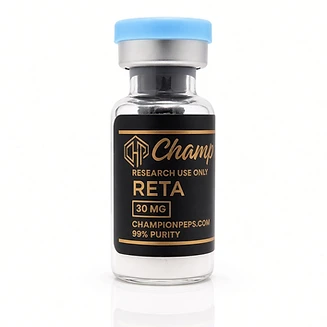
Research use only. Listing a supplier is not an endorsement of any protocol on this site, and nothing sold there is approved for human use.
Related protocols
View allGLOW (GHK-Cu + TB-500 + BPC-157)
A 70 mg multi-peptide research formulation combining GHK-Cu, TB-500, and BPC-157 in a fixed 5:1:1 ratio for tissue repair investigations.
View ProtocolAmycretin 5mg
Dual GLP-1 and amylin receptor agonist investigated for potent satiety induction and body weight regulation.
View ProtocolCagrilintide 10mg
A long-acting synthetic amylin analogue investigated for neuroendocrine satiety signaling, gastric kinetics, and body composition regulation.
View Protocol