PE-22-28 10mg
A synthetic spadin-derived heptapeptide and TREK-1 potassium channel blocker evaluated in preclinical fast-acting antidepressant models.
Mechanism
Selectively inhibits TREK-1 (KCNK2) two-pore-domain potassium channels to stimulate hippocampal neurogenesis and synaptogenesis in preclinical paradigms.
Dosing
Standard laboratory protocols initiate investigation at 50 mcg administered once daily via subcutaneous injection, with gradual titration up to 200 mcg over an 8- to 16-week cycle.
Reconstitution
Reconstituting a 10 mg vial with 3.0 mL of bacteriostatic water yields a peptide concentration of approximately 3.33 mg/mL (33.3 mcg per U-100 unit).
Storage
Store the unmixed lyophilized powder at -20 °C, and once dissolved in bacteriostatic water, refrigerate between 2 °C and 8 °C for up to 28 days without freezing.
Mix & measure PE-22-28 10mg
Pre-filled with this protocol's recommended BAC water and documented starting dose — edit any field to run your own numbers.
Mix & measure PE-22-28 10mg
Vial strength → BAC water → target dose
Common vial sizes
Label claim
Total doses in vial: 200.0
U-100 syringe: 100 units = 1 mL
Need supplies for this protocol?
Research-grade peptides, fast shipping, competitive pricing
Reconstitution math only — not dosing advice. U-100 syringe: 100 units = 1 mL. Advanced calculator →
Track my protocol
Log each dose, build a streak, and watch your progress through this protocol's schedule.
Dosing Chart
| Phase / Day(s) | Dose & Frequency | Volume (U-100 units / mL) |
|---|---|---|
| Weeks 1–2 | 50 mcg (1× daily) | ~1.5 units (0.015 mL) |
| Weeks 3–4 | 100 mcg (1× daily) | ~3 units (0.03 mL) |
| Weeks 5–8 | 100 mcg (1× daily) | ~3 units (0.03 mL) |
| Weeks 9–12 (optional) | 150 mcg (1× daily) | ~4.5 units (0.045 mL) |
| Weeks 13–16 (optional) | 200 mcg (1× daily) | ~6 units (0.06 mL) |
Reconstitution Steps
- 1
Draw precisely 3.0 mL of bacteriostatic water into a sterile reconstitution syringe.
- 2
Gently inject the diluent along the interior glass wall of the PE-22-28 vial to prevent turbulence and foaming.
- 3
Slowly roll or swirl the vial until the lyophilized cake is completely dissolved; do not agitate or shake.
- 4
Clearly label the vial with reconstitution date, time, and calculated concentration (~3.33 mg/mL).
- 5
Store immediately in a dark refrigerator at 2–8 °C (35.6–46.4 °F).
Supplies Needed


Peptide Vial
PE-22-28 (10 mg lyophilized powder) for reconstitution and research preparation


Insulin Syringes (U-100)
Low-dose 30-unit or 50-unit sterile syringes for precise low-volume microgram draws


Bacteriostatic Water
3.0 mL sterile diluent containing 0.9% benzyl alcohol used to reconstitute the peptide


Alcohol Swabs
70% isopropyl alcohol prep pads for sanitizing the vial septum and injection site
Why researchers study it
Fast-acting antidepressant candidate research
Selective TREK-1 potassium channel inhibition mechanisms
Rodent behavioural models of mood regulation
Stimulation of hippocampal neurogenesis and synaptogenesis
These describe what is being studied, not proven benefits, approved uses, or promised results.
Overview
PE-22-28 is an engineered heptapeptide (sequence GVSWGLR) derived directly from residues 22 through 28 of spadin, the propeptide released during the cleavage of sortilin. Designed as a shortened, optimized analog, it selectively targets and blocks TREK-1 (KCNK2) two-pore-domain potassium channels without retaining the broader structural complexity of the parent molecule. In preclinical neuropharmacology, PE-22-28 has drawn significant interest due to its capacity to induce rapid antidepressant-like behavioral responses in rodent paradigms, bypassing the standard multi-week latency period characteristic of conventional monoaminergic agents. Investigation shows this channel blockade prompts neuroplastic remodeling, facilitating enhanced synaptogenesis and hippocampal neurogenesis in animal models. Because PE-22-28 remains strictly an experimental research compound with no human clinical evaluation or pharmacokinetic confirmation, laboratory studies focus on its receptor-binding kinetics, behavioral markers in standard depression screening models, and structural stability in vitro.
References
- 1.Mazella et al., PLoS Biology, 2010 — Spadin, a sortilin-derived peptide, acts as a TREK-1 blocker and produces antidepressant-like effects in rodents
- 2.Veyssiere et al., PNAS, 2015 — Retro-inverso and short spadin analogs (including PE-22-28) as optimized TREK-1 blockers with antidepressant activity in mice
- 3.Djillani et al., Frontiers in Pharmacology / J. Neurochem. — Shortened spadin analog PE-22-28: fast antidepressant action, increased hippocampal neurogenesis and synaptogenesis in rodent models
- 4.Djillani et al., Review (TREK-1 / spadin) — Review of TREK-1 (KCNK2) as an antidepressant target and the development of spadin-derived peptides such as PE-22-28
- 5.Heurteaux et al., Nature Neuroscience, 2006 — TREK-1 knockout produces a depression-resistant phenotype, establishing TREK-1 as an antidepressant target
- 6.Mazella & Borsotto, Pharmacology of spadin — Sortilin/spadin signalling and modulation of TREK-1 potassium channels relevant to mood regulation
Supplies Needed
Suggested supplier
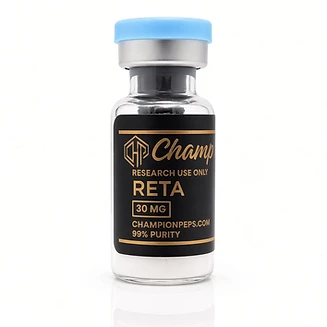
Research use only. Listing a supplier is not an endorsement of any protocol on this site, and nothing sold there is approved for human use.
Related protocols
View allGHRP-6 10mg
A synthetic hexapeptide growth hormone secretagogue and ghrelin receptor agonist investigated for appetite and pulsatile somatotropin release.
View ProtocolCagrilintide 10mg
A long-acting synthetic amylin analogue investigated for neuroendocrine satiety signaling, gastric kinetics, and body composition regulation.
View ProtocolCagriSema 10mg (5+5 mg)
An investigational co-formulated dual-action blend combining the amylin analog cagrilintide with GLP-1 agonist semaglutide.
View Protocol