CagriSema 10mg (5+5 mg)
An investigational co-formulated dual-action blend combining the amylin analog cagrilintide with GLP-1 agonist semaglutide.
Mechanism
Simultaneously activates GLP-1 and amylin receptors to delay gastric emptying, suppress glucagon release, and stimulate central satiety pathways.
Dosing
The research protocol initiates administration at 0.25 mg of each component (0.5 mg total blend) once weekly, titrating upward in four-week intervals toward target maintenance levels.
Reconstitution
Reconstituting a 10 mg combination vial with 1.0 mL of bacteriostatic water yields an overall concentration of 10 mg/mL, containing 5 mg/mL of cagrilintide and 5 mg/mL of semaglutide.
Storage
Store unmixed lyophilized vials in a cold, dark environment, and maintain reconstituted solutions refrigerated between 2 and 8 °C protected from light for up to 28 days.
Mix & measure CagriSema 10mg (5+5 mg)
Pre-filled with this protocol's recommended BAC water and documented starting dose — edit any field to run your own numbers.
Mix & measure CagriSema 10mg (5+5 mg)
Vial strength → BAC water → target dose
Total doses in vial: 40.0
U-100 syringe: 100 units = 1 mL
Reconstitution math only — not dosing advice. U-100 syringe: 100 units = 1 mL. Advanced calculator →
Dosing Chart
| Phase / Day(s) | Dose & Frequency | Volume (U-100 units / mL) |
|---|---|---|
| Weeks 1–4 | 0.25 mg + 0.25 mg (1×/week) | 5 units (0.05 mL) |
| Weeks 5–8 | 0.5 mg + 0.5 mg (1×/week) | 10 units (0.10 mL) |
| Weeks 9–12 | 1.0 mg + 1.0 mg (1×/week) | 20 units (0.20 mL) |
| Weeks 13–16 | 1.7 mg + 1.7 mg (1×/week) | 34 units (0.34 mL) |
| Week 17 onward | 2.4 mg + 2.4 mg (1×/week) | 48 units (0.48 mL) |
Reconstitution Steps
- 1
Thoroughly wipe down the rubber stoppers of both the CagriSema blend vial and the bacteriostatic water vial using separate, fresh alcohol swabs.
- 2
Draw 1.0 mL of bacteriostatic water into a sterile mixing syringe.
- 3
Insert the needle into the CagriSema vial and slowly dispense the diluent down the inner glass wall, avoiding direct force onto the lyophilized cake.
- 4
Gently swirl the vial in circular motions until the lyophilized powder has completely dissolved, ensuring not to agitate or shake the mixture.
- 5
Record the date of reconstitution and transfer the vial to a refrigerated environment maintained at 2–8 °C.
Supplies Needed


Peptide Vial
CagriSema combo vial containing 5 mg cagrilintide and 5 mg semaglutide lyophilized powder


Insulin Syringes (U-100)
Calibrated measurement syringes used to measure precise subcutaneous volumes at 100 units per mL


Bacteriostatic Water
Sterile diluent preserved with benzyl alcohol used to safely reconstitute and preserve the multi-dose blend


Alcohol Swabs
Antiseptic wipes used to sterilize vial stoppers and injection surfaces prior to handling
Why researchers study it
Investigated for marked body-weight reduction in obesity models
Evaluated for glycemic modulation and HbA1c control in type 2 diabetes
Studied to assess synergistic appetite signaling via dual amylin and GLP-1 pathways
Compared against standalone incretin therapies like semaglutide and tirzepatide
These describe what is being studied, not proven benefits, approved uses, or promised results.
Overview
CagriSema represents an advanced investigational dual-action peptide formulation designed to explore synergistic metabolic signaling. The blend co-formulates the synthetic amylin analog cagrilintide alongside the established glucagon-like peptide-1 (GLP-1) receptor agonist semaglutide in an equal 1:1 mass ratio. Evaluated extensively within late-phase clinical trial programs, this combination is engineered to probe the metabolic impacts of simultaneously activating divergent neuroendocrine satiety pathways. By engaging distinct receptors within both peripheral organ systems and central nervous system appetite centers, CagriSema facilitates parallel modulation of gastric transit, glucagon release, and postprandial insulin secretion. The fixed combination vial requires joint titration, meaning that researchers evaluate both peptide molecules escalating simultaneously rather than as independently managed chemical entities.
References
- 1.Garvey WT et al., New England Journal of Medicine, 2025 — Phase 3 REDEFINE 1 trial evaluating cagrilintide and semaglutide co-administration in overweight/obesity
- 2.Davies M et al., New England Journal of Medicine, 2025 — Phase 3 REDEFINE 2 trial of cagrilintide-semaglutide combination in type 2 diabetes
- 3.Enebo LB et al., The Lancet, 2021 — Safety, tolerability, and pharmacokinetics of co-administered cagrilintide and semaglutide
- 4.Lau DCW et al., The Lancet, 2021 — Phase 2 dose-finding monotherapy evaluation of cagrilintide for weight regulation
- 5.Wilding JPH et al., New England Journal of Medicine, 2021 — STEP 1 trial investigating weekly semaglutide 2.4 mg in obesity
- 6.ClinicalTrials.gov, NCT05567796, 2022 — Registry data for pivotal phase 3 REDEFINE 1 weight-management trial
- 7.Hay DL et al., Pharmacological Reviews, 2015 — Overview of amylin physiology, receptor pharmacology, and therapeutic scope
- 8.ClinicalTrials.gov, NCT05669755, 2022 — REDEFINE 3 study on major adverse cardiovascular events in obesity
Supplies Needed
Suggested supplier
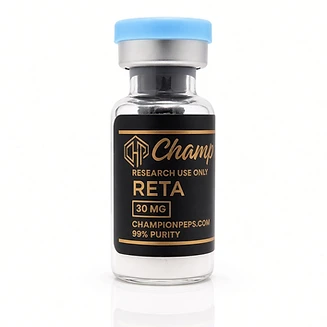
Research use only. Listing a supplier is not an endorsement of any protocol on this site, and nothing sold there is approved for human use.
Related protocols
View allCagrilintide 5mg
Synthetic, long-acting dual amylin and calcitonin receptor agonist under investigation for metabolic regulation and weight reduction.
View ProtocolMazdutide 10mg
Dual GLP-1 and glucagon receptor agonist investigated for synergistic appetite control, energy expenditure, and glycemic regulation.
View ProtocolCardiogen 20mg
Synthetic short-chain tetrapeptide bioregulator studied for its potential effects on cardiomyocyte gene expression and cardiovascular integrity.
View Protocol