MOTS-C 5mg
Mitochondrial-derived peptide investigated for AMPK signaling activation, metabolic regulation, and age-related physical performance.
Mechanism
Stimulates the cellular AMPK pathway via folate cycle inhibition to enhance insulin sensitivity, fatty acid oxidation, and metabolic homeostasis.
Dosing
Documented laboratory research protocols initiate daily subcutaneous administration at 200 mcg, titrating progressively up to 1,000 mcg per day over a 10-week cycle.
Reconstitution
Reconstituting a 5 mg vial with 3.0 mL of bacteriostatic water yields an approximate working concentration of 1.67 mg/mL (1,667 mcg/mL).
Storage
Store the lyophilized peptide at -20 °C, and once reconstituted, keep refrigerated between 2 °C and 8 °C protected from light, using within 7 days without freezing.
Mix & measure MOTS-C 5mg
Pre-filled with this protocol's recommended BAC water and documented starting dose — edit any field to run your own numbers.
Mix & measure MOTS-C 5mg
Vial strength → BAC water → target dose
Total doses in vial: 25.0
U-100 syringe: 100 units = 1 mL
Reconstitution math only — not dosing advice. U-100 syringe: 100 units = 1 mL. Advanced calculator →
Dosing Chart
| Phase / Day(s) | Dose & Frequency | Volume (U-100 units / mL) |
|---|---|---|
| Weeks 1–2 | 200 mcg (1× daily) | 12 units (0.12 mL) |
| Weeks 3–4 | 400 mcg (1× daily) | 24 units (0.24 mL) |
| Weeks 5–6 | 600 mcg (1× daily) | 36 units (0.36 mL) |
| Weeks 7–8 | 800 mcg (1× daily) | 48 units (0.48 mL) |
| Weeks 9–10+ | 1,000 mcg (1× daily) | 60 units (0.60 mL) |
Reconstitution Steps
- 1
Draw exactly 3.0 mL of sterile bacteriostatic water into a fresh reconstitution syringe.
- 2
Insert the syringe needle into the MOTS-c vial stopper and allow the diluent to run gently down the inside glass wall to minimize agitation and foaming.
- 3
Carefully rotate or swirl the vial between your palms until the lyophilizate dissolves completely; avoid vigorous shaking.
- 4
Inspect the final solution to verify that it is fully dissolved, clear, and particulate-free.
- 5
Label the container with the mixing date and reconstituted concentration, then store immediately at 2–8 °C shielded from light.
Supplies Needed


Peptide Vial
5 mg vial of lyophilized MOTS-c peptide for laboratory research use.


Insulin Syringes (U-100)
Standard 1 mL U-100 syringes used to accurately measure microgram doses.


Bacteriostatic Water
Sterile diluent preserved with 0.9% benzyl alcohol, requiring 3.0 mL per 5 mg vial.


Alcohol Swabs
Sterile 70% isopropyl alcohol wipes for sanitizing vial tops and administration sites.
Why researchers study it
AMPK pathway activation and metabolic homeostasis
Enhanced insulin sensitivity and glucose clearance
Exercise capacity and endurance signaling
Mitochondrial-to-nuclear retrograde communication
Mitigation of age-dependent metabolic decline
These describe what is being studied, not proven benefits, approved uses, or promised results.
Overview
MOTS-c is an endogenous 16-amino-acid peptide encoded within the mitochondrial genome rather than nuclear DNA. Belonging to the family of mitochondrial-derived peptides (MDPs), it serves as a critical signaling molecule involved in cellular stress adaptation and systemic energy balance. Preclinical investigations highlight its capability to act as an exercise mimetic by initiating retrograde communication from mitochondria to the cell nucleus. At the cellular level, MOTS-c interferes with the folate cycle, triggering the intracellular accumulation of AICAR and subsequently activating adenosine monophosphate-activated protein kinase (AMPK). This enzymatic cascade enhances cellular glucose clearance, stimulates fatty acid beta-oxidation, and bolsters mitochondrial respiration, thereby mimicking the physiological benefits observed during physical training and caloric restriction in animal models. In experimental models, MOTS-c administration is associated with the prevention of high-fat-diet-induced insulin resistance, reduction of visceral adiposity, and preservation of physical performance in aging cohorts. While preclinical findings suggest significant promise for metabolic regulation and longevity pathways, MOTS-c remains an unapproved investigational chemical without established human efficacy data.
References
- 1.Lee C, Zeng J, Drew BG, et al., Cell Metabolism, 2015 — The mitochondrial-derived peptide MOTS-c promotes metabolic homeostasis and reduces obesity and insulin resistance
- 2.Wan W, Zhang L, Lin Y, et al., Journal of Translational Medicine, 2023 — Mitochondria-derived peptide MOTS-c: effects and mechanisms related to stress, metabolism and aging
- 3.Lu H, Wei M, Zhai Y, et al., Journal of Molecular Medicine, 2019 — MOTS-c peptide regulates adipose homeostasis to prevent ovariectomy-induced metabolic dysfunction
- 4.Reynolds JC, Lai RW, Woodhead JST, et al., Nature Communications, 2021 — MOTS-c is an exercise-induced mitochondrial-encoded regulator of age-dependent physical decline and muscle homeostasis
- 5.Yi X, Hu G, Yang Y, et al., Frontiers in Physiology, 2023 — Role of MOTS-c in the regulation of bone metabolism
- 6.Mohtashami Z, Singh MK, Salimiaghdam N, et al., International Journal of Molecular Sciences, 2022 — MOTS-c, the Most Recent Mitochondrial-Derived Peptide in Human Aging and Age-Related Diseases
- 7.Kong BS, Lee H, L'Yi S, et al., Experimental & Molecular Medicine, 2025 — Mitochondrial-encoded peptide MOTS-c prevents pancreatic islet cell senescence to delay diabetes
Supplies Needed
Suggested supplier
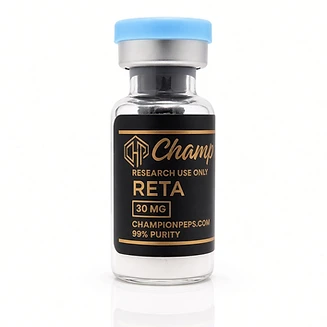
Research use only. Listing a supplier is not an endorsement of any protocol on this site, and nothing sold there is approved for human use.
Related protocols
View allRetatrutide 60mg
First-in-class triple agonist targeting GLP-1, GIP, and glucagon receptors investigated for substantial weight reduction and metabolic control.
View Protocol5-Amino-1MQ 10mg
Synthetic small-molecule NNMT inhibitor explored in preclinical models for cellular energy balance, NAD+ preservation, and adipocyte metabolism.
View ProtocolBPC-157 10mg
A 15-amino-acid synthetic peptide researched in preclinical models for soft-tissue recovery, angiogenesis, and gastrointestinal protection.
View Protocol