MOTS-C 40mg
A mitochondrial-derived peptide studied for AMPK activation, glucose homeostasis, lipid oxidation, and exercise-mimetic potential.
Mechanism
Stimulates the cellular AMPK pathway via folate cycle modulation and AICAR accumulation to enhance peripheral glucose handling, fatty acid oxidation, and metabolic homeostasis.
Dosing
Preclinical literature references an initial research dose of 200 mcg administered subcutaneously once daily.
Reconstitution
Reconstituting a 40 mg vial with 3.0 mL of bacteriostatic water yields an approximate working concentration of 13.33 mg/mL (13,333 mcg/mL).
Storage
Store the unmixed lyophilized vial frozen at -20 °C (-4 °F), and keep the reconstituted solution refrigerated at 2–8 °C (35.6–46.4 °F) protected from light for up to 7 days without freezing.
Mix & measure MOTS-C 40mg
Pre-filled with this protocol's recommended BAC water and documented starting dose — edit any field to run your own numbers.
Mix & measure MOTS-C 40mg
Vial strength → BAC water → target dose
Total doses in vial: 200.0
U-100 syringe: 100 units = 1 mL
Reconstitution math only — not dosing advice. U-100 syringe: 100 units = 1 mL. Advanced calculator →
Dosing Chart
| Phase / Day(s) | Dose & Frequency | Volume (U-100 units / mL) |
|---|---|---|
| Weeks 1–2 | 200 mcg (1× daily) | ~1.5 units (0.015 mL) |
| Weeks 3–4 | 400 mcg (1× daily) | ~3 units (0.03 mL) |
| Weeks 5–6 | 600 mcg (1× daily) | ~4.5 units (0.045 mL) |
| Weeks 7–8 | 800 mcg (1× daily) | ~6 units (0.06 mL) |
| Weeks 9–10+ | 1,000 mcg (1× daily) | ~7.5 units (0.075 mL) |
Reconstitution Steps
- 1
Draw 3.0 mL of bacteriostatic water into a sterile syringe.
- 2
Dispense the liquid slowly down the inner glass wall of the vial to minimize foaming.
- 3
Gently swirl or roll the vial between palms until the powder dissolves completely without shaking.
- 4
Mark the vial with the date and concentration, then refrigerate at 2–8 °C (35.6–46.4 °F) shielded from light.
Supplies Needed


Peptide Vial
Lyophilized MOTS-C (40 mg per vial) for research-grade reconstitution


Insulin Syringes (U-100)
0.3 mL, 0.5 mL, or 1.0 mL U-100 sterile syringes for precise micro-volume administration


Bacteriostatic Water
Sterile 0.9% benzyl alcohol diluent (3.0 mL required per 40 mg vial)


Alcohol Swabs
Antiseptic prep pads for sanitizing vial rubber stoppers and injection sites
Why researchers study it
AMPK pathway activation and metabolic homeostasis
Enhanced lipid metabolism and fatty acid oxidation
Glucose disposal and peripheral insulin sensitivity
Exercise capacity preservation and metabolic aging
These describe what is being studied, not proven benefits, approved uses, or promised results.
Overview
MOTS-c is an endogenous 16-amino-acid peptide encoded within the mitochondrial genome rather than nuclear DNA. First characterized for its role in cellular stress signaling, it functions as an essential systemic regulator of metabolic homeostasis. Preclinical investigations describe it as an exercise-mimetic agent capable of shifting cellular energetics toward increased efficiency, mitochondrial respiration, and adaptive stress defense. At the cellular level, research indicates MOTS-c disrupts folate metabolism to elevate intracellular AICAR levels, directly stimulating the AMP-activated protein kinase (AMPK) signaling cascade. This activation suppresses gluconeogenesis and adipogenesis while enhancing peripheral glucose uptake and fatty-acid beta-oxidation. Under oxidative or metabolic strain, MOTS-c can translocate to the cell nucleus to modulate transcriptional programs linked to cellular survival and antioxidant responses. While preclinical models demonstrate pronounced benefits regarding physical capacity, diet-induced obesity resistance, and metabolic aging, clinical efficacy data in human subjects remains pending. Consequently, MOTS-c is maintained strictly as an experimental tool for laboratory investigation into energy metabolism, cellular aging, and mitochondrial biology.
References
- 1.Lee C, Zeng J, Drew BG, et al., Cell Metabolism, 2015 — The mitochondrial-derived peptide MOTS-c promotes metabolic homeostasis and reduces obesity and insulin resistance
- 2.Wan W, Zhang L, Lin Y, et al., Journal of Translational Medicine, 2023 — Mitochondria-derived peptide MOTS-c: effects and mechanisms related to stress, metabolism and aging
- 3.Lu H, Wei M, Zhai Y, et al., Journal of Molecular Medicine, 2019 — MOTS-c peptide regulates adipose homeostasis to prevent ovariectomy-induced metabolic dysfunction
- 4.Reynolds JC, Lai RW, Woodhead JST, et al., Nature Communications, 2021 — MOTS-c is an exercise-induced mitochondrial-encoded regulator of age-dependent physical decline and muscle homeostasis
- 5.Yi X, Hu G, Yang Y, et al., Frontiers in Physiology, 2023 — Role of MOTS-c in the regulation of bone metabolism
- 6.Mohtashami Z, Singh MK, Salimiaghdam N, et al., International Journal of Molecular Sciences, 2022 — MOTS-c, the Most Recent Mitochondrial-Derived Peptide in Human Aging and Age-Related Diseases
- 7.Kong BS, Lee H, L'Yi S, et al., Experimental & Molecular Medicine, 2025 — Mitochondrial-encoded peptide MOTS-c prevents pancreatic islet cell senescence to delay diabetes
Supplies Needed
Suggested supplier
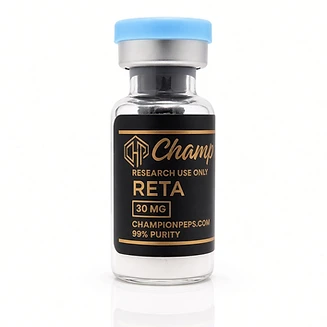
Research use only. Listing a supplier is not an endorsement of any protocol on this site, and nothing sold there is approved for human use.
Related protocols
View allRetatrutide 60mg
First-in-class triple agonist targeting GLP-1, GIP, and glucagon receptors investigated for substantial weight reduction and metabolic control.
View Protocol5-Amino-1MQ 10mg
Synthetic small-molecule NNMT inhibitor explored in preclinical models for cellular energy balance, NAD+ preservation, and adipocyte metabolism.
View ProtocolBPC-157 10mg
A 15-amino-acid synthetic peptide researched in preclinical models for soft-tissue recovery, angiogenesis, and gastrointestinal protection.
View Protocol