MGF 5mg
Mechano Growth Factor (IGF-1Ec) splice variant investigated in preclinical literature for myogenic satellite cell activation and localized repair.
Mechanism
MGF (IGF-1Ec) drives cellular muscle repair by stimulating dormant myogenic satellite cell activation and proliferation via its distinctive C-terminal E-domain and cross-interaction with the IGF-1 receptor.
Dosing
Standard laboratory protocols initiate investigation at a starting dose of 200 mcg once daily, carefully titrating upward over successive research phases.
Reconstitution
Reconstituting a 5 mg vial with 3.0 mL of bacteriostatic water creates a final solution concentration of approximately 1.67 mg/mL (1,667 mcg/mL).
Storage
Preserve unmixed lyophilized vials at -20 °C protected from moisture; store reconstituted solutions refrigerated between 2 °C and 8 °C, never freezing the mixed peptide.
Mix & measure MGF 5mg
Pre-filled with this protocol's recommended BAC water and documented starting dose — edit any field to run your own numbers.
Mix & measure MGF 5mg
Vial strength → BAC water → target dose
Total doses in vial: 25.0
U-100 syringe: 100 units = 1 mL
Reconstitution math only — not dosing advice. U-100 syringe: 100 units = 1 mL. Advanced calculator →
Dosing Chart
| Phase / Day(s) | Dose & Frequency | Volume (U-100 units / mL) |
|---|---|---|
| Weeks 1–2 | 200 mcg (1× daily) | ~12 units (0.12 mL) |
| Weeks 3–4 | 300 mcg (1× daily) | ~18 units (0.18 mL) |
| Weeks 5–6 | 400 mcg (1× daily) | ~24 units (0.24 mL) |
| Weeks 7–12 | 500 mcg (1× daily) | ~30 units (0.30 mL) |
Reconstitution Steps
- 1
Aseptically draw exactly 3.0 mL of bacteriostatic water using a sterile syringe.
- 2
Introduce the diluent slowly against the interior glass wall of the vial to minimize turbulence and foam creation.
- 3
Swirl or rotate the vial gently until the cake completely dissolves, ensuring the solution is never vigorously shaken.
- 4
Affix a label noting concentration and mixing date, then place immediately into refrigeration between 2–8 °C away from light.
Supplies Needed


Peptide Vial
MGF 5 mg lyophilized powder vial for laboratory experimental use.


Insulin Syringes (U-100)
0.3 mL, 0.5 mL, or 1 mL U-100 syringes for precise measurement and fluid delivery.


Bacteriostatic Water
Sterile multi-dose reconstitution diluent preserved with 0.9% benzyl alcohol.


Alcohol Swabs
Disinfecting rubber vial septums and target administration regions prior to puncture.
Why researchers study it
Muscle repair & regeneration
Satellite cell activation
Injury & tissue recovery
Neuroprotection
These describe what is being studied, not proven benefits, approved uses, or promised results.
Overview
Mechano Growth Factor (MGF), identified as the IGF-1Ec splice isoform, is an endogenous peptide produced locally within skeletal muscle tissue following mechanical stress, strain, or physical damage. It differs fundamentally from liver-derived systemic IGF-1 isoforms due to its unique C-terminal E-domain sequence, which mediates distinct local regenerative signaling pathways independent of classical endocrine mechanisms. Preclinical research focuses largely on the peptide's capacity to induce myogenic stem cell (satellite cell) activation and proliferation. By signaling these dormant progenitor cells to re-enter the cell cycle, MGF facilitates the cellular pool expansion necessary for subsequent fusion into damaged myofibers during experimental tissue repair. While highly studied in cellular cultures and animal damage models, exogenous MGF remains an unapproved investigational chemical without established efficacy or safety in human subjects. Current scientific literature details strictly exploratory protocols evaluating local cellular proliferation and structural recovery in non-human environments.
References
- 1.Goldspink et al., PubMed, 2001 — Identification of IGF-1Ec (mechano growth factor) as a splice variant of the IGF-1 gene expressed in mechanically loaded muscle
- 2.Yang et al., Journal of Physiology, 2002 — Characterization of the MGF E-domain and distinct C-terminal sequence differentiating it from systemic IGF-1
- 3.Ates et al., PubMed, 2007 — Preclinical administration of mechano growth factor in animal muscle repair models
- 4.Mills et al., PubMed, 2007 — Role of MGF and E-domain peptide in satellite cell activation and proliferation in vitro
- 5.Hameed et al., PubMed, 2003 — Mechano growth factor and muscle repair / hypertrophy in preclinical models
- 6.Dluzniewska et al., PubMed, 2005 — Neuroprotective effects of the mechano growth factor E-domain peptide in animal models
Supplies Needed
Suggested supplier
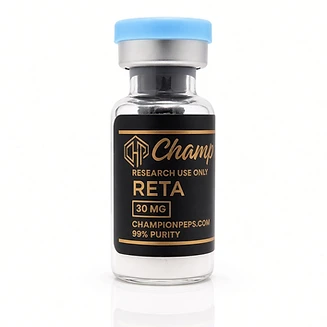
Research use only. Listing a supplier is not an endorsement of any protocol on this site, and nothing sold there is approved for human use.
Related protocols
View allPinealon 20mg
Synthetic CNS bioregulator tripeptide (EDR) investigated in preclinical models for neuroprotective, epigenetic, and antioxidant properties.
View ProtocolSemax 5mg
Synthetic ACTH(4–10) analogue studied for neuroprotection, neuroplasticity, and cognitive enhancement through BDNF pathway modulation.
View ProtocolTriptorelin 2mg
Potent synthetic GnRH agonist evaluated for its biphasic endocrine profile, producing an initial gonadotropin surge followed by axis shutdown.
View Protocol