Livagen 20mg
A synthetic Khavinson tetrapeptide investigated for liver bioregulation, epigenetic modulation, and chromatin decondensation in aging models.
Mechanism
Livagen is theorized to promote epigenetic reactivation via direct chromatin decondensation, potentially restoring transcription of previously repressed genes in senescent cells.
Dosing
Standard laboratory protocols document an initial daily research dose of 500 mcg administered subcutaneously during introductory phases.
Reconstitution
Reconstituting a 20 mg vial with 3.0 mL of bacteriostatic water yields an approximate working concentration of 6.67 mg/mL (66.7 mcg per U-100 unit).
Storage
Store the unmixed lyophilized powder frozen at -20 °C, and once dissolved, keep the vial refrigerated between 2 °C and 8 °C protected from light without refreezing.
Mix & measure Livagen 20mg
Pre-filled with this protocol's recommended BAC water and documented starting dose — edit any field to run your own numbers.
Mix & measure Livagen 20mg
Vial strength → BAC water → target dose
Total doses in vial: 40.0
U-100 syringe: 100 units = 1 mL
Reconstitution math only — not dosing advice. U-100 syringe: 100 units = 1 mL. Advanced calculator →
Dosing Chart
| Phase / Day(s) | Dose & Frequency | Volume (U-100 units / mL) |
|---|---|---|
| Weeks 1–2 | 500 mcg (1× daily) | ~7.5 units (~0.075 mL) |
| Weeks 3–4 | 1,000 mcg (1× daily) | 15 units (0.15 mL) |
| Weeks 5–6 | 1,500 mcg (1× daily) | ~23 units (~0.225 mL) |
| Weeks 7–12 | 2,000 mcg (1× daily) | 30 units (0.30 mL) |
Reconstitution Steps
- 1
Draw exactly 3.0 mL of bacteriostatic water into a fresh sterile syringe.
- 2
Gently inject the diluent along the interior glass wall of the 20 mg Livagen vial to prevent aggressive agitation.
- 3
Slowly roll or swirl the vial between your fingers until all peptide cake is completely dissolved; never shake vigorously.
- 4
Clearly label the reconstituted vial with the date and concentration, then refrigerate at 2–8 °C away from light.
Supplies Needed


Peptide Vial
Supplies the lyophilized Livagen peptide (20 mg per container) for investigative reconstitution.


Insulin Syringes (U-100)
Enables accurate fluid volumetric measurement of micro-doses using standard 100-unit graduations.


Bacteriostatic Water
Serves as the sterile, preserved diluent required to reconstitute the peptide cake safely for multi-dose usage.


Alcohol Swabs
Ensures proper aseptic handling by disinfecting vial stoppers and contact surfaces prior to puncture.
Why researchers study it
Hepatic tissue bioregulation and liver support
Chromatin decondensation and transcriptional reactivation
Cellular senescence and longevity pathways
Immune cell modulation and lymphocyte activity
These describe what is being studied, not proven benefits, approved uses, or promised results.
Overview
Livagen is a synthetic short-chain peptide composed of four amino acids (Lys-Glu-Asp-Ala, or KEDA). Classified under the Khavinson group of peptide bioregulators, it is primarily examined for its prospective tissue-specific affinity toward hepatic cells and immune system components. Originally designed through Russian gerontological research programs, this tetrapeptide remains an experimental subject for understanding cellular regulation across aging models. In preclinical laboratory literature, Livagen is evaluated for its capacity to influence nuclear architecture and reverse age-associated transcriptional silencing. By interacting with core genetic machinery, it is hypothesized to stimulate cellular renewal pathways without acting as a conventional synthetic stimulant or receptor agonist. To date, Livagen is not approved by major regulatory bodies, such as the FDA or EMA, for any clinical indication or therapeutic use. Scientific understanding relies almost entirely on preliminary cellular cultures and animal studies, and the compound is maintained solely for laboratory investigation and reference benchmarking.
References
- 1.Khavinson et al., Biogerontology, 2002 — Peptides and ageing: short-peptide bioregulators including Livagen (KEDA)
- 2.Khavinson et al., Bull. Exp. Biol. Med., 2003 — Livagen peptide sequence and in-vitro effects on lymphocyte chromatin
- 3.Anisimov & Khavinson, Biogerontology, 2010 — Review of peptide bioregulation of aging and short peptides
- 4.Khavinson et al., Bull. Exp. Biol. Med., 2000 — Epigenetic chromatin decondensation and gene reactivation by short peptides
Supplies Needed
Suggested supplier
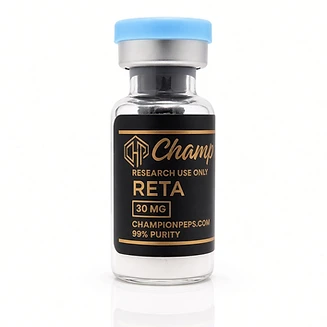
Research use only. Listing a supplier is not an endorsement of any protocol on this site, and nothing sold there is approved for human use.
Related protocols
View allLiraglutide 10mg
A long-acting GLP-1 receptor agonist investigated in metabolic research models for appetite regulation, glycemic control, and weight loss.
View ProtocolSS-31 30mg
Mitochondria-targeted synthetic tetrapeptide researched for cardiolipin stabilization, ATP production, and oxidative stress mitigation.
View ProtocolAdamax 10mg
Adamax is an adamantane-modified Semax analog investigated in neurobiology models for cognitive enhancement and BDNF upregulation.
View Protocol