Ipamorelin 5mg + Tesamorelin 5mg (10mg Blend)
Dual-pathway secretagogue blend (10mg total) combining GHRH and GHSR agonists to study amplified pulsatile somatotroph secretion.
Mechanism
Tesamorelin activates GHRH receptors while ipamorelin selectively stimulates GHS-R1a (ghrelin) receptors, acting synergistically on somatotrophs to amplify endogenous pulsatile growth hormone secretion.
Dosing
Documented laboratory research schedules examine 300 mcg once daily, frequently evaluated on a 5-day on and 2-day off cycle.
Reconstitution
Add 3.0 mL of bacteriostatic water to the 10 mg blend vial to obtain a final working concentration of 3.33 mg/mL (33.3 mcg per U-100 unit).
Storage
Store the lyophilized powder at −20 °C protected from light, and keep the reconstituted peptide solution refrigerated between 2 °C and 8 °C.
Mix & measure Ipamorelin 5mg + Tesamorelin 5mg (10mg Blend)
Pre-filled with this protocol's recommended BAC water and documented starting dose — edit any field to run your own numbers.
Mix & measure Ipamorelin 5mg + Tesamorelin 5mg (10mg Blend)
Vial strength → BAC water → target dose
Common vial sizes
Label claim
Total doses in vial: 33.3
U-100 syringe: 100 units = 1 mL
Need supplies for this protocol?
Research-grade peptides, fast shipping, competitive pricing
Reconstitution math only — not dosing advice. U-100 syringe: 100 units = 1 mL. Advanced calculator →
Track my protocol
Log each dose, build a streak, and watch your progress through this protocol's schedule.
Dosing Chart
| Phase / Day(s) | Dose & Frequency | Volume (U-100 units / mL) |
|---|---|---|
| Initiation (Days 1–14) | 300 mcg once daily (5 days on / 2 days off) | 9 units (0.09 mL) |
| Maintenance (Days 15–42) | 400 mcg once daily (5 days on / 2 days off) | 12 units (0.12 mL) |
| Escalation (Days 43+) | 500 mcg once daily (5 days on / 2 days off) | 15 units (0.15 mL) |
Reconstitution Steps
- 1
Remove the lyophilized 10mg peptide blend vial and bacteriostatic water vial from cold storage and allow both to equilibrate to room temperature for 15–20 minutes.
- 2
Disinfect the rubber stoppers of both vials thoroughly using fresh sterile alcohol swabs and allow them to air-dry completely.
- 3
Using a sterile syringe, draw exactly 3.0 mL of bacteriostatic water from the diluent vial.
- 4
Insert the needle at an angle through the blend vial stopper and slowly inject the diluent down the inner glass wall to prevent shearing the peptides.
- 5
Gently roll and swirl the vial between your palms until the lyophilized cake is fully dissolved; avoid shaking or vigorous agitation.
- 6
Label the vial with the reconstitution date, concentration (3.33 mg/mL), and refrigerate immediately at 2–8 °C.
Supplies Needed


Peptide Vial
Provides the lyophilized 10mg co-formulated peptide blend (5mg Ipamorelin / 5mg Tesamorelin), requiring one vial per 3- to 4-week research block.


Insulin Syringes (U-100)
Used for precise measurement and subcutaneous administration of research doses, requiring approximately 20 to 25 sterile syringes per research month.


Bacteriostatic Water
Supplies the sterile preservative-containing solvent for peptide reconstitution, requiring 3.0 mL per 10mg vial.


Alcohol Swabs
Maintains aseptic conditions across vial stoppers and injection sites, requiring roughly 50 to 60 swabs per full cycle.
Why researchers study it
Synergistic GHRH and GHRP receptor cross-talk
Pulsatile growth hormone and IGF-1 elevation
Visceral adipose tissue reduction and lipid metabolism
Preservation of skeletal muscle and lean body mass
These describe what is being studied, not proven benefits, approved uses, or promised results.
Overview
The Ipamorelin and Tesamorelin blend provides an equimolar-ratio formulation pairing two distinct growth hormone secretagogues. Tesamorelin is a synthetic 44-amino acid analog of human growth hormone-releasing hormone (GHRH) with an N-terminal trans-3-hexenoic acid modification that confers enzymatic resistance. It selectively activates pituitary GHRH receptors via the adenylate cyclase and cAMP second-messenger pathways, promoting natural pulsatile transcription and release of somatotropin. In parallel, ipamorelin is a synthetic pentapeptide agonist targeting the growth hormone secretagogue receptor 1a (GHS-R1a or ghrelin receptor), initiating intracellular calcium mobilization via the phospholipase C and IP3 cascade without triggering off-target spikes in cortisol or prolactin. Simultaneous engagement of GHRH receptors and GHS-R1a somatotroph pathways produces synergistic pituitary stimulation, generating growth hormone output significantly greater than the additive effect of either agent alone. This dual stimulation promotes downstream hepatic synthesis of insulin-like growth factor 1 (IGF-1), facilitating research into cellular repair, protein synthesis, visceral adipose tissue lipolysis, and preservation of lean body mass. The complementary kinetics provide an experimental platform for assessing endocrine axis resilience and targeted metabolic signaling. In preclinical and laboratory models, this combination serves as a primary tool for evaluating receptor co-activation, GH pulse dynamics, and non-pharmacologic pituitary exhaustion kinetics. Investigational designs frequently evaluate body composition alteration, lipid redistribution, and cellular aging markers without introducing exogenous recombinant growth hormone, thereby maintaining native physiological feedback loops.
References
- 1.Raun et al., European Journal of Endocrinology, 1998 — Ipamorelin, the first selective growth hormone secretagogue
- 2.Ferdinandi et al., Basic & Clinical Pharmacology & Toxicology, 2007 — Non-clinical pharmacology and safety evaluation of TH9507, a human growth hormone-releasing factor analog
- 3.Falutz et al., The New England Journal of Medicine, 2007 — Effects of a growth hormone-releasing factor analog on visceral adipose tissue in HIV-infected patients
- 4.Johansen et al., Growth Hormone & IGF Research, 1999 — Ipamorelin, a new growth-hormone secretagogue, induces longitudinal bone growth in rats
Supplies Needed
Suggested supplier
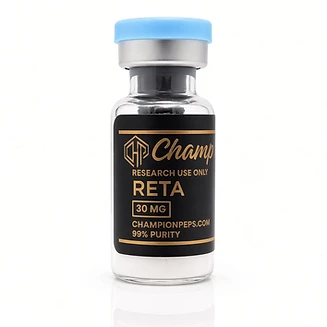
Research use only. Listing a supplier is not an endorsement of any protocol on this site, and nothing sold there is approved for human use.
Related protocols
View allIpamorelin + Tesamorelin 10mg
Dual-action GH secretagogue blend combining a selective ghrelin agonist with a stabilized GHRH analog for investigational metabolic research.
View ProtocolFollistatin-344 1mg
Recombinant glycoprotein studied for myostatin inhibition, ActRIIB pathway modulation, and muscle hypertrophy in preclinical models.
View ProtocolPielotax 20 mg oral
Pielotax (A-9) is an oral animal-derived peptide complex explored in preclinical models for renal cellular health and functional protection.
View Protocol