Ipamorelin 10mg
Selective pentapeptide ghrelin receptor agonist investigated for targeted, pulsatile growth hormone secretion without significant cortisol spikes.
Mechanism
Ipamorelin selectively binds to and activates the pituitary ghrelin receptor (GHS-R1a), triggering intracellular signaling cascades that provoke transient, pulsatile endogenous growth hormone secretion with negligible influence on cortisol or prolactin.
Dosing
Common experimental protocols establish an introductory research dose of 100 mcg administered once daily, typically titrated upward across an 8- to 12-week study framework.
Reconstitution
Diluting the 10 mg lyophilized vial with 3.0 mL of bacteriostatic water yields an operational working concentration of approximately 3.33 mg/mL (3,333 mcg/mL).
Storage
Store the lyophilized peptide at 2–8 °C for short-term preservation or at -20 °C for extended stability; keep the reconstituted liquid refrigerated at 2–8 °C and protected from light, never allowing it to freeze.
Mix & measure Ipamorelin 10mg
Pre-filled with this protocol's recommended BAC water and documented starting dose — edit any field to run your own numbers.
Mix & measure Ipamorelin 10mg
Vial strength → BAC water → target dose
Total doses in vial: 100.0
U-100 syringe: 100 units = 1 mL
Reconstitution math only — not dosing advice. U-100 syringe: 100 units = 1 mL. Advanced calculator →
Dosing Chart
| Phase / Day(s) | Dose & Frequency | Volume (U-100 units / mL) |
|---|---|---|
| Weeks 1–2 | 100 mcg (1× daily) | ~3 units (0.03 mL) |
| Weeks 3–4 | 150 mcg (1× daily) | ~4.5 units (0.045 mL) |
| Weeks 5–8 | 200 mcg (1× daily) | ~6 units (0.06 mL) |
| Weeks 9–12 | 300 mcg (1× daily) | ~9 units (0.09 mL) |
Reconstitution Steps
- 1
Aseptically withdraw 3.0 mL of bacteriostatic water using a sterile syringe.
- 2
Slowly introduce the diluent into the vial, directing the stream against the interior glass wall to minimize turbulent agitation and foaming.
- 3
Gently rotate or swirl the vial until the lyophilized cake fully dissolves, taking care not to shake vigorously.
- 4
Record the preparation date and resulting concentration (~3.33 mg/mL) on the vial label, and immediately store refrigerated at 2–8 °C away from light.
Supplies Needed


Peptide Vial
Contains 10 mg of lyophilized ipamorelin powder for laboratory reconstitution.


Insulin Syringes (U-100)
Calibrated U-100 syringes utilized for measuring and transferring precise micro-volumes.


Bacteriostatic Water
Sterile diluent preserved with benzyl alcohol used to safely reconstitute and preserve the multi-dose peptide.


Alcohol Swabs
Antiseptic wipes used to sterilize the rubber vial stopper and preparation materials before sampling.
Why researchers study it
Selective GH and downstream IGF-1 pathway activation
Adipose tissue metabolism and lipolytic dynamics
Endocrine-mediated tissue regeneration and repair pathways
Nocturnal growth hormone pulsatility and circadian rhythm modeling
These describe what is being studied, not proven benefits, approved uses, or promised results.
Overview
Ipamorelin is an engineered synthetic pentapeptide designed to act as an agonist at the growth hormone secretagogue receptor (GHS-R1a). It emerged as an advanced generation secretagogue intended to provoke somatotroph cells within the anterior pituitary to release native growth hormone. Unlike older secretagogues like GHRP-6 or GHRP-2, ipamorelin's primary scientific distinction is its high specificity, producing negligible elevations in adrenocorticotropic hormone (ACTH), cortisol, or prolactin levels. Preclinical investigations frequently focus on ipamorelin's pharmacokinetic profile, which features a rapid peak and a systemic half-life of roughly two hours, thereby preserving natural episodic endocrine pulsatility rather than causing continuous systemic exposure. Research often explores its interactions alongside growth hormone-releasing hormone (GHRH) analogs to examine potential additive or synergistic somatotropic signaling pathways. Although explored clinically in preliminary trials for indications like postoperative ileus, ipamorelin did not meet critical endpoints and holds no regulatory approval for human administration or therapeutic application. Consequently, it remains strictly a non-clinical laboratory tool restricted to in vitro and animal experimental research.
References
- 1.Raun et al., Bioorganic & Medicinal Chemistry Letters, 1998 — Ipamorelin: the first selective growth-hormone secretagogue, characterizing GHS-R1a binding and GH release
- 2.European Journal of Endocrinology, 1998 — Selectivity of Ipamorelin: GH release without significant ACTH, cortisol or prolactin elevation
- 3.ClinicalTrials.gov, 2014 — Phase II trial of Ipamorelin for postoperative ileus
Supplies Needed
Suggested supplier
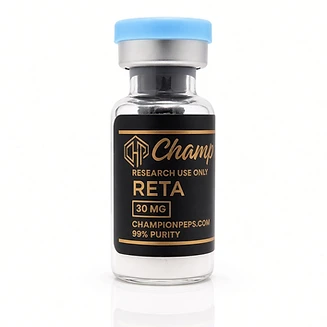
Research use only. Listing a supplier is not an endorsement of any protocol on this site, and nothing sold there is approved for human use.
Related protocols
View allHumanin 5mg
Mitochondrial-derived peptide and potent HNG analog researched for cellular survival, metabolic signaling, and cytoprotective pathways.
View ProtocolSelank 5mg
Synthetic tuftsin-derived heptapeptide investigated for non-sedating anxiolysis, cognitive support, and neurotrophic modulation.
View ProtocolThymogen 10mg
Synthetic thymic dipeptide researched for its configuration-dependent immunomodulatory and bone marrow regenerative properties.
View Protocol