BPC-157 + TB-500 10mg
Co-formulated 1:1 dual peptide blend designed to investigate synergistic mechanisms in soft-tissue repair and cellular migration models.
Mechanism
The blend functions by concurrently regulating cellular actin polymerization to drive cell migration (TB-500) while promoting localized cytoprotection, tissue revascularization, and nitric oxide signaling pathways (BPC-157).
Dosing
Standard experimental research protocols document a daily starting dose of 600 mcg total blend (delivering 300 mcg of each peptide) administered subcutaneously.
Reconstitution
Reconstituting the 10 mg combined vial with 3.0 mL of bacteriostatic water achieves a total peptide concentration of 3.33 mg/mL (1.67 mg/mL of each active peptide).
Storage
Store unmixed lyophilized vials at -20 °C protected from moisture and light, and maintain reconstituted solutions at 2–8 °C without freezing for up to 28 days.
Mix & measure BPC-157 + TB-500 10mg
Pre-filled with this protocol's recommended BAC water and documented starting dose — edit any field to run your own numbers.
Mix & measure BPC-157 + TB-500 10mg
Vial strength → BAC water → target dose
Common vial sizes
Label claim
Total doses in vial: 16.7
U-100 syringe: 100 units = 1 mL
Need supplies for this protocol?
Research-grade peptides, fast shipping, competitive pricing
Reconstitution math only — not dosing advice. U-100 syringe: 100 units = 1 mL. Advanced calculator →
Track my protocol
Log each dose, build a streak, and watch your progress through this protocol's schedule.
Dosing Chart
| Phase / Day(s) | Dose & Frequency | Volume (U-100 units / mL) |
|---|---|---|
| Weeks 1–2 | 600 mcg total (300 mcg BPC + 300 mcg TB-500) once daily | 18 units (0.18 mL) |
| Weeks 3–4 | 800 mcg total (400 mcg BPC + 400 mcg TB-500) once daily | 24 units (0.24 mL) |
| Weeks 5–8 | 600 mcg total (300 mcg BPC + 300 mcg TB-500) once daily | 18 units (0.18 mL) |
Reconstitution Steps
- 1
Draw 3.0 mL of bacteriostatic water into a sterile syringe.
- 2
Gently inject the diluent along the interior wall of the vial to minimize agitation and foaming.
- 3
Carefully roll or swirl the vial until the lyophilized cake fully dissolves; do not shake.
- 4
Affix a label with the reconstitution date and calculated concentration, then refrigerate between 2–8 °C away from light.
Supplies Needed


Peptide Vial
Lyophilized BPC-157 (5 mg) + TB-500 (5 mg) combined 10 mg research vial.


Insulin Syringes (U-100)
0.5 mL or 1.0 mL U-100 sterile syringes for accurate single-unit draw volume measurement.


Bacteriostatic Water
Sterile diluent containing 0.9% benzyl alcohol for peptide reconstitution.


Alcohol Swabs
Used for sanitizing vial rubber stoppers and experimental preparation sites before injection.
Why researchers study it
Soft-tissue and musculoskeletal wound healing
Preclinical inflammation pathway modulation
Gastrointestinal lining integrity and cytoprotection
Angiogenic signaling and cellular motility
These describe what is being studied, not proven benefits, approved uses, or promised results.
Overview
The BPC-157 and TB-500 blend combines two prominent investigational peptides into a single 1:1 formulation providing 5 mg of each compound per 10 mg vial. By combining these agents, researchers aim to explore potential complementary pathways involved in tissue repair, structural remodeling, and vascular maintenance in preclinical biological models. BPC-157 is an engineered synthetic peptide modeled after an endogenous gastric compound, primarily investigated for cytoprotection, growth factor regulation, and nitric oxide pathway modulation. TB-500 represents a synthetic peptide fragment corresponding to the active region of Thymosin Beta-4, characterized by its actin-sequestering properties that promote directed cellular migration and motility during wound regeneration matrices. While popular within experimental recovery research designs, this fixed-ratio subcutaneous mixture lacks formal human clinical trials or regulatory approval. Laboratory protocols emphasize accurate measurement and steady state handling to track cellular signaling and physiological endpoints in laboratory test subjects without confounding variables.
References
- 1.Sikiric et al., Journal of Physiology & Pharmacology, 2010 — BPC-157 cytoprotective and wound-healing activity in preclinical models
- 2.Ho et al., Journal of Chromatography A, 2012 — Doping-control analysis of TB-500 as a synthetic thymosin beta-4 fragment
- 3.Malinda et al., Journal of Investigative Dermatology, 1999 — Thymosin beta-4 accelerates wound healing in preclinical models
- 4.Philp et al., FASEB Journal, 2003 — Active-site mapping of thymosin beta-4 fragments for angiogenesis and cell migration
Supplies Needed
Suggested supplier
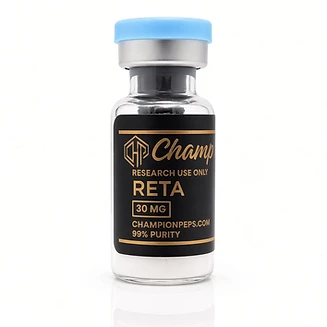
Research use only. Listing a supplier is not an endorsement of any protocol on this site, and nothing sold there is approved for human use.
Related protocols
View allKLOW 80mg
Four-component investigative peptide blend designed to study concurrent soft-tissue repair, cellular remodeling, and inflammation modulation.
View ProtocolVitamin B12 10mg
Water-soluble cyanocobalamin cofactor investigated for cellular methylation, neurological health, and mitochondrial energy production.
View ProtocolRetatrutide 30mg
Investigational triple-receptor agonist targeting GLP-1, GIP, and glucagon pathways to evaluate metabolic rate and body mass reduction.
View Protocol