Noopept 20mg
An orally bioavailable dipeptide derivative studied for neuroprotection, memory, and cognitive enhancement via cycloprolylglycine conversion.
Mechanism
Acts primarily as a prodrug for cyclo-prolylglycine to selectively stimulate HIF-1 DNA-binding activity, elevate hippocampal NGF and BDNF expression, and enhance hippocampal inhibitory neurotransmission via alpha-7 nicotinic pathways.
Dosing
Standard documented research protocols evaluate 10 mg administered twice daily (or 20 mg once daily) orally for up to two months.
Reconstitution
Oral formulation requiring no reconstitution or dilution with bacteriostatic water.
Storage
Store dry solid capsules in an airtight container at controlled room temperature protected from light and moisture.
Mix & measure Noopept 20mg
Pre-filled with this protocol's recommended BAC water and documented starting dose — edit any field to run your own numbers.
Mix & measure Noopept 20mg
Vial strength → BAC water → target dose
Total doses in vial: —
U-100 syringe: 100 units = 1 mL
Reconstitution math only — not dosing advice. U-100 syringe: 100 units = 1 mL. Advanced calculator →
Dosing Chart
| Phase / Day(s) | Dose & Frequency | Volume (U-100 units / mL) |
|---|---|---|
| Initiation / Days 1–14 | 10 mg once daily | 1 capsule / oral |
| Conventional Schedule / Days 15–60 | 10 mg twice daily (or 20 mg once daily) | 1–2 capsules / oral |
Reconstitution Steps
- 1
Confirm the identity and stated milligram content of the solid oral capsules using the accompanying Certificate of Analysis.
- 2
Verify the unit contains 20 mg of active N-phenylacetyl-L-prolylglycine ethyl ester.
- 3
Do not add bacteriostatic water, sterile water, or solvents, as this compound is prepared exclusively for dry oral research use.
- 4
Administer the target oral unit whole without crushing or dissolving in liquid mediums.
- 5
Reseal the original capsule container immediately following unit removal.
Supplies Needed


Peptide Vial
20 mg oral capsules or tablets containing pure N-phenylacetyl-L-prolylglycine ethyl ester


Insulin Syringes (U-100)
Not required (oral solid dosage form)


Bacteriostatic Water
Not required (no reconstitution needed)


Alcohol Swabs
Not required for oral administration
Why researchers study it
Memory & cognitive impairment models
Oral nootropic pharmacokinetics
Neurotrophic factor signalling (NGF and BDNF)
HIF-1 adaptive response activation
These describe what is being studied, not proven benefits, approved uses, or promised results.
Overview
Noopept (omberacetam, GVS-111) is an orally active dipeptide-derived molecule chemically designated as N-phenylacetyl-L-prolylglycine ethyl ester. Developed as a synthetic derivative structurally inspired by piracetam and endogenous neuroactive peptides, it acts largely as a central prodrug. Pharmacokinetic analyses show the intact molecule undergoes rapid metabolism, yielding elevated central nervous system levels of the endogenous cyclic dipeptide cyclo-prolylglycine. While commonly grouped alongside racetam nootropics in experimental literature, its biological pathways are distinct. Scientific interest primarily centers on its neuroprotective capabilities, stimulation of neurotrophin expression, and selective modulation of adaptive cell survival signaling cascades. In human clinical reports, exploration has predominantly focused on post-stroke cognitive sequelae and vascular-related cognitive impairment. Unlike traditional synthetic peptides that necessitate parenteral or intranasal administration, Noopept is stable for enteral intake as dry solid capsules or tablets. It does not require reconstitution, cold-chain liquid transport, or sterile reconstitution practices, serving as a distinct small-molecule model within cognitive research collections.
References
- 1.Gudasheva et al., Eur J Drug Metab Pharmacokinet, 1997 — GVS-111 is a prodrug for cyclo-prolylglycine
- 2.Araj et al., J Pharm Biomed Anal, 2024 — Physicochemical and structural analysis of Noopept
- 3.Amelin, Iliukhina & Shmonin, Zh Nevrol Psikhiatr, 2011 — Noopept 20 mg/day in stroke patients (open study)
- 4.Bochkarev et al., Zh Nevrol Psikhiatr, 2008 — Clinical and EEG characteristics in mild cognitive impairment
- 5.Vakhitova et al., Acta Naturae, 2016 — Selective HIF-1 effect proposed as the primary mechanism
- 6.Ostrovskaya et al., Bull Exp Biol Med, 2008 — NGF and BDNF expression in rat hippocampus
- 7.Ostrovskaya et al., J Biomed Sci, 2014 — Protection against amyloid-beta in a PC12 cell model
- 8.Jia et al., J Mol Biol, 2011 — Independent work on alpha-synuclein amyloid cytotoxicity
- 9.Kondratenko et al., Neurosci Lett, 2022 — Alpha7 nicotinic receptors on interneurons as a site of action
- 10.Ostrovskaya et al., Bull Exp Biol Med, 2013 — Metabolic effects in streptozotocin-diabetic rats
Supplies Needed
Suggested supplier
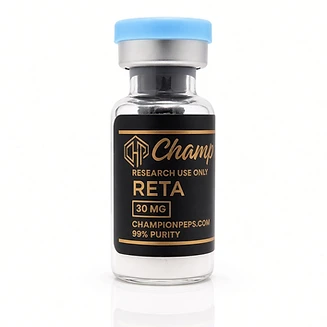
Research use only. Listing a supplier is not an endorsement of any protocol on this site, and nothing sold there is approved for human use.
Related protocols
View allSurvodutide 10mg
Investigational dual GLP-1 and glucagon receptor agonist studied for body weight management and metabolic liver disease.
View ProtocolSetmelanotide 10mg
A selective MC4R agonist studied for addressing extreme hyperphagia and monogenic obesity resulting from leptin-melanocortin pathway defects.
View ProtocolB7-33 10mg
A synthetic single-chain relaxin-2 mimetic engineered to selectively activate RXFP1 signaling for preclinical anti-fibrotic research.
View Protocol