Setmelanotide 10mg
A selective MC4R agonist studied for addressing extreme hyperphagia and monogenic obesity resulting from leptin-melanocortin pathway defects.
Mechanism
Selectively stimulates the hypothalamic melanocortin-4 receptor to restore central satiety and energy balance signaling downstream of impaired POMC, PCSK1, or LEPR pathways.
Dosing
Standard documented exploration begins at 2 mg daily for genetic obesity models (or 0.5 mg daily for hypothalamic models), titrating up to a maximum maintenance ceiling of 3 mg once daily.
Reconstitution
Reconstituting a 10 mg vial with 2.0 mL of bacteriostatic water yields a peptide concentration of 5 mg/mL.
Storage
Store the unmixed lyophilized vial between 2°C and 8°C protected from light, and keep the reconstituted solution refrigerated at 2°C to 8°C.
Mix & measure Setmelanotide 10mg
Pre-filled with this protocol's recommended BAC water and documented starting dose — edit any field to run your own numbers.
Mix & measure Setmelanotide 10mg
Vial strength → BAC water → target dose
Total doses in vial: 5.0
U-100 syringe: 100 units = 1 mL
Reconstitution math only — not dosing advice. U-100 syringe: 100 units = 1 mL. Advanced calculator →
Dosing Chart
| Phase / Day(s) | Dose & Frequency | Volume (U-100 units / mL) |
|---|---|---|
| Start — genetic obesity, age 12+ | 2 mg once daily × 2 weeks | 40 units (0.40 mL) |
| Start — acquired hypothalamic obesity | 0.5 mg once daily × 2 weeks | 10 units (0.10 mL) |
| Maintenance — all indications | 3 mg once daily | 60 units (0.60 mL) |
| Maximum dose | 3 mg daily — do not exceed | 60 units (0.60 mL) |
| Timing | Beginning of the day, subcutaneous | — |
Reconstitution Steps
- 1
Sanitize the stoppers of the setmelanotide vial and bacteriostatic water vial using clean alcohol prep pads and allow them to dry fully.
- 2
Draw 2.0 mL of bacteriostatic water using a sterile syringe.
- 3
Introduce the diluent gently against the inner glass wall of the setmelanotide vial to avoid aggressive splashing or shearing forces.
- 4
Swirl the container in a smooth circular motion until all lyophilized cake is dissolved, ensuring the vial is never shaken.
- 5
Label the vial with the preparation date and resulting 5 mg/mL concentration, and transfer to refrigerated storage between 2°C and 8°C.
Supplies Needed


Peptide Vial
Lyophilized setmelanotide container supplying 10 mg of active research peptide.


Insulin Syringes (U-100)
Calibrated syringes used for fine measurement and administration of micro-volumes.


Bacteriostatic Water
Sterile diluent containing 0.9% benzyl alcohol used to reconstitute 2.0 mL of solution.


Alcohol Swabs
Antiseptic wipes used for decontaminating vial tops and preparation zones.
Why researchers study it
Approved — but not for what people assume
The experiment that defines its limits
A 2x error waiting to happen
These describe what is being studied, not proven benefits, approved uses, or promised results.
Overview
Setmelanotide is a synthetic cyclic octapeptide engineered as a high-affinity, selective agonist of the central melanocortin-4 receptor (MC4R). Within neuroendocrine physiology, the MC4R pathway acts as a crucial checkpoint for satiety and energetic expenditure. While general metabolic interventions broadly suppress appetite via peripheral hormones, setmelanotide specifically addresses molecular disruptions upstream of the MC4R, restoring essential signaling in targeted genetic conditions. In preclinical and clinical research models, setmelanotide bypasses congenital or acquired lesions in proopiomelanocortin (POMC), proprotein convertase subtilisin/kexin type 1 (PCSK1), or the leptin receptor (LEPR). When these upstream components fail, central appetite suppression is compromised, culminating in intractable hyperphagia. Setmelanotide interacts directly with intact MC4 receptors, reinstating homeostatic signaling and reestablishing downstream control over caloric drive. Research material is typically supplied in lyophilized form for controlled laboratory evaluation, contrasting with commercial formulations prepared as stable aqueous solutions. Investigators frequently explore setmelanotide's high receptor potency to evaluate receptor-ligand kinetics, cross-reactivity with MC1R melanocyte pathways, and energy balance neurobiology under defined physiological conditions.
References
- 1.Clement et al., The Lancet Diabetes & Endocrinology, 2020 — Efficacy and safety of setmelanotide, an MC4R agonist, in individuals with severe obesity due to LEPR or POMC deficiency: single-arm, open-label, multicentre, phase 3 trials
- 2.Haqq et al., The Lancet Diabetes & Endocrinology, 2022 — Efficacy and safety of setmelanotide in patients with Bardet-Biedl syndrome and Alstrom syndrome: a multicentre, randomised, double-blind, placebo-controlled, phase 3 trial
- 3.Kuhnen et al., New England Journal of Medicine, 2016 — Proopiomelanocortin Deficiency Treated with a Melanocortin-4 Receptor Agonist
- 4.Collet et al., Molecular Metabolism, 2017 — Evaluation of a melanocortin-4 receptor (MC4R) agonist (Setmelanotide) in MC4R deficiency
- 5.FDA, DailyMed, 2026 — IMCIVREE (setmelanotide) injection, prescribing information
- 6.Rhythm Pharmaceuticals, Press Release, 2026 — FDA approves IMCIVREE (setmelanotide) for patients with acquired hypothalamic obesity
- 7.Muller et al., Frontiers in Endocrinology, 2026 — Expert meeting report: epidemiology and management of acquired hypothalamic obesity
Supplies Needed
Suggested supplier
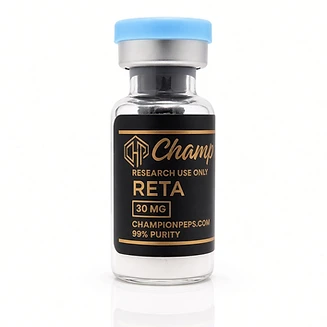
Research use only. Listing a supplier is not an endorsement of any protocol on this site, and nothing sold there is approved for human use.
Related protocols
View allB7-33 10mg
A synthetic single-chain relaxin-2 mimetic engineered to selectively activate RXFP1 signaling for preclinical anti-fibrotic research.
View ProtocolMK-677 25mg
Orally active non-peptide ghrelin receptor agonist investigated for pulsing growth hormone and elevating systemic IGF-1 concentrations.
View ProtocolEPO 3000 IU
Recombinant human erythropoietin evaluated for its role in stimulating erythropoiesis and tissue oxygenation in research models.
View Protocol