Mazdutide 5mg
Dual GLP-1 and glucagon receptor agonist evaluated in clinical models for robust metabolic regulation and body weight reduction.
Mechanism
Acts as a dual agonist co-activating both GLP-1 and glucagon receptors to simultaneously suppress appetite, delay gastric emptying, and elevate hepatic energy expenditure.
Dosing
Standard reference protocols initiate exploration at 2.5 mg administered subcutaneously once weekly for the initial 4-week titration phase.
Reconstitution
Reconstituting a 5 mg vial with 3.0 mL of bacteriostatic water yields an approximate working concentration of 1.67 mg/mL (1,667 mcg/mL).
Storage
Store dry lyophilized vials frozen at -20 °C; once reconstituted, refrigerate at 2–8 °C, protect from light, and do not freeze.
Mix & measure Mazdutide 5mg
Pre-filled with this protocol's recommended BAC water and documented starting dose — edit any field to run your own numbers.
Mix & measure Mazdutide 5mg
Vial strength → BAC water → target dose
Total doses in vial: 2.0
U-100 syringe: 100 units = 1 mL
Reconstitution math only — not dosing advice. U-100 syringe: 100 units = 1 mL. Advanced calculator →
Dosing Chart
| Phase / Day(s) | Dose & Frequency | Volume (U-100 units / mL) |
|---|---|---|
| Weeks 1–4 | 2.5 mg once weekly | 150 units (1.50 mL) |
| Weeks 5–8+ | 5.0 mg once weekly | 300 units (3.00 mL) |
Reconstitution Steps
- 1
Draw 3.0 mL of bacteriostatic water into a sterile reconstitution syringe.
- 2
Insert the needle into the 5 mg Mazdutide vial and allow the liquid to flow slowly down the inner glass wall to prevent excessive foaming.
- 3
Gently roll or swirl the vial until the lyophilized cake is fully dissolved; do not shake aggressively.
- 4
Record the date and resulting concentration (~1.67 mg/mL) on the vial label.
- 5
Store the reconstituted solution protected from light in a laboratory refrigerator at 2–8 °C.
Supplies Needed


Peptide Vial
Mazdutide 5 mg lyophilized powder vial for laboratory reconstitution.


Insulin Syringes (U-100)
Calibrated U-100 sterile syringes for precise measurement and subcutaneous administration.


Bacteriostatic Water
Sterile diluent containing 0.9% benzyl alcohol used to reconstitute the peptide cake.


Alcohol Swabs
70% isopropyl alcohol prep pads for disinfecting vial septums and injection sites.
Why researchers study it
Weight management and adiposity reduction
Appetite suppression and satiety signaling
Glycemic regulation and HbA1c moderation in type 2 diabetes models
Glucagon-driven hepatic fat metabolism and energy expenditure
These describe what is being studied, not proven benefits, approved uses, or promised results.
Overview
Mazdutide (also referenced in literature as IBI362 or LY3305677) is an investigational synthetic peptide designed to simultaneously stimulate both glucagon-like peptide-1 (GLP-1) and glucagon receptors. By co-activating these complementary pathways, researchers aim to harness both incretin-driven appetite suppression and glucagon-mediated thermogenic energy expenditure. In controlled multi-week clinical trials, the compound has shown notable efficacy in reducing adiposity and improving glycemic indices relative to baseline. Preclinical and clinical evaluations highlight a favorable pharmacokinetic profile characterized by an extended half-life, enabling once-weekly subcutaneous evaluation schedules. Dose-titration paradigms are universally implemented in literature to mitigate transient gastrointestinal reactivity, systematically escalating subjects from an initial exposure dose to target maintenance levels over multiple weeks. While mazdutide obtained regulatory clearance via China's NMPA for weight management and glycemic regulation in type 2 diabetes, it remains an unapproved investigational substance under regulatory bodies such as the US FDA and EMA. All referenced handling parameters, concentrations, and protocols are documented strictly for academic, laboratory, and scientific benchmarking.
References
- 1.EClinicalMedicine (PubMed), 2021 — Phase 1b trial: safety and efficacy of mazdutide 9–10 mg in Chinese adults with overweight or obesity
- 2.Nature Communications, 2022 — Phase 2 randomized controlled trial of mazdutide in Chinese adults with overweight or obesity
- 3.New England Journal of Medicine, 2024 — Phase 3 trial: once-weekly mazdutide in Chinese adults with obesity or overweight (48-week results)
- 4.Diabetes Care (PubMed), 2023 — Phase 2 trial: efficacy and safety of mazdutide in Chinese patients with type 2 diabetes
- 5.Frontiers in Endocrinology, 2024 — Systematic review and meta-analysis of mazdutide for weight loss in diabetic and non-diabetic patients
- 6.International Journal of Obesity (Nature), 2023 — Review of the pipeline for future obesity medications, including GLP-1 / glucagon dual agonists such as mazdutide
Supplies Needed
Suggested supplier
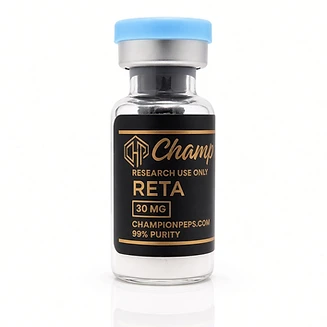
Research use only. Listing a supplier is not an endorsement of any protocol on this site, and nothing sold there is approved for human use.
Related protocols
View allPT-141 10mg
A synthetic melanocortin receptor agonist evaluated in clinical and laboratory models for centrally regulated libido and sexual response.
View ProtocolAra-290 16mg
Ara-290 is an EPO-derived peptide targeting the innate repair receptor for neuroprotection, tissue repair, and neuropathic pain research.
View ProtocolSS-31 10mg
Mitochondria-targeted synthetic tetrapeptide researched for cardiolipin stabilization, ATP production, and cellular aging models.
View Protocol