Larazotide 5mg
An oral, gut-restricted octapeptide tight-junction regulator researched for paracellular barrier permeability and celiac disease models.
Mechanism
Acts locally in the gut lumen as a zonulin antagonist to promote tight-junction assembly and reduce paracellular epithelial permeability.
Dosing
The benchmark clinical maintenance dose documented in trials is 0.5 mg administered orally three times daily prior to meals.
Reconstitution
As an oral peptide formulated for luminal action, it is not reconstituted with bacteriostatic water or prepared for injection.
Storage
Store the lyophilized powder or solid capsules sealed in a dry environment at controlled room temperature, protected from light and moisture.
Mix & measure Larazotide 5mg
Pre-filled with this protocol's recommended BAC water and documented starting dose — edit any field to run your own numbers.
Mix & measure Larazotide 5mg
Vial strength → BAC water → target dose
Total doses in vial: —
U-100 syringe: 100 units = 1 mL
Reconstitution math only — not dosing advice. U-100 syringe: 100 units = 1 mL. Advanced calculator →
Dosing Chart
| Phase / Day(s) | Dose & Frequency | Volume (U-100 units / mL) |
|---|---|---|
| Primary Maintenance | 0.5 mg (500 mcg) 3x daily before meals | Oral (Solid / Capsule) |
| Low-Dose Study Arm | 0.25 mg 3x daily before meals | Oral (Solid / Capsule) |
| High-Dose Exploratory Arm | 1.0 mg to 2.0 mg 3x daily | Oral (Solid / Capsule) |
Reconstitution Steps
- 1
Verify that the peptide is supplied as an oral research solid or capsule formulation rather than an injectable vial.
- 2
Do not add bacteriostatic water, sterile water, or solvents for parenteral administration.
- 3
Measure sub-milligram quantities (0.5 mg / 500 mcg) using an analytical balance if handling bulk powder.
- 4
Prepare single-dose oral units corresponding to documented pre-prandial research intervals.
- 5
Store the remaining solid material in an airtight, desiccated vial away from direct sunlight.
Supplies Needed


Peptide Vial
Provides 5 mg of solid oral-grade Larazotide acetate for laboratory evaluation.


Insulin Syringes (U-100)
Not utilized; this peptide is administered exclusively via oral/luminal experimental pathways.


Bacteriostatic Water
Not required; parenteral reconstitution is contraindicated for gut-restricted tight-junction studies.


Alcohol Swabs
Used for sanitizing laboratory handling benches and spatulas prior to dispensing dry aliquots.
Why researchers study it
Intestinal barrier and paracellular permeability regulation
Adjunctive therapy models in non-responsive celiac disease
Zonulin-mediated tight junction signaling dynamics
Pharmacology of non-absorbed, gut-restricted oral peptides
These describe what is being studied, not proven benefits, approved uses, or promised results.
Overview
Larazotide acetate (developmental code AT-1001) is a synthetic, eight-amino-acid peptide engineered to act as an antagonist to zonulin, an endogenous protein that regulates intestinal mucosal permeability. Derived structurally from the zonula occludens toxin of Vibrio cholerae, the compound is characterized by its topical, luminal activity within the gastrointestinal tract and minimal systemic bioavailability. In preclinical and clinical research, larazotide has served as a benchmark probe for investigating epithelial junction integrity and mitigating the paracellular transit of macromolecular dietary antigens, such as gliadin fragments. It advanced through late-stage clinical evaluations as an adjunct therapy for persistent non-responsive celiac disease, though a pivotal Phase 3 study was terminated in 2022 after failing to meet primary endpoints. Because this agent functions locally at the apical surface of the gut mucosa, it is provided primarily as an oral solid or solution form rather than a parenterally injected or reconstituted compound. Laboratory investigations focus on its ability to preserve tight-junction architecture and reorganize the actin cytoskeleton without producing systemic hormonal or metabolic shifts.
References
- 1.Paterson et al., Aliment Pharmacol Ther, 2007 — Safety and pharmacodynamics of single oral doses of AT-1001 during gluten challenge in celiac subjects
- 2.Kelly et al., Aliment Pharmacol Ther, 2013 — Larazotide acetate in celiac patients undergoing a gluten challenge trial
- 3.Leffler et al., Gastroenterology, 2015 — Phase 2b trial of 0.5 mg larazotide acetate three times daily for persistent celiac symptoms
- 4.Khaleghi et al., Therap Adv Gastroenterol, 2016 — Tight-junction regulation and larazotide acetate pharmacology review
- 5.Slifer et al., Am J Physiol Gastrointest Liver Physiol, 2021 — Pharmacological targeting of tight junctions via gut-restricted peptides
- 6.Fasano, Physiol Rev, 2011 — Zonulin regulation of intestinal barrier function and paracellular permeability
Supplies Needed
Suggested supplier
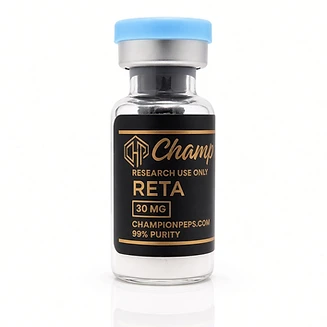
Research use only. Listing a supplier is not an endorsement of any protocol on this site, and nothing sold there is approved for human use.
Related protocols
View allACE-031 1mg
Investigational ActRIIB-Fc decoy protein evaluated for myostatin inhibition, discontinued due to vascular adverse events.
View ProtocolGonadorelin 2mg
Synthetic GnRH decapeptide investigated for anterior pituitary gonadotropin stimulation and HPG axis regulation in research models.
View ProtocolSNAP-8 10mg
Synthetic octapeptide researched for mimicking SNAP-25 to attenuate muscle contraction signaling and soften dynamic facial lines.
View Protocol