Hexarelin 5mg
Potent synthetic hexapeptide growth hormone secretagogue investigated for pituitary stimulation, desensitization kinetics, and CD36 binding.
Mechanism
Hexarelin acts as an agonist at the growth hormone secretagogue receptor type 1a to trigger intracellular calcium influx and growth hormone exocytosis, while also binding cardiac CD36 receptors.
Dosing
Published experimental trials commonly implemented a baseline single subcutaneous reference dose of roughly 100 mcg (approximately 1.5 mcg/kg in adult reference subjects).
Reconstitution
Reconstituting a 5 mg vial with 2.0 mL of bacteriostatic water creates an operational concentration of 2.5 mg/mL (2,500 mcg/mL).
Storage
Store the unmixed lyophilized powder away from light at cold temperatures, and keep the reconstituted solution refrigerated between 2 and 8 °C for limited experimental durations.
Mix & measure Hexarelin 5mg
Pre-filled with this protocol's recommended BAC water and documented starting dose — edit any field to run your own numbers.
Mix & measure Hexarelin 5mg
Vial strength → BAC water → target dose
Total doses in vial: 50.0
U-100 syringe: 100 units = 1 mL
Reconstitution math only — not dosing advice. U-100 syringe: 100 units = 1 mL. Advanced calculator →
Dosing Chart
| Phase / Day(s) | Dose & Frequency | Volume (U-100 units / mL) |
|---|---|---|
| Low Reference | 50 mcg per administration | 2 units (0.02 mL) |
| Saturating Reference Dose | 100 mcg (1–3× daily) | 4 units (0.04 mL) |
| Upper Documented Range | 150 mcg per administration | 6 units (0.06 mL) |
Reconstitution Steps
- 1
Sterilize the rubber stoppers of the Hexarelin and bacteriostatic water vials using fresh alcohol swabs, permitting them to air dry completely.
- 2
Draw exactly 2.0 mL of bacteriostatic water into a reconstitution syringe.
- 3
Insert the syringe needle into the peptide vial and smoothly deliver the diluent along the interior glass wall to avoid agitating the compound.
- 4
Gently swirl the vial in circular motions until the lyophilized cake fully dissolves into a clear liquid without shaking.
- 5
Mark the preparation date onto the vial label and place it inside a laboratory refrigerator maintained between 2 °C and 8 °C, shielded from light.
Supplies Needed


Peptide Vial
Contains 5 mg of lyophilized Hexarelin peptide powder for laboratory exploration.


Insulin Syringes (U-100)
Enables micro-volume measurement where 4 units correspond precisely to 100 mcg.


Bacteriostatic Water
Provides 2.0 mL of sterile, preserved diluent necessary to achieve a 2.5 mg/mL concentration.


Alcohol Swabs
Ensures aseptic preparation and maintenance of vial septums prior to needle penetration.
Why researchers study it
Pituitary growth hormone secretagogue potency
GHS-R1a receptor desensitization and tachyphylaxis
CD36-mediated cardiovascular signaling pathways
Secondary neuroendocrine effects on cortisol and prolactin
These describe what is being studied, not proven benefits, approved uses, or promised results.
Overview
Hexarelin, also classified in preclinical literature as Examorelin, is a synthetic hexapeptide belonging to the growth hormone-releasing peptide family. Recognized as one of the most potent secretagogues developed in its class, it serves primarily as an investigational probe for assessing somatotroph responsiveness and the pulsatile dynamics of the somatotropic axis. Beyond simple endocrine stimulation, scientific literature frequently evaluates Hexarelin to explore tachyphylaxis mechanisms, as repetitive exposure triggers rapid down-regulation of receptor responsiveness. Concurrently, non-selective signaling pathways involving downstream elevations of prolactin and adrenocorticotropic axes have been documented. In addition to hypothalamic-pituitary engagement, independent lines of cardiovascular research highlight Hexarelin's affinity for the CD36 scavenger receptor. This secondary binding profile provides an experimental foundation for probing cardioprotective pathways in tissue models distinct from growth hormone-mediated actions.
References
- 1.Ghigo et al., J Clin Endocrinol Metab, 1994 — GH-releasing activity of hexarelin across administration routes and potency comparison against GHRH
- 2.Imbimbo et al., Eur J Clin Pharmacol, 1994 — Human dose-response kinetics identifying saturating secretagogue parameters
- 3.Rahim, O'Neill & Shalet, J Clin Endocrinol Metab, 1998 — Documentation of receptor desensitization across 16 weeks of subcutaneous administration
- 4.Howard et al., Science, 1996 — Molecular cloning and identification of the pituitary GHS-R1a receptor target
- 5.Massoud, Hindmarsh & Brook, J Clin Endocrinol Metab, 1996 — Evaluation of GH plateaus alongside concurrent off-target cortisol and prolactin releases
- 6.Locatelli et al., Endocrinology, 1999 — Preclinical investigation of GH-independent cardioprotective pathways in animal models
- 7.Orkin et al., J Endocrinol Invest, 2003 — In vitro observation of rapid ghrelin receptor desensitization upon hexarelin exposure
Supplies Needed
Suggested supplier
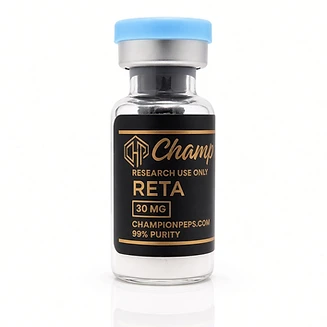
Research use only. Listing a supplier is not an endorsement of any protocol on this site, and nothing sold there is approved for human use.
Related protocols
View allDSIP 10mg
Experimental nonapeptide evaluated in scientific literature for slow-wave sleep induction and neuroendocrine modulation.
View ProtocolVIP 5mg
A 28-amino-acid neuropeptide acting on VPAC receptors, studied for mucosal integrity, systemic inflammation, and pulmonary tissue signaling.
View ProtocolDSIP 5mg
Endogenous nonapeptide examined in experimental protocols for slow-wave sleep architecture, circadian rhythm modulation, and stress response.
View Protocol