AHK-Cu 50mg
A copper-bound tripeptide studied in vitro for hair follicle stimulation, cellular proliferation, and cosmetic tissue regeneration.
Mechanism
AHK-Cu coordinates copper delivery to stimulate dermal papilla cell proliferation and modulate apoptotic signaling pathways like Bcl-2/Bax to encourage follicular elongation.
Dosing
Preclinical and community research protocols cite a documented starting benchmark of 100 mcg.
Reconstitution
Reconstituting a 50 mg vial with 2.0 mL of bacteriostatic water yields an operational working concentration of 25 mg/mL.
Storage
Keep lyophilized vials frozen at -20 °C protected from moisture and light; once reconstituted, refrigerate at 2–8 °C without freezing and use within 28 days.
Mix & measure AHK-Cu 50mg
Pre-filled with this protocol's recommended BAC water and documented starting dose — edit any field to run your own numbers.
Mix & measure AHK-Cu 50mg
Vial strength → BAC water → target dose
Total doses in vial: 500.0
U-100 syringe: 100 units = 1 mL
Reconstitution math only — not dosing advice. U-100 syringe: 100 units = 1 mL. Advanced calculator →
Dosing Chart
| Phase / Day(s) | Dose & Frequency | Volume (U-100 units / mL) |
|---|---|---|
| Community Low | 100 mcg as scheduled | 0.4 units / 0.004 mL |
| Community Typical | 200 mcg as scheduled | 0.8 units / 0.008 mL |
| Patent Intradermal Upper | 500 mcg as scheduled | 2 units / 0.02 mL |
| High Laboratory Benchmark | 1 mg as scheduled | 4 units / 0.04 mL |
Reconstitution Steps
- 1
Clean the rubber stoppers of both the AHK-Cu vial and bacteriostatic water vial using sterile alcohol prep pads and allow them to dry fully.
- 2
Draw 2.0 mL of bacteriostatic water using a sterile syringe.
- 3
Insert the needle into the AHK-Cu vial at a slight angle and direct the stream gently down the interior glass wall.
- 4
Swirl the vial gently until the lyophilized cake is fully dissolved, yielding a clear solution with a faint blue tint; avoid vigorous shaking.
- 5
Place the reconstituted solution in refrigerated storage at 2–8 °C protected from light.
Supplies Needed


Peptide Vial
Contains 50 mg lyophilized AHK-Cu powder


Insulin Syringes (U-100)
For drawing micro-volume aliquots with fine calibrations


Bacteriostatic Water
2.0 mL diluent used to achieve a 25 mg/mL concentration


Alcohol Swabs
To sanitize vial tops and equipment before fluid transfer
Why researchers study it
Dermal papilla cell proliferation
Ex-vivo hair follicle elongation
Copper-mediated extracellular matrix remodeling
Comparative topical transdermal delivery
These describe what is being studied, not proven benefits, approved uses, or promised results.
Overview
AHK-Cu, or Copper Tripeptide-3, is a synthetic copper-peptide complex composed of L-alanyl-L-histidyl-L-lysine coordinated with a divalent copper ion. Positioned chemically within the same structural class as GHK-Cu, this compound is primarily recognized in preclinical literature for its investigation into dermal tissue biology and hair follicle dynamics. While lyophilized vials exist across peptide research channels, the molecule lacks clinical human trials and remains strictly a subject of experimental inquiry. Scientific interest in AHK-Cu originated from cellular assays examining dermal papilla activity and follicle shaft elongation. Due to its hydrophilic composition, patent literature historically emphasized its suitability for topical skin permeation rather than parenteral application. Much of the wider physiological data attributed to AHK-Cu is largely derived by analogy from GHK-Cu in vivo models, leaving its standalone injectable profile largely uncharacterized. In laboratory environments, reconstitution requires careful handling to maintain molecular stability and prevent the dissociation of the coordinate copper bond. Because documented community and patent research doses are exceptionally small relative to standard 50 mg vial sizes, experimental measurements demand meticulous volumetric dilution and precision handling.
References
- 1.Pyo et al., Archives of Pharmacal Research, 2007 — Effect of tripeptide-copper complex on human hair growth in vitro
- 2.Pickart & Margolina, International Journal of Molecular Sciences, 2018 — Regenerative and protective actions of the GHK-Cu peptide
- 3.Pickart, Journal of Biomaterials Science, Polymer Edition, 2008 — The human tri-peptide GHK and tissue remodeling
- 4.Pickart, US Patent 5,550,183, 1996 — Metal-peptide compositions and methods for stimulating hair growth
- 5.Pallenberg et al., US Patent 5,538,945, 1996 — Stimulation of hair growth by peptide copper complexes
- 6.Maquart et al., Journal of Clinical Investigation, 1993 — In vivo stimulation of connective tissue accumulation by GHK-Cu in rat wounds
- 7.Siméon et al., Journal of Investigative Dermatology, 2000 — Modulation of glycosaminoglycans and small proteoglycans in wounds by GHK-Cu
- 8.Swaim et al., American Journal of Veterinary Research, 1996 — Effect of locally injected medications on pad wound healing in dogs
- 9.Ma et al., Life Sciences, 2019 — Protective effects of GHK-Cu in bleomycin-induced pulmonary fibrosis
- 10.Maquart et al., FEBS Letters, 1988 — Stimulation of collagen synthesis in fibroblast cultures by GHK-Cu
- 11.Parker et al., Otolaryngology–Head and Neck Surgery, 2013 — Effects of topical copper tripeptide complex on wound healing in irradiated rats
Supplies Needed
Suggested supplier
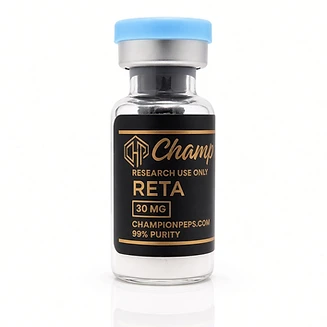
Research use only. Listing a supplier is not an endorsement of any protocol on this site, and nothing sold there is approved for human use.
Related protocols
View allCerluten 20mg
An oral animal-derived central nervous system peptide complex investigated in bioregulator models for neural integrity and cognitive health.
View ProtocolOxytocin 10mg
Endogenous nonapeptide neurohormone studied for its impact on social cognition, pair bonding, anxiety pathways, and sexual function.
View ProtocolSemaglutide 5mg
Synthetic GLP-1 receptor agonist studied for glycemic regulation, delayed gastric motility, and metabolic weight management pathways.
View Protocol