Triptorelin 2mg
Potent synthetic GnRH agonist evaluated for its biphasic endocrine profile, producing an initial gonadotropin surge followed by axis shutdown.
Mechanism
Binds continuously with high affinity to pituitary GnRH receptors, triggering an initial gonadotropin surge that is rapidly followed by profound receptor desensitization and down-regulation to arrest downstream sex steroid production.
Dosing
Standard laboratory reference conversions document an initial benchmark amount of 0.1 mg for experimental concentration modeling.
Reconstitution
Reconstituting a 2 mg vial with 2 mL of bacteriostatic water yields a standard research concentration of 1 mg/mL.
Storage
Store the lyophilized vial in a cool, light-shielded area, and preserve the reconstituted liquid at 2–8 °C without freezing.
Mix & measure Triptorelin 2mg
Pre-filled with this protocol's recommended BAC water and documented starting dose — edit any field to run your own numbers.
Mix & measure Triptorelin 2mg
Vial strength → BAC water → target dose
Total doses in vial: 20.0
U-100 syringe: 100 units = 1 mL
Reconstitution math only — not dosing advice. U-100 syringe: 100 units = 1 mL. Advanced calculator →
Dosing Chart
| Phase / Day(s) | Dose & Frequency | Volume (U-100 units / mL) |
|---|---|---|
| Low Reference | 0.1 mg (laboratory metric) | 10 units (0.10 mL) |
| Moderate Reference | 0.5 mg (laboratory metric) | 50 units (0.50 mL) |
| High Reference | 1.0 mg (laboratory metric) | 100 units (1.00 mL) |
| Full Vial Reference | 2.0 mg (laboratory metric) | 200 units (2.00 mL) |
Reconstitution Steps
- 1
Thoroughly clean the rubber septums of both the peptide vial and the diluent vial using sterile alcohol prep pads, allowing them to dry fully.
- 2
Draw precisely 2 mL of bacteriostatic water into a sterile syringe.
- 3
Insert the needle into the peptide vial at an angle, directing the stream against the interior glass wall to avoid direct turbulence onto the lyophilized cake.
- 4
Allow the vial to rest undisturbed for 30 seconds to initiate passive dissolution.
- 5
Gently rotate and roll the container between your palms until the solution becomes completely clear; do not shake or agitate forcefully.
- 6
Transfer the dissolved solution into refrigeration at 2–8 °C, shielded from light exposure.
Supplies Needed


Peptide Vial
Lyophilized active research sample requiring dilution


Insulin Syringes (U-100)
Precision measuring tool for accurate volume micro-dispensation


Bacteriostatic Water
Sterile diluent with preservative used to reconstitute the peptide


Alcohol Swabs
Sanitization of vial stoppers and tools before sampling
Why researchers study it
Testosterone & the HPTA
Prostate cancer & endometriosis
The initial flare
Fertility & puberty
These describe what is being studied, not proven benefits, approved uses, or promised results.
Overview
Triptorelin acetate is a synthetic decapeptide analogue of natural gonadotropin-releasing hormone (GnRH). In physiological systems, endogenous GnRH is released from the hypothalamus in discrete pulsatile bursts to stimulate pituitary gonadotropin release. In contrast, triptorelin exhibits sustained and high-affinity receptor occupancy, completely altering the signaling dynamics of the hypothalamic-pituitary-gonadal axis. The pharmacodynamic profile of triptorelin is distinctly biphasic. Initial application triggers rapid release of luteinizing hormone and follicle-stimulating hormone, producing a transient hormonal flare. With prolonged and uninterrupted exposure, the pituitary receptors desensitize and down-regulate, precipitating a collapse in gonadotropin release that reduces sex steroids to castrate or menopausal baselines. In scientific literature, clinical formulations rely on microsphere-based sustained-release depots for managing androgen-dependent prostate carcinomas, endometriosis, and precocious puberty. In laboratory research contexts, lyophilized research vials serve as analytical standards for studying GnRH receptor kinetics, receptor desensitization pathways, and downstream endocrine cascade modulations.
References
- 1.Romero et al., Journal of Pharmacology and Experimental Therapeutics, 2012 — PK/PD model of the testosterone effects of triptorelin in sustained-release formulations in prostate cancer
- 2.Msaouel et al., Expert Opinion on Emerging Drugs, 2007 — Luteinising hormone-releasing hormone antagonists in prostate cancer therapy
- 3.Damber et al., Urology, 2012 — Effect of baseline testosterone on the efficacy of degarelix and leuprolide: phase III study
- 4.Li et al., Chinese Journal of Surgery, 2008 — Efficacy and safety of long-acting triptorelin in metastatic prostate cancer
Supplies Needed
Suggested supplier
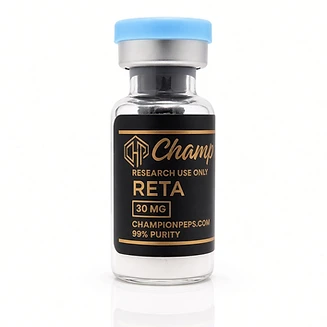
Research use only. Listing a supplier is not an endorsement of any protocol on this site, and nothing sold there is approved for human use.
Related protocols
View allLibidon 20mg
An oral animal-derived prostate peptide bioregulator investigated for lower urinary tract function and prostate tissue homeostasis.
View ProtocolDermorphin 5mg
Natural amphibian heptapeptide exhibiting exceptional mu-opioid receptor affinity and metabolic stability via an unusual D-amino acid.
View ProtocolWolverine Stack (BPC-157 + TB-500) 20mg
A dual-action preclinical blend pairing BPC-157 and TB-500 in equal ratios to investigate soft tissue regeneration and cellular repair pathways.
View Protocol