N-Acetyl Selank Amidate 10mg
An acetylated and amidated heptapeptide derivative studied intranasally for neuroprotection, anxiety regulation, and cognitive enhancement.
Mechanism
Acts as a positive allosteric modulator of GABA-A receptors and modulates neurotropic signaling pathways to support stress adaptation and cognitive processing.
Dosing
Standard laboratory protocols administer 100 mcg (one 0.1 mL spray) into each nostril once or twice daily.
Reconstitution
Reconstitute 10 mg of lyophilized powder with 10 mL of bacteriostatic water or sterile nasal saline to achieve an operating concentration of 1 mg/mL (100 mcg per 0.1 mL spray).
Storage
Store the lyophilized peptide refrigerated or frozen shielded from light, and keep reconstituted intranasal solutions refrigerated between 2°C and 8°C.
Mix & measure N-Acetyl Selank Amidate 10mg
Pre-filled with this protocol's recommended BAC water and documented starting dose — edit any field to run your own numbers.
Mix & measure N-Acetyl Selank Amidate 10mg
Vial strength → BAC water → target dose
Total doses in vial: 100.0
U-100 syringe: 100 units = 1 mL
Reconstitution math only — not dosing advice. U-100 syringe: 100 units = 1 mL. Advanced calculator →
Dosing Chart
| Phase / Day(s) | Dose & Frequency | Volume (U-100 units / mL) |
|---|---|---|
| Initiation (Days 1–3) | 100 mcg (1 spray in one nostril) once daily | 0.1 mL |
| Standard Evaluation (Days 4–14) | 100 mcg per nostril (200 mcg total) 1–2x daily | 0.1 mL – 0.2 mL |
| Base-Selank Comparison Ref | 300–900 mcg daily divided over 10–14 days | 0.3 mL – 0.9 mL |
Reconstitution Steps
- 1
Clean the rubber stoppers of both the 10 mg peptide vial and diluent container with sterile alcohol swabs.
- 2
Draw 10 mL of bacteriostatic water or compatible buffered nasal solution using a sterile syringe.
- 3
Slowly introduce the diluent against the inner glass wall of the peptide vial to minimize agitation and foaming.
- 4
Swirl the vial in a gentle circular motion until the lyophilized cake is fully dissolved; do not shake violently.
- 5
Transfer the solution into an appropriate metered nasal spray device calibrated to 0.1 mL per actuation.
- 6
Inspect the reconstituted liquid for absolute clarity, verify the final calculated concentration, and refrigerate promptly.
Supplies Needed


Peptide Vial
Lyophilized cake containing 10 mg of N-Acetyl Selank Amidate.


Insulin Syringes (U-100)
Used for transferring precise diluent volumes and measuring solution during reconstitution.


Bacteriostatic Water
Sterile diluent used to dissolve the peptide into an intranasal liquid base.


Alcohol Swabs
Disinfection of vial septums and mixing equipment prior to reconstitution.
Why researchers study it
Stress mitigation and non-sedative anxiolysis
Cognitive acquisition and focus under stress
Peptidase resistance and peptide half-life extension
Amygdala-associated functional connectivity modulation
These describe what is being studied, not proven benefits, approved uses, or promised results.
Overview
N-Acetyl Selank Amidate represents an engineered analog of the synthetic heptapeptide Selank (Thr-Lys-Pro-Arg-Pro-Gly-Pro), which was originally derived from the human immunomodulatory tetrapeptide tuftsin. By appending an acetyl group to the N-terminus and an amide group to the C-terminus, the molecule is chemically shielded against enzymatic degradation by amino- and carboxypeptidases. This synthetic capping strategy aims to extend the circulating half-life and potentially enhance central nervous system penetration compared to unmodified baseline peptides. While empirical evaluations specific to the amidate derivative remain absent from peer-reviewed literature, its functional profile is inferred from parental Selank research. In laboratory and clinical investigations, base Selank demonstrates regulatory activity over neurotransmitter networks without inducing the sedative or habit-forming phenotypes common to traditional anxiolytics. Research explores its application primarily via mucosal intranasal pathways to assess functional connectivity changes in the brain and evaluate responses in stress models. Because standardized clinical protocols for the amidate formulation are not formally established, researchers rely on stoichiometric dilutions of the lyophilized powder into nasal spray delivery systems. Documenting precise reconstitution volumes is critical in laboratory models to ensure accurate actuation dosages and reproducible delivery to targeted mucosal surfaces.
References
- 1.Vyunova et al., Protein and Peptide Letters, 2018 — Radioligand binding demonstrating positive allosteric modulation of GABA-A receptors by Selank
- 2.Zozulia et al., Zh Nevrol Psikhiatr im S.S. Korsakova, 2008 — Clinical efficacy of Selank in generalized anxiety disorder and neurasthenia
- 3.Medvedev et al., Zh Nevrol Psikhiatr im S.S. Korsakova, 2015 — Optimization of anxiety treatment and reduction of phenazepam side effects
- 4.Doyno & White, Journal of Clinical Pharmacology, 2021 — Critical appraisal and review of poorly studied GABAergic compounds
- 5.Panikratova et al., Doklady Biological Sciences, 2020 — Resting-state fMRI connectomic analysis of Selank and Semax on right amygdala functional connectivity
- 6.Kozlovskii & Danchev, Neuroscience and Behavioral Physiology, 2003 — Facilitation of conditioned active avoidance reflexes in rats with low learning baseline
- 7.Filatova et al., Frontiers in Pharmacology, 2017 — Analysis of Selank on GABAergic neurotransmission gene expression in IMR-32 neuroblastoma cells
Supplies Needed
Suggested supplier
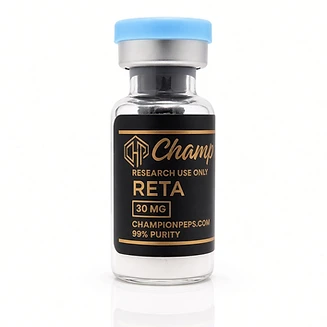
Research use only. Listing a supplier is not an endorsement of any protocol on this site, and nothing sold there is approved for human use.