GLOW 70mg (50+10+10 mg)
A multi-peptide blend combining GHK-Cu, TB-500, and BPC-157 investigated for cellular repair, collagen synthesis, and systemic healing.
Mechanism
Operates through concurrent stimulation of extracellular matrix remodeling by GHK-Cu, actin regulation and cellular migration via TB-500, and microvascular angiogenesis orchestrated by BPC-157.
Dosing
Standard laboratory protocols document an experimental starting quantity of 2,330 mcg of total blend administered subcutaneously once daily.
Reconstitution
Reconstituting the 70 mg blend vial with 3.0 mL of bacteriostatic water results in an approximate total peptide concentration of 23.3 mg/mL.
Storage
Keep lyophilized powder at -20 °C protected from moisture and light; store reconstituted liquid between 2 °C and 8 °C for up to 28 days without freezing.
Mix & measure GLOW 70mg (50+10+10 mg)
Pre-filled with this protocol's recommended BAC water and documented starting dose — edit any field to run your own numbers.
Mix & measure GLOW 70mg (50+10+10 mg)
Vial strength → BAC water → target dose
Total doses in vial: 30.0
U-100 syringe: 100 units = 1 mL
Reconstitution math only — not dosing advice. U-100 syringe: 100 units = 1 mL. Advanced calculator →
Dosing Chart
| Phase / Day(s) | Dose & Frequency | Volume (U-100 units / mL) |
|---|---|---|
| Weeks 1–4 | 2,330 mcg total blend (1× daily) | 10 units (0.10 mL) |
| Weeks 5–6/8 | Off (no injections) | — |
Reconstitution Steps
- 1
Draw exactly 3.0 mL of sterile bacteriostatic water into a reconstitution syringe.
- 2
Insert the needle through the sanitized rubber stopper and slowly run the liquid down the inner glass wall to minimize agitation.
- 3
Swirl and rotate the vial gently until the cake is completely dissolved, taking care never to shake vigorously.
- 4
Record the date and final concentration (~23.3 mg/mL total blend) on the vial label.
- 5
Place the reconstituted solution in a refrigerator maintained at 2–8 °C, sheltered from direct light exposure.
Supplies Needed


Peptide Vial
Provides 70 mg of lyophilized GHK-Cu, TB-500, and BPC-157 blend for experimental use.


Insulin Syringes (U-100)
Facilitates precise measurement and administration of low-volume 10-unit (0.10 mL) doses.


Bacteriostatic Water
Serves as the sterile diluent containing 0.9% benzyl alcohol required to dissolve the lyophilized cake.


Alcohol Swabs
Used to maintain aseptic conditions on vial septa and injection surfaces.
Why researchers study it
Tissue repair and wound healing acceleration in preclinical models
Extracellular matrix remodeling and collagen biosynthesis pathways
Modulation of systemic and localized inflammatory signaling cascades
Synergistic cellular recovery effects within a fixed-ratio formulation
These describe what is being studied, not proven benefits, approved uses, or promised results.
Overview
GLOW is a tripartite research peptide formulation designed to combine the biological properties of GHK-Cu, Thymosin Beta-4 fragment (TB-500), and BPC-157 within a single 70 mg vial. Utilizing a fixed 5:1:1 mass ratio (50 mg copper tripeptide, 10 mg TB-500, and 10 mg BPC-157), each aliquot drawn delivers proportional quantities of all three constituent agents. This pre-mixed configuration aims to streamline multi-target tissue recovery studies in experimental frameworks. In preclinical settings, researchers evaluate this compound for potential synergy across several overlapping regenerative cascades. GHK-Cu contributes by stimulating fibroblast activity and modulating extracellular matrix remodeling, while TB-500 facilitates actin sequestering and endothelial cell motility. Concurrently, BPC-157 acts via cytoprotective and angiogenic pathways, particularly within compromised connective, tendon, and microvascular environments. Because the blend maintains an immutable 5:1:1 proportional ratio, individual titration of any single constituent peptide is impossible. The composite is intended strictly for in vitro and laboratory animal research models; it has not received clinical validation or regulatory clearance for human diagnostic or therapeutic administration.
References
- 1.FASEB Journal, 2012 — Biological activities of thymosin beta-4 mapped to active peptide sequences, including the fragment marketed as TB-500
- 2.Journal of Chromatography A, 2012 — Doping-control analysis of TB-500 as a synthetic thymosin beta-4 fragment in biological samples
- 3.WADA Scientific Research, 2013 — Investigation of TB-500 metabolism, synthesis of its metabolites, and detection limits
- 4.Racing Medication & Testing Consortium, 2015 — Thymosin beta-4 regulatory bulletin covering TB-500 use in equine sports medicine
- 5.Journal of Investigative Dermatology, 1999 — Thymosin beta-4 accelerates wound healing in a preclinical model
- 6.FASEB Journal, 2003 — Active-site mapping of thymosin beta-4 fragments for angiogenesis and cell migration
- 7.Journal of Investigative Dermatology, 2007 — Thymosin beta-4 wound-healing mechanisms: collagen deposition, angiogenesis and granulation tissue
- 8.Journal of Chromatography B, 2017 — Quantification of TB-500 metabolites and screening of wound-healing activity
Supplies Needed
Suggested supplier
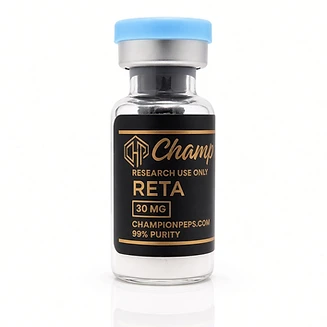
Research use only. Listing a supplier is not an endorsement of any protocol on this site, and nothing sold there is approved for human use.